GCI Economic Development Grants
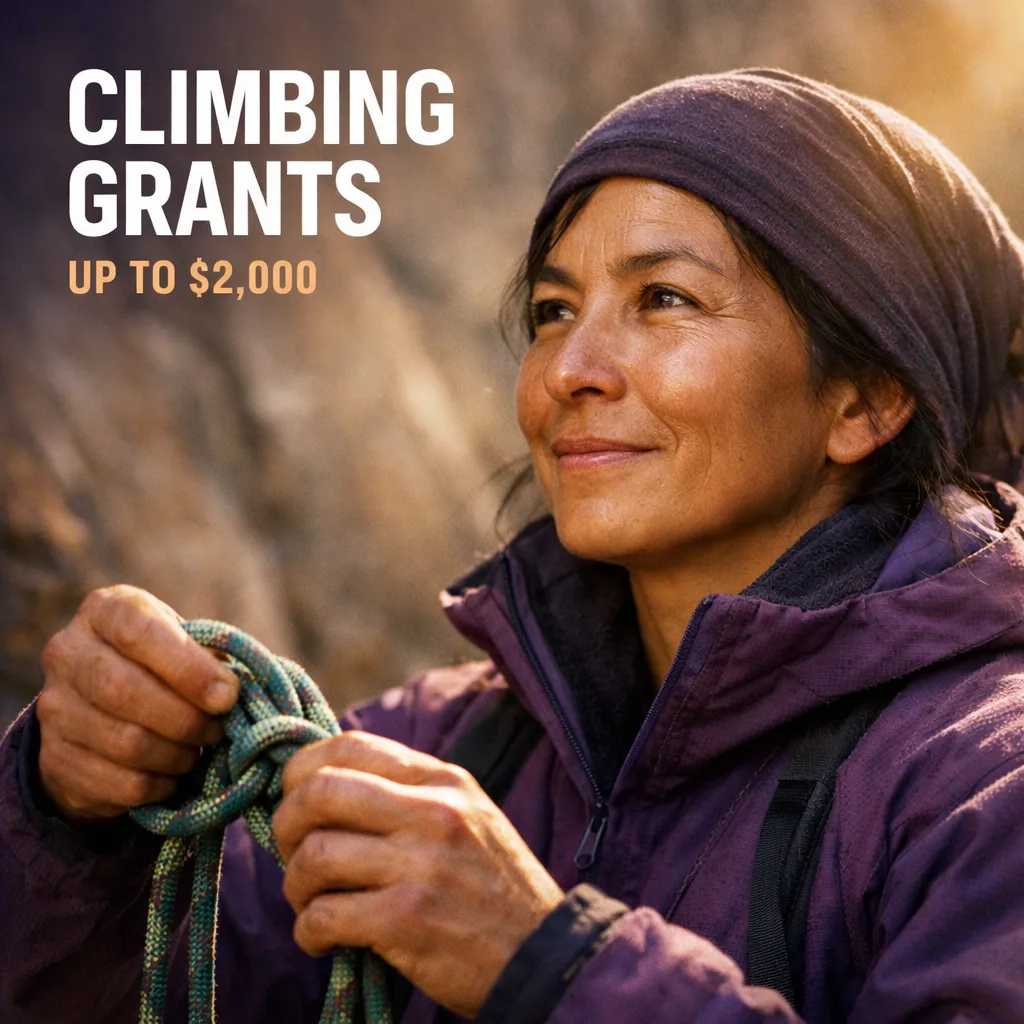
$2,000 grants for locally led climbing projects creating jobs and tourism income outside the continental US.
Key Takeaways
$2,000 for climbing economic development
Outside continental US or Indigenous in US
BIPOC climbing leaders explicitly prioritized
Two-stage process reduces initial workload
Grant Overview
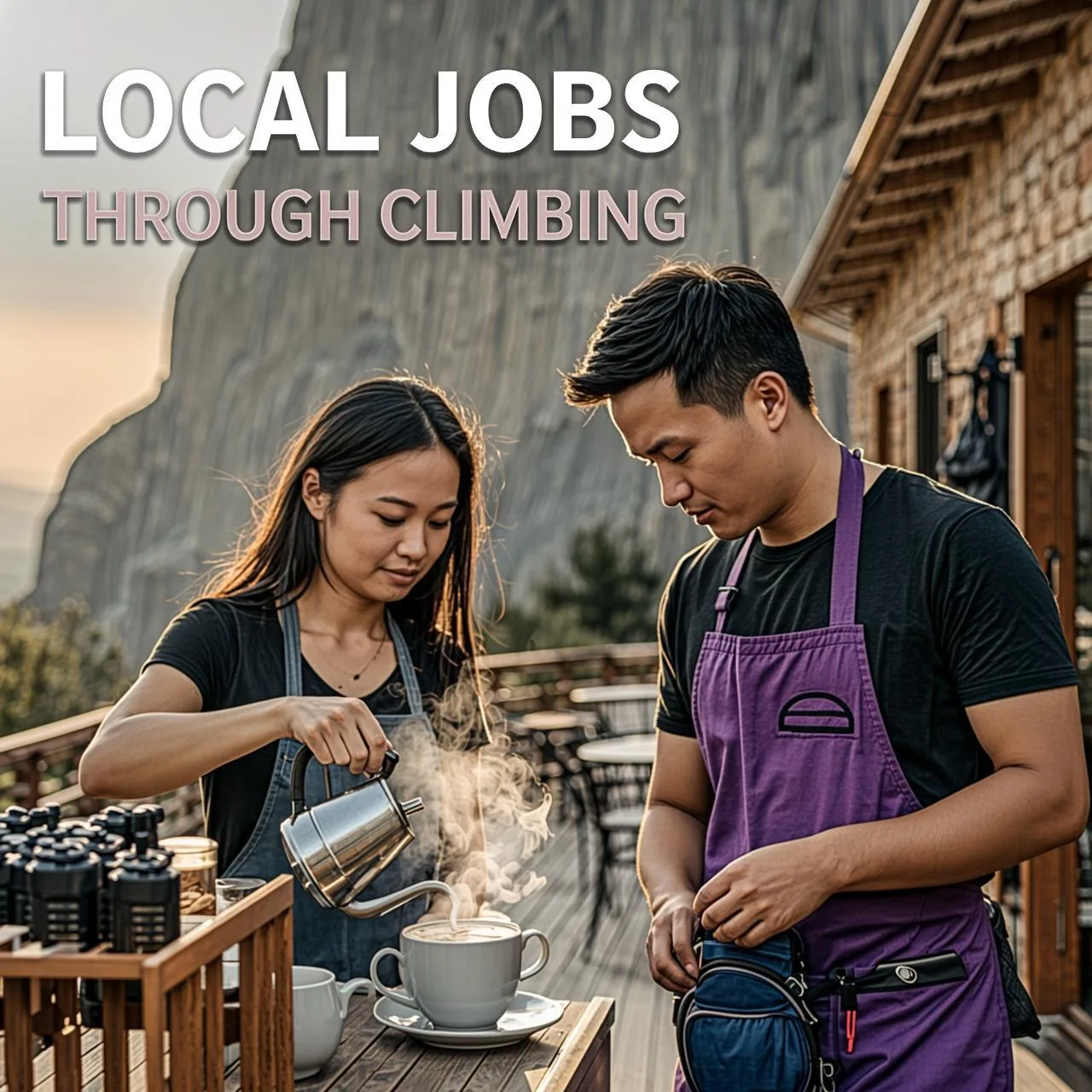
You are training local climbers to become certified guides. You are developing routes at a crag that could attract tourism revenue. You are opening a small cafe near a climbing area so the community benefits when visitors arrive. These ideas are income generating projects that turn climbing into sustainable livelihoods.
If your project is outside the continental United States (or led by an Indigenous community within the US), the Global Climbing Initiative's Economic Development Grants might fund it. Unlike what some third-party sites incorrectly claim, this grant is NOT available to most US-based organizations. The geographic requirement is strict and the focus is narrow which is "economic development through climbing", not conservation or inclusion work.
This is a $2,000 micro grant with a two stage application process. Initial applications close January 28, 2026. Only invited finalists submit full proposals by February 25. Projects run April through September 2026. The Global Climbing Initiative prioritizes BIPOC and underrepresented climbing leaders explicitly, not just as stated policy but in actual selection patterns.
Global Climbing Initiative Economic Development Grants
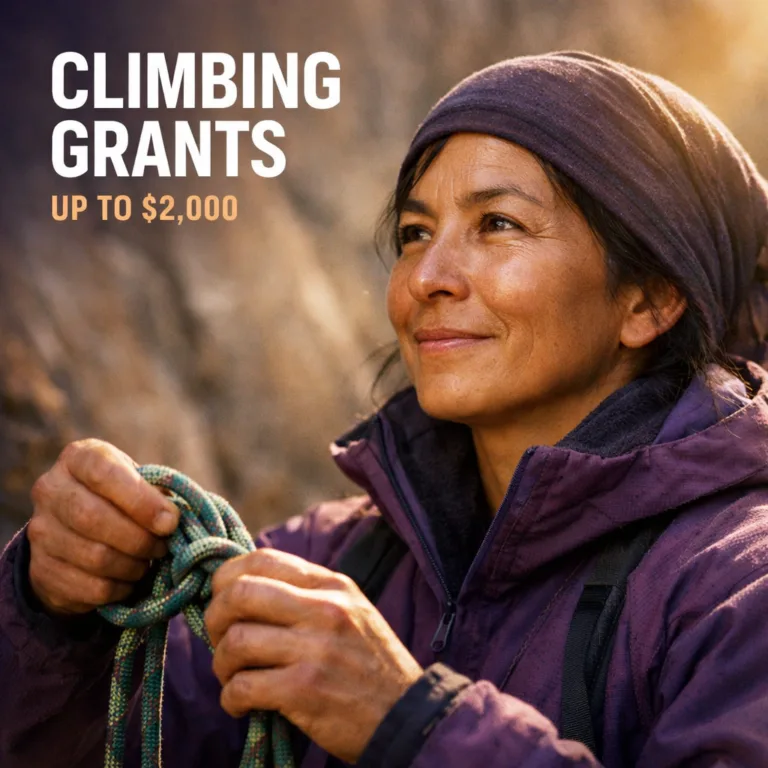
- Grant Award
- $2,000
- Application Deadline
- January 28, 2026
- Eligible Region
- Outside Continental United States, Indigenous Communities Within United States
- Project must be related to climbing (indoor or outdoor)
- Led by a local climbing organization with demonstrated climbing related impact
- Proposed by a local leader of that climbing organization
- Located outside the continental United States OR led by an Indigenous community within the US
- Organization cannot have received Economic Development category funding in Fall 2025 cycle
- Organizations can apply to different grant categories or skip a cycle
- Project must directly create income or jobs or tourism opportunities or small businesses
- Project must be completable within 6 months (April 1 to September 30 2026)
- Subject to compliance and risk considerations
- $2,000
- Project leadership support from GCI staff
- Access to GCI's network of 100+ climbing organizations in 30+ countries
- Participation in grant partner webinars and resources
What Economic Development Actually Means for Climbing Communities
The Global Climbing Initiative runs three separate grant categories. Environmental (conservation and stewardship), Social Impact (access and inclusion), and Economic Development. Each serves different purposes. If you are unclear which fits your project, you will waste time applying to the wrong one.
Economic Development grants fund projects that generate income or create jobs or build tourism infrastructure or establish small businesses. The key word is "generate." These are not one time community events or awareness campaigns. They are projects that create ongoing economic benefit for local people through climbing related activities.
If your project's primary goal is protecting climbing areas or increasing diversity in climbing, you need GCI's Environmental or Social Impact categories instead. Economic Development is strictly about creating sustainable income streams.
Fundable project examples from past recipients include women's climbing instructor training in Chile, advanced guide certification for women in Nepal, crag development for ecotourism in Guatemala, and trail building with community festivals in Peru. Notice the pattern. Each creates capacity for locals to earn money from climbing tourism or instruction.
Non fundable examples include research papers about climbing economics, social media campaigns promoting local climbing areas, conferences about sustainable tourism, general operating costs for your organization, or advocacy work for climbing access. These might be valuable but they do not fit this category's definition.
How This Differs From Other Climbing Grants
Most climbing grants focus on conservation (protecting crags from erosion or overcrowding) or access (building diversity in who climbs). The Global Climbing Initiative offers all three categories, but Economic Development is the smallest and most specific. It exists because climbing tourism often benefits foreign owned businesses while local communities see little economic return.
This grant tries to flip that dynamic. When your
cafe serves visiting climbers, when your guide service employs local instructors, when your community owned campground generates revenue, the economic benefit stays local. That is the theory. The $2,000 funds the initial infrastructure or training that makes local ownership possible.
If you are working on similar economic development in the US, you might consider Sky's the Limit Friends and Family Fund which offers $2,500 for underrepresented entrepreneurs or Galaxy of Stars Grant which provides $2,500 for minority and women entrepreneurs.
Check Your Eligibility for Economic Development Grants
Before reading every detail on this page, you can check basic eligibility using the tool below. It walks through the critical requirements. Geographic location, organizational structure, project focus, and timing constraints. The tool helps you self disqualify fast if there is a clear mismatch, or it confirms you should keep reading if you are potentially eligible.
If the tool indicates you are likely eligible, continue reading this page to understand competitive factors and application strategy. If it suggests you are not eligible, check the "More Grants" section later for alternative funding opportunities that might fit your situation better. If you are uncertain about specific requirements, the detailed breakdowns below address common edge cases and ambiguities.
Who Can Actually Apply - Geographic Eligibility Decoded
This is where competing websites get it wrong. CharityJournal.org incorrectly states this grant is for "local communities in the United States" with no mention of the outside continental US requirement. That is factually wrong and could waste applicants' time. The accurate eligibility is that projects must be located outside the continental United States OR led by Indigenous communities within the United States.
What "outside the continental United States" includes. All countries except the US, plus Hawaii, Alaska, Puerto Rico, US Virgin Islands, Guam, American Samoa, and Northern Mariana Islands. These US territories qualify because they are outside the continental 48 states.
What "Indigenous community within the US" means is less clear. The official page does not define whether this requires tribal recognition, cultural connection, or specific organizational structure. If you are an Indigenous led climbing organization in the continental US and unsure about eligibility, contact grants@globalclimbing.org directly before applying. Do not assume.
The geographic restriction exists because GCI was designed to support climbing communities in developing countries where economic opportunity from climbing tourism often bypasses local people. US based organizations have access to significantly more funding sources. The Indigenous exception recognizes that Indigenous communities within the US face similar economic development challenges as communities in developing countries.
Q: We are based in Denver but our project serves Indigenous communities in Colorado. Are we eligible?
A: Unclear without more specifics. If your organization is led by Indigenous climbers and serves Indigenous communities, potentially yes. If you are a non Indigenous organization serving Indigenous communities, probably no because the requirement states "led by an Indigenous community." Verify directly with GCI.
Q: Our organization is in Mexico City but we are not local to the climbing area we want to develop. Does that disqualify us?
A: Possibly. The grant requires projects "led by a local climbing organization." GCI defines local as based in and serving the community where climbing happens. An organization in Mexico City developing a crag in Oaxaca might not meet the local leadership requirement unless you have strong community ties and local team members in Oaxaca.
What "Local Leadership" and "Demonstrated Impact" Actually Mean
Two eligibility requirements cause the most confusion. "Local climbing organization" and "demonstrated climbing related impact." These are not defined with precision on the GCI website, so applicants must interpret based on past recipient patterns and program values.
Local Climbing Organization
Local means based in the community you are serving. If you are developing a crag in Santa Cruz la Laguna, Guatemala, your organization should be based in or very near Santa Cruz la Laguna, not Guatemala City. The point is community ownership and benefit, not external organizations parachuting in with projects.
Organization does not necessarily mean formal nonprofit registration, though that helps. Past recipients include groups with varying levels of formalization. What matters more is organizational capacity. Do you have a team, a track record, and community trust? A well organized climbing club with three years of programs might be stronger than a newly registered nonprofit with no actual work done yet.
If you are an individual climber without an organizational structure, this grant is not for you. GCI funds organizations, not individuals, because organizational structures provide accountability and sustainability beyond any single person.
Demonstrated Climbing Related Impact
Demonstrated impact means you have already done climbing related work in your community and can show results. This could be route development you have completed, climbing programs you have run, events you have organized, or communities you have served. The emphasis is on past action, not just plans.
Evidence might include numbers of people who participated in your programs, routes you have established, partnerships you have built, media coverage you have received, testimonials from community members, or documented growth in local climbing participation. You do not need formal metrics, but you need something concrete.
If you are a brand new organization with no track record, your chances are weak. GCI prioritizes organizations with proven capacity because $2,000 needs to generate measurable outcomes in six months. That is hard without existing infrastructure and community relationships.
The Consecutive Cycle Rule and Timing
Organizations cannot receive funding in the same grant category in back to back cycles. If you received Economic Development funding in Fall 2025, you are ineligible for Spring 2026 Economic Development grants. But you could apply for Social Impact or Environmental grants in Spring 2026, or you could wait until Fall 2026 to apply for Economic Development again.
This rule prevents the same organizations from monopolizing funding and creates space for new organizations to receive support. It also encourages organizations to plan multi year strategies rather than depending on GCI for ongoing operational funding.
Q: We got Social Impact funding in Fall 2025. Can we apply for Economic Development in Spring 2026?
A: Yes. The consecutive cycle rule only applies within the same category. If you received Social Impact funding last cycle, you can apply for Economic Development this cycle because they are different categories.
Q: We applied but were not selected in Fall 2025. Can we reapply in Spring 2026?
A: Yes. The rule only affects organizations that received funding, not organizations that applied but were not selected. You can apply again in the same category.
Strategic timing consideration. If your project needs more than $2,000 or more than six months, it might make sense to skip this cycle and wait until you have a smaller, more focused project that fits the constraints. Applying with an oversized project that you will have to radically scale down if selected does not serve you or GCI well.
What GCI Prioritizes in Selection
GCI receives more applications than available funding and uses specific criteria to prioritize. Understanding these factors helps you assess your competitive positioning and strengthen your application where possible.
BIPOC and Underrepresented Leadership
The website explicitly states. "Projects led by climbers who are Black, Indigenous, People of Color, or from other underrepresented groups are prioritized." This is not subtle or buried. It is a direct statement of preference based on GCI's values around equity and representation in climbing.
Past recipient examples support this. Cuartafem (Chile) focuses on women climbers. Empowering Women of Nepal trains women guides. The pattern is clear. Projects led by people who face barriers in climbing and outdoor industries get priority.
If your organization is led by BIPOC or underrepresented climbers, highlight this in your application. It is not token diversity. It is central to GCI's mission of supporting locally led, community driven work in contexts where climbing has historically been dominated by external (often white, often Western) actors.
Local Ownership and Community Engagement
Projects shaped with community input and designed for community benefit score higher than projects imposed by outside organizations. This ties back to the "local leadership" requirement but goes deeper. GCI wants to see that community members participated in designing the project, not just that you are delivering services to them.
Strong applications show community members involved in planning, local people employed or trained through the project, decision making that includes community voices, and benefit structures that keep resources local rather than extracting them.
Measurable Economic Impact
Because this is the Economic Development category, you need to show how your project creates income or jobs or business opportunities. Vague claims about "supporting the local economy" do not work. Specific metrics do.
Examples of measurable impact. "Train 10 local climbers to become certified guides who can charge $50 per day for guiding services" or "Establish a cafe that employs 3 local people and generates estimated $500 monthly revenue" or "Develop 25 new routes that attract 100 additional tourists annually contributing estimated $10,000 to local economy through accommodations and services."
Your numbers do not need to be perfectly accurate (these are projections) but they need to be specific and realistic. Claiming your $2,000 project will create 50 jobs strains credibility. Claiming it will create 2 to 3 part time income opportunities is believable.
Sustainability Beyond the Grant Period
GCI funds six month projects but wants lasting impact. How does your project continue generating benefit after September 30, 2026? If you are training guides, how do they continue finding clients? If you are building infrastructure, how is it maintained? If you are starting a business, what is the revenue model?
The strongest applications show sustainability mechanisms. Revenue generation that funds ongoing operations, trained local people who continue the work, partnerships that provide ongoing support, or community ownership structures that ensure long term stewardship.
Clear economic metrics with specific numbers Evidence of community involvement in project design Realistic sustainability plan beyond grant period Priority for BIPOC and underrepresented leadership
Budget Reality for $2,000 Projects
Two thousand dollars is meaningful seed capital in many developing countries but will not fund large infrastructure projects. Your budget needs to match the scope. Here is what $2,000 can and cannot realistically cover based on past recipient examples and typical costs in developing country contexts.
What $2,000 Can Fund
Guide training and certification programs. Course fees, equipment, instruction, materials for 8 to 12 participants in contexts where certification costs $100 to $200 per person. Include safety equipment, first aid training, and technical instruction.
Initial crag development. Trail building materials, tools, route cleaning equipment, basic signage, and bolts and anchors for establishing 15 to 25 routes. Does not include major construction or land acquisition.
Small business launch costs. Kitchen equipment for a climbing cafe (stove, refrigerator, basic furniture), initial inventory, signage, licenses, and permits. Revenue generation starts immediately to cover ongoing costs.
Community owned infrastructure. Materials for simple campground facilities (tent platforms, basic bathroom structure, fire pits, directional signs), not full construction labor which comes from community contribution.
Cultural integration projects. Materials and training for local artisans to create climbing related crafts (chalk bags, approach shoe repairs, handmade guidebooks), plus initial marketing to establish sales channels.
What $2,000 Cannot Fund
Complete campground construction from bare land. Land acquisition or long term leases. Full building construction for hostels or lodges. Vehicles or major transportation equipment. Ongoing salaries or operational costs beyond the six month project period. Large scale tourism marketing campaigns. Research or academic studies. General organizational overhead not directly tied to the specific project.
If your project needs $10,000 or $20,000, GCI Economic Development grants are not the right fit. Consider larger funding sources or redesign your project into phases where $2,000 funds a meaningful first phase that generates revenue to fund subsequent phases.
Copy Paste Budget Templates
Use these ready to paste budget blocks for your application. Keep explanations short. Do not attach files. Paste budgets directly into the form.
Each table row is intentional. Keep explanations short. Avoid adding salaries or long term admin costs. If you need help translating a local currency into USD for the form, we can help. See the services block below.
The Two Stage Application Process Explained
GCI uses a two stage system. Initial application (January 5 to 28, 2026) followed by invited full proposals (February 2 to 25, 2026). This structure actually reduces your initial workload because the first application is lighter. You are validating concept and eligibility before investing in detailed budget work.
The initial application asks for project concept, basic budget outline, organizational capacity information, and demonstrated climbing related impact. GCI reviews these and invites select applicants to submit full proposals. Only invited finalists complete the detailed proposal with comprehensive budgets, timelines, and impact measurement plans.
If you are not invited to submit a full proposal, it does not mean your project is bad. It means GCI receives more viable applications than available funding. They explicitly state they get more applications than they can fund but do not publish exact selection rates.
Decisions are sent March 18, 2026. Selected grant partners attend kickoff meetings March 23 to 31, then begin implementation April 1. The six month project period runs through September 30, 2026. You submit final reports, photos, metrics, and testimonials within 60 days of project completion.
An optional but helpful step. Attend the informational webinar on January 15, 2026 at 7:00 PM Mountain Standard Time. The first 15 minutes cover program overview, followed by 30 minutes of Q and A. Registration is at the GCI events page. Webinars are particularly useful for clarifying eligibility edge cases and understanding what reviewers prioritize.
Application Requirements Summary
The initial application validates your concept and eligibility. Expect questions about organizational background, project description, preliminary budget, community engagement approach, and how you will measure impact. This is lighter than a full proposal but still requires thought.
You will likely need. Organization name and basic information, project title and one paragraph summary, preliminary budget outline showing major cost categories, description of demonstrated climbing related impact, explanation of local leadership and community engagement, and estimated measurable outcomes.
Access the application form at globalclimbing.org/community-grants starting January 5, 2026. The form is online and should save progress so you can work on it over multiple sessions. Exact questions are not visible until you start the application.
If you are invited to submit a full proposal, you will provide comprehensive detail. Line item budget with justifications, month by month timeline showing specific milestones, detailed impact measurement plan with metrics, organizational capacity information including team backgrounds, sustainability plan showing how project continues beyond grant period, and letters or testimonials showing community support.
Attend the January 15 webinar if possible | Start the initial application early to identify missing information | Prepare preliminary budget and timeline now even though full detail comes later | Document your demonstrated impact with specific examples and numbers | Identify community partners or testimonials you can provide if invited to full proposal stage]
Required Documents After Selection
Grant recipients sign three documents. Memorandum of Understanding outlining project expectations and requirements, Code of Conduct committing to GCI values and ethical practices, and Photography Agreement allowing GCI to use project photos for promotion and storytelling.
You attend a project kickoff meeting between March 23 to 31, 2026 (virtual, with GCI staff) to clarify expectations, timelines, and reporting requirements. This is your chance to ask operational questions before implementation starts April 1.
Within 60 days of completing your project (by late November 2026), you provide. Folder of quality photos showing project activities and outcomes, one to two page project summary describing what happened and what changed, qualitative and quantitative metrics proving impact, quotes or testimonials from project team and community participants, short survey about your grant experience, and collaboration with GCI on a social media post celebrating the project.
You must also name GCI as a supporter in any public communications about the project during implementation. This includes social media posts, community announcements, signage at project sites, and media coverage. Standard acknowledgment language will be provided in your Memorandum of Understanding.
Comparing Economic Development to Other GCI Grant Categories
GCI offers three main grant categories with different purposes and requirements. Choosing the wrong category wastes your time and reviewers' time. Here is how to tell which fits your project.
Decision logic. If your project primarily creates income or jobs or tourism revenue, choose Economic Development. If it primarily increases diversity or access or inclusion in who climbs, choose Social Impact. If it primarily protects or restores climbing areas, choose Environmental.
Projects can have secondary benefits across categories. Your guide training program (Economic Development) might include women participants (Social Impact secondary benefit). Your crag development (Economic Development) might include erosion control (Environmental secondary benefit). Choose category based on primary goal and main outcomes.
You can only apply to one category per cycle, so choose strategically. If you are genuinely uncertain which category fits, email grants@globalclimbing.org and describe your project. They can guide you to the right category before you invest application time.
Common Mistakes and How to Avoid Them
Based on GCI's selection criteria and reported feedback, these errors sink otherwise strong proposals.
- Geographic ineligibility. If you are in the continental US and not Indigenous led, do not apply. GCI enforces this strictly.
- Wrong category fit. Project is not climbing related or is really about conservation or inclusion rather than economic development. Reframe to show climbing link or apply to a different category.
- Budgets with salaries. GCI is very clear that funds are for project specific costs like gear, infrastructure, or certifications. Convert to training fees or materials.
- Attaching files. GCI does not review extra attachments. Paste budgets and short narratives directly into the form.
- No local lead. Partner with a local organization and make them the primary applicant if you are an external organization.
- Vague outcomes. Training for training's sake fits Social Impact. Training that leads to paid guide work fits Economic Development. Be specific about income generation.
- Unrealistic scope. Claiming your $2,000 project will create 50 jobs strains credibility. Claiming it will create 2 to 3 part time income opportunities is believable.
Timeline and Important Dates for Spring 2026 Cycle
Understanding the timeline helps you plan backwards from deadlines and identify what to prepare now versus later.
- January 5, 2026: Application period opens for initial applications
- January 15, 2026: Informational webinar at 7:00 PM Mountain Standard Time (register at GCI events page)
- January 28, 2026: Initial application deadline
- February 2 to 25, 2026: Invited applicants submit full project proposals
- March 18, 2026: Grant decisions sent to all applicants
- March 23 to 31, 2026: Project kickoff meetings for selected grant partners
- April 1, 2026: Project period begins
- September 30, 2026: Project period ends
- Late November 2026: Final reports, photos, and metrics due (60 days after project completion)
Working backwards from September 30, plan your project milestones. If you need to order equipment internationally, account for shipping delays. If your project depends on weather (crag development during rainy season is difficult), plan around seasonal constraints. If you need permits or approvals, start that process immediately upon selection in late March.
Six months sounds like reasonable time, but in practice it is short for projects with supply chain dependencies, bureaucratic approval processes, or seasonal limitations. Projects that can start immediately with locally available resources have implementation advantages.
What Happens If You Are Not Selected
Most applicants will not receive funding because GCI gets more applications than available grants. Not being selected does not mean your project lacks merit. It means competition exceeded available resources.
If you are not selected, consider applying to other GCI categories if your project has secondary goals that fit Social Impact or Environmental focus, waiting until Fall 2026 or Spring 2027 to reapply with a strengthened application, pursuing larger grants if your project scope exceeds what $2,000 can accomplish, or exploring the alternative funding sources listed in the More Grants section below.
GCI does not provide detailed feedback on unsuccessful applications due to volume, but common reasons applications are not selected include geographic ineligibility, insufficient demonstrated impact, unclear economic development focus, unrealistic project scope for budget and timeline, weak sustainability plan, or simply being in a competitive pool where many viable projects compete for limited funds.
If you apply and are not selected, do not take it as final judgment. Strengthen your organizational capacity, build your track record, engage your community more deeply, and reapply when you are more competitive. Many successful grant recipients applied multiple times before receiving funding.
Understanding GCI's Organizational Background
The Global Climbing Initiative was founded by Veronica Baker Amores during her graduate studies at Yale University. Her background combines international development with climbing, giving her perspective on how climbing tourism often bypasses local economic benefit in developing countries. She designed GCI to flip that dynamic by funding locally led projects that keep economic value in communities.
Since starting grantmaking in 2023, GCI has funded 28 locally led projects across 16 countries. The organization now serves more than 100 grassroots climbing organizations in 30+ countries through multiple programs. Community Grants (Environmental, Social Impact, Economic Development categories), Gear Distribution, Climbing Leadership Fund, and Best Practices resources.
GCI operates as a 501(c)(3) nonprofit based in Boulder, Colorado (EIN 84-4133618). The organization maintains Platinum transparency rating on Candid (formerly GuideStar), indicating strong financial reporting and governance practices. Industry partners include Osprey Packs (Social Impact grants sponsor) and Sterling Rope (Climbing Leadership Fund sponsor).
This background matters because it signals credibility and understanding of both climbing culture and international development contexts. The founder is not just a climber trying to do good. She has formal training in development policy and has built systems designed for accountability and local leadership.
Terms and Definitions
- Continental United States: The 48 contiguous states excluding Alaska and Hawaii. For GCI eligibility purposes, projects must be outside these 48 states OR led by Indigenous communities within them. Alaska, Hawaii, Puerto Rico, and other US territories qualify geographically as outside the continental US.
- Local Climbing Organization: An organization based in and serving the community where climbing activity happens. Not external organizations delivering services to communities, but community based groups with local leadership and local decision making authority.
- Demonstrated Climbing Related Impact: Evidence that your organization actively engages with climbing communities through organized events, crag stewardship, training programs, or consistent presence at local climbing areas. This can include photos, participant testimonials, or documented climbing activity.
- Indigenous Led: Projects directed by Indigenous community members rather than merely serving Indigenous populations. Leadership must include decision making authority for the project, not just advisory roles or beneficiary status.
- Locally Led Organization: An organization rooted in the community it serves with local climbers making decisions rather than outside NGOs directing activities. GCI prioritizes groups with authentic community connections over professionally managed international nonprofits.
- Economic Development Category: Focuses on jobs, businesses, and tourism via climbing. Differs from Environmental (conservation) or Social Impact (inclusion) categories.
- Back to Back Funding Restriction: GCI policy preventing organizations from receiving grants in the same category in consecutive cycles. You may apply in non consecutive cycles or switch categories between applications.
- BIPOC Priority: Explicit preference in selection scoring for projects led by Black, Indigenous, People of Color, or other underrepresented groups in climbing. This reflects GCI's commitment to equity in outdoor recreation access.
- Memorandum of Understanding (MOU): A formal agreement between GCI and grant recipients outlining expectations, reporting requirements, and mutual commitments. It is legally binding and must be signed before funds are released.
- Photography Agreement: Contractual permission for GCI to use project images for reporting, promotion, and storytelling. Grantees must provide quality photos and collaborate on social media content.
- Two Stage Application: GCI's screening process where initial short applications filter for alignment before selected applicants submit full proposals. This reduces workload for both applicants and reviewers.
- Project Period: The six month timeframe during which grant activities must occur. For Spring 2026, this runs April 1 through September 30. Extensions are not standard.
- Light Touch Reporting: Simple end summary with photos and metrics. Eases burden on small organizations compared to traditional grant reporting.
- Guide Training: Programs that certify local climbers to lead paying clients. This creates immediate employment while building local expertise that reduces dependence on outside guides.
- Crag Development: The process of preparing natural rock climbing areas for safe public use including route establishment, anchor installation, access trail creation, and environmental protection measures.
- Climbing Tourism: Travel specifically to access climbing areas including route climbing, bouldering, and mountaineering. Economic development in this sector focuses on capturing tourism revenue locally through guiding, accommodation, food services, and equipment rental.
- Community Owned Infrastructure: Physical assets like campgrounds, climbing walls, or equipment cooperatives owned collectively by local climbing organizations rather than private investors. This keeps economic benefits local.
- Measurable Economic Impact: Quantifiable outcomes like jobs created, revenue generated, tourists hosted, or businesses launched. Vague claims of economic benefit without specific metrics weaken proposals.
- Sustainable Income: Revenue that continues beyond the grant period without ongoing external funding. Projects that create self sustaining economic activity align with GCI's long term vision.
- Global South: Geographic and economic designation referring to developing countries primarily in Africa, Asia, Latin America, and the Middle East. GCI focuses funding here rather than wealthy industrialized nations.
Related Grants to Consider
The GCI Economic Development Grant is not your only option. If the $2,000 amount feels too small for your project scope, or if your organization does not fit the climbing focus, explore these alternatives. Some serve similar communities while others offer larger funding amounts for different types of work.
When to Get Help With Your Application
If you are seriously considering this grant but feeling uncertain about any aspect, whether your project qualifies, how to structure your budget, or how to frame your economic impact, getting expert guidance can make the difference between a rejected application and a funded project.
Grantaura works with organizations navigating grants like this one every day. We understand what GCI is looking for because we have studied their priorities, reviewed successful applications, and helped organizations like yours craft compelling proposals. Our team can review your draft, identify weaknesses, and help you position your project in the strongest possible light.
We do not just write grants. We understand what funders actually want to see. Our experts can translate your community's vision into language that resonates with GCI's priorities, helping you avoid common mistakes that sink applications.
About the Author
Imran is the founder of Grantaura and has spent years helping organizations navigate the often confusing world of grant funding. He writes about grants because he has seen too many good projects fail to get funding simply because the application process was not clear or the fit was not right. His approach is straightforward. Understand what funders want, be honest about what you need, and do not waste time on opportunities that do not match. This GCI Economic Development Grant caught his attention specifically because it serves communities that larger funders often overlook, a gap he is committed to helping close.
About Imran | Book Free Consultation
How to apply for this grant
We are your trusted grant application partners. You can navigate the entire grant application process with our expert guidance through this simple 5-step process.
Step 1: Application Form
Fill out the "Apply for this grant" form with your information and grant requirements.
Step 2: Eligibility Assessment
Our grant experts will assess your eligibility and notify you via email.
Step 3: Expert Consultation
A dedicated grant expert will be assigned to discuss next steps for your application.
Step 4: Application Submission
Our expert will help you complete and submit your application with all required materials.
Step 5: Final Decision
The grant committee will make their decision and notify successful applicants.