If your program uses athletics to fix a social problem (mental health support, classroom outcomes, girls’ participation, or removing cost barriers, etc.), this grant is a source of funding. Most sports grants trap you in equipment-only silos or demand you fit a single demographic. This one breaks the pattern.
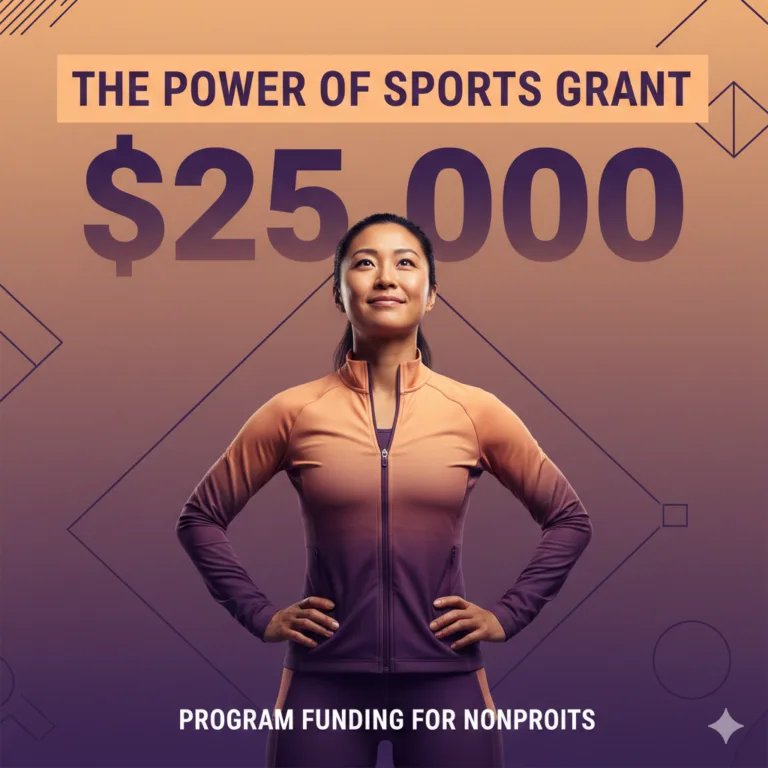
The Power of Sports Grant offers up to $25,000 for programmatic work across four distinct pillars: mental health, education, female advocacy, and socioeconomic accessibility. Unlike equipment distributors or tournament sponsors, this foundation funds the messy middle of sports-based intervention - the work itself.
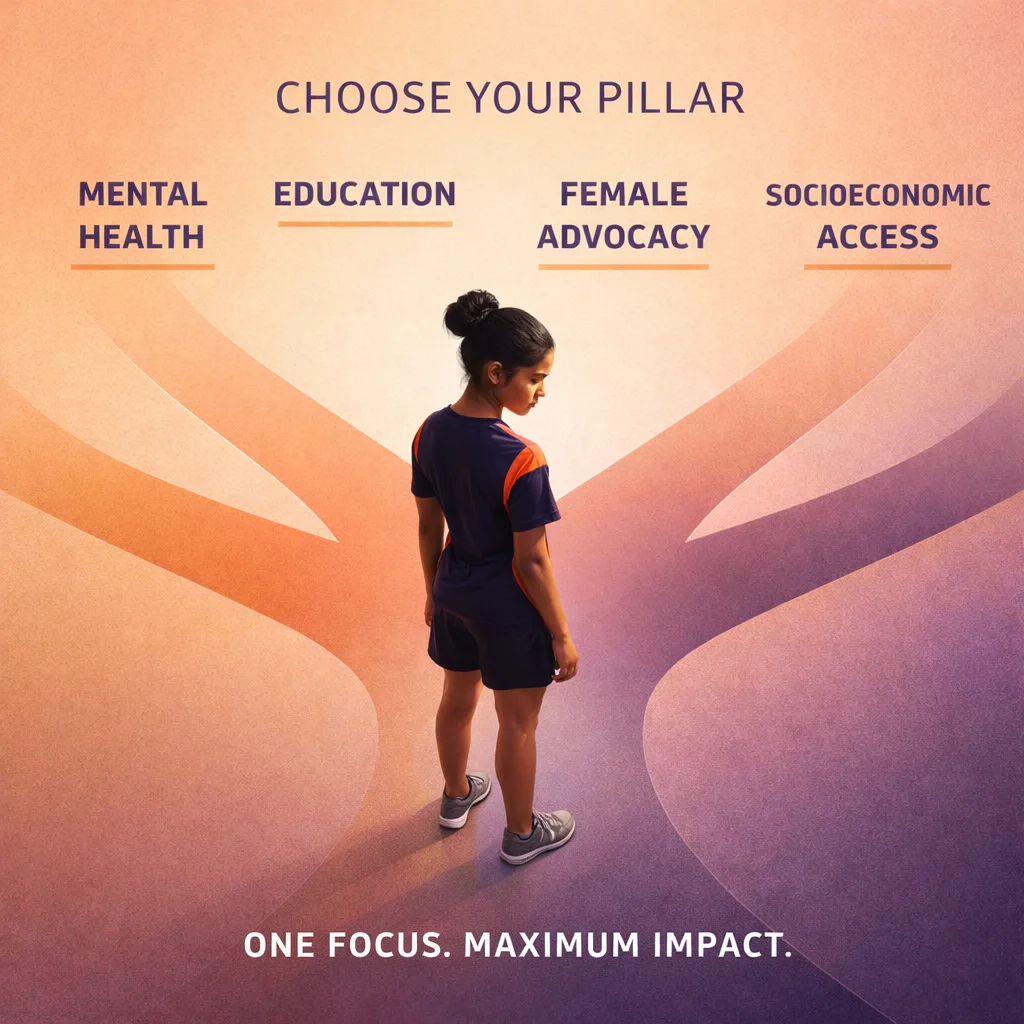
Here is the catch. You must choose only one pillar. Even if your program beautifully intersects mental health and education, you must declare a primary home. And this is the inaugural cycle. No previous winners to study. No established patterns to decode. Just a new foundation backed by Michelle Hagerty's family philanthropy and FAU's Touchdowns for Charity mechanism, operating from Boca Raton but casting a global net.
Global, United States, International (English documentation required)
03
Eligibility and Benefits
Eligibility Criteria
Be a registered 501(c)(3) nonprofit or use a qualified fiscal sponsor
Program uses sport/athletics as the primary tool
Request ≤ $25,000 and ≤ 50% of your annual operating budget
Only one application per organization per cycle
Required: IRS 501(c)(3) letter or fiscal sponsor verification
Grant Benefits
$25,000
Media & Exposure: Potential storytelling or media assets requested by donor
Repeat Opportunity: Invitation to reapply in future cycles (after reporting)
04
Focus Areas
Sport as a toolMental HealthEducationFemale AdvocacySocioeconomic AccessibilityProgrammatic Grants
Eligibility Tool
Use our quick eligibility tool to test the four hard rules: (1) entity type, (2) whether sport is primary, (3) requested amount vs annual budget, and (4) single submission rule. The tool is optimized to save time - it flags likely disqualifiers before you draft answers.
Eligibility Check
Eligibility for The Power of Sports Grant For Nonprofit Organizations
Answer a few guided questions. Your responses are matched to this grant's criteria in real time.
Ready to check your eligibility?
We'll guide you through a short, structured flow and instantly evaluate fit for this opportunity.
Eligible
You Appear Eligible
Based on your answers, you meet the core requirements for this grant.
Recommended Next Step
Protect Your Application Before You Submit
You look eligible — but eligibility alone doesn't win grants. Most rejections happen on the application itself: missed language, wrong framing, weak impact statement. A Grantaura Expert Review takes 24–48 hours and flags every gap before the funder sees it.
✓Expert reviews your draft⏱Results in 24–48 h💰Avg. grant value $12,000+
⚠ Grant committees reject 7 in 10 applications that meet eligibility. One overlooked line can cost you thousands.
🔒 Satisfaction-backed — if our review finds nothing actionable, you pay nothing more.
This Grant Isn’t the Right Fit. Your Best One Might Be Two Clicks Away.
Missing one criterion for The Power of Sports Grant For Nonprofit Organizations doesn’t mean you’re out of options — it means this grant wasn’t designed for your profile. Our expert research team identifies the grants built specifically for businesses like yours, across 500+ active opportunities.
Basic Match
$125
One-time research
A list of 5 grants only
Basic eligibility matching based on industry & location
Standard funding amount range verification
Primary criteria alignment check
Most Popular
Advanced Match
$145
One-time research
A list of 7 grants only
Advanced eligibility matching with business model analysis
Deep competitive advantage assessment
Innovation & impact potential matching
Market fit & growth trajectory alignment
Premium Match
$175
One-time research
A list of 10 grants only
AI-powered deep-match algorithm analysis
Historical success pattern matching
Priority sector & focus area alignment
Advanced sustainability impact matching
Strategic vision & long-term goals alignment
Preparing secure checkout…
✓
Order Confirmed
Your grant research order is placed. Our team will deliver your personalised report within 3–5 business days. Check your email for confirmation.
Auto-advances after each answer. Use Back to revise.
What This Actually Funds
This is programmatic money. Not a salary subsidy for your executive director. Not a budget band-aid for administrative overhead. Not new uniforms.
The foundation wants direct service. Programming that happens on courts, in pools, on fields, or in gymnasiums where sport serves as the intervention mechanism for mental health outcomes, educational advancement, gender equity advancement, or economic barrier removal.
You can pay staff. But only if their time directly ties to program delivery. The program coordinator who runs the after-school sessions? Yes. The development director who writes other grants? No. The line blurs quickly here. The foundation offers no specific percentage threshold for "direct" versus "indirect" time. You must make that case yourself in the budget narrative.
Expert Tip
When describing staff salary allocations, use specific percentages tied to direct program hours rather than general role descriptions to strengthen your budget justification.
Capital campaigns sit explicitly outside eligibility. So do regrants. If your model involves distributing funds to other organizations or individual athletes, look elsewhere. This money stays with the applying organization for their own programmatic execution.
Q: Can funding be used for general operating costs or salaries? A: No for general operating. Yes for salaries only if directly tied to program delivery. Administrative and overhead expenses are prohibited.
Q: Is there a minimum funding request amount? A: No. Request what reflects your program scope. The maximum is $25,000 or 50% of your operating budget, whichever is lower.
Q: Who this grant is actually for?
A: Organizations with legal nonprofit status that run programmatic projects where sport or athletics is the main method to produce measurable outcomes in mental health, education, female advocacy, or socioeconomic access. Requests may be domestic or international if documentation is provided.
Q: Who should not apply?
A: Groups seeking general operating support, infrastructure/capital purchases, lobbying funds, or regranting to third parties. If sport is only an activity accessory (not the primary method), this grant is not a fit.
Q: What usually disqualifies applicants?
A: Asking for more than 50% of your annual operating budget, lacking nonprofit documentation (501(c)(3) or verified fiscal sponsor), or submitting more than one application per organization during the same cycle.
Q: What funding realistically supports?
A: Program delivery costs directly tied to the sporting activity: curriculum, coaching tied to program delivery, equipment used directly in program sessions (not capital infrastructure), and evaluation that measures outcomes tied to sport.
The Single Pillar Constraint
Here is where applicants stumble. Your program probably does multiple things. It teaches swimming while building confidence. It combines soccer with academic tutoring. It addresses both gender barriers and economic access simultaneously.
The application forces a choice.
You must select the single strongest pillar representing your primary focus. The foundation acknowledges that programs intersect. They expect this. Yet they require you to declare one dominant lane. This is not a trick question. It is a strategic filter. Programs with muddy focal points or those trying to be everything simultaneously tend to score lower in evaluation.
Choose the pillar where your evidence is strongest. Where your outcomes are most measurable. Where your target population faces the most acute need. Then write the entire application through that lens, even if ignoring the other dimensions feels like amputating part of your mission.
Q: Can our program align with more than one funding pillar? A: Yes for the work itself, but no for the application. You must select the single strongest pillar even if your program intersects multiple areas.
Budget Math That Matters
The $25,000 maximum sounds straightforward. The 50% rule complicates it.
Your request cannot exceed half your total annual operating budget. A $30,000 organization cannot ask for $20,000. The cap stops at $15,000. A $100,000 organization maxes out at $25,000, not $50,000.
This rule favors mid-sized nonprofits with established budgets over shoestring startups. A new organization with a $20,000 annual budget tops out at $10,000. Which might be perfect for a pilot program. But you need to know this ceiling before you design your project scope.
Important Note
Calculate your 50% cap before drafting your program budget to avoid requesting amounts that trigger automatic disqualification during administrative review.
Q: What counts as "total annual operating budget" for the 50% calculation? A: Use your current fiscal year operating budget. If you lack a full year of history, use your projected annual operating budget supported by fiscal sponsor documentation or board-approved financial projections.
Q: Can I request $25,000 if my operating budget is $60,000? A: No. The 50% rule caps you at $30,000, but the absolute maximum is $25,000. Request $25,000.
Q: Does the 50% rule apply to the total project budget or just the grant request? A: Just the grant request relative to your organizational operating budget, not the project budget.
Q: Is there a minimum budget size to apply? A: No minimum. However, your request cannot exceed 50% of whatever your total budget is, no matter how small.
Eligibility
Short version: you must be a nonprofit (or have a clear fiscal sponsor) and your program must rely on sport as the main way to create impact. If your plan names sports as a channel but the real change comes from case management, the donor will likely view sport as ancillary.
The money is program money only. Salaries count if they pay staff who are directly delivering the sessions (coaches, program coordinators tied to the activity). Administrative overhead and capital are excluded.
Two rules trip people up: the request cap (≤ $25,000) and the relative cap (≤ 50% of your annual operating budget). If your budget is small, a modest request can still breach the 50 percent rule; run the math early.
Ambiguous / unknown items to check before you start: acceptable foreign nonprofit documents (what the donor will accept in place of a U.S. 501(c)(3) letter), and whether fiscal sponsors outside the U.S. are allowed. Mark these as checks to resolve with the donor before submission.
Important Note
If any of the foreign documentation or fiscal sponsor points are unclear for your case, email info@powerofsports.com before you prepare your full application.
Silent Disqualifiers
The things that end applications fast: multiple submissions from the same org, budgets that show the requested funds will be used for general operating costs, or an application that cannot show sport is the primary method for impact.
Do's
Confirm nonprofit status
Run request vs annual budget math early
Limit asks to program delivery
Don'ts
Request >50% of budget
Use funds for capital
Submit multiple applications
What This Grant Supports?
Designed to deepen program impact where sport is the vehicle: mental health programs using teams as therapy platforms, school-based sports linked to literacy or attendance gains, girls’ sport participation initiatives, and low-cost access programs removing fees and equipment barriers.
Not designed for building a new gym, paying unrelated administrative salaries, or grants that simply give equipment without a clear program model demonstrating measurable outcomes.
Expert Tip
When describing your program, make the causal link between sport activity and the measured outcome explicit: what the sessions are, who runs them, and the indicators you will track.
How This Differs From Other Sports Funding
Good Sports distribute equipment. Bins of balls, pallets of shoes, racks of uniforms. The Power of Sports Grant funds programming. Staff time. Facility rental for specific interventions. Curriculum development. These are different funding ecosystems.
Compared with large corporate programs (Nike, ESPN): award size here is modest (up to $25k) but the fund explicitly centers programmatic, measurable social outcomes over marketing or brand partnerships.
Compared with big foundations (Laureus): this grant is narrower in scale and often targets program expansion or deepening rather than large-scale system change projects.
Compared with micro-equipment grants: this fund expects program design and evaluation; it is not equipment-only unless equipment is essential to program delivery and tied to measurable outcomes.
In short: this fund sits between small seed grants and large national funds. It is best for nonprofits that already run programmatic sport activities and need targeted program funding and visibility.
The Application Reality
Brevity is enforced. Two hundred fifty characters for your mission statement. Five hundred characters for your executive summary. These are tight constraints. A tweet is 280 characters. You have less than that to capture your organizational purpose.
This design intentionally filters out organizations that cannot communicate succinctly. It rewards clarity over comprehensiveness. Draft your responses in a separate document first. Edit ruthlessly. Then paste into the portal.
Do's
Draft responses in Word first to check character counts
Upload optional testimonials or budget breakdowns to strengthen weak narrative sections
Clarify geographic scope if applying as a national chapter
Don'ts
Exceed character limits assuming they are suggestions
Submit the same narrative for multiple prompts without customization
Assume reviewers know your sport or community context without explanation
The portal opens January 15, 2026. It closes March 31, 2026. No extensions mentioned. No late submissions accepted. Notifications arrive by June 1. Funds disburse by August 1. Final reports due June 30, 2027. This timeline assumes a twelve-month project cycle with a cushion for final reporting.
Q: Can my organization submit more than one application?
A: No. Only one per organization per cycle.
Q: When will funding decisions be made?
A: All applicants notified by June 1, 2026. Funds disbursed by August 1, 2026.
Q: Will there be future grant opportunities?
A: Yes. This is expected to continue as an annual cycle. Previous applicants whether awarded or not may reapply.
Be ready to provide concise fields: mission (short), program name and description, selected funding pillar (pick the single strongest), operating budget, project budget, amount requested, budget narrative, and evaluation plan (who you measure, how, and what metrics).
Must Do
Draft answers offline
Confirm nonprofit docs
Calculate % of annual budget
Prepare a concise 500-character exec summary
Funding Breakdown (what’s covered / not covered)
Expense Category
Covered Expenses
Not Covered Expenses
Program Delivery
Coaching fees tied to sessions and curriculum delivery
Capital projects or facility construction
Evaluation
Measurement tools and basic data collection
Large-scale outside evaluations or consulting unrelated to delivery
Materials & Consumables
Equipment used directly in sessions and consumables
Long-term asset purchases or vehicles
Participant Support
Scholarships to remove cost barriers
Regranting funds to other organizations
More The Power Of Sports Grants
Grants for Non-Profit Organizations (category): A curated category of grants suitable for registered nonprofits seeking program funding across sectors.
- Donor: Various
- Focus: Nonprofit program funding
- Deadline: Varies
Global Grants (location): Listings and filters for grants that accept international applicants and cross-border programs.
- Donor: Various
- Focus: International eligibility
- Deadline: Varies
Gainbridge Assists — Female Sports Grants: Targeted support for increasing women and girls’ access to sport programs.
- Donor: Gainbridge
- Focus: Female Advocacy, Sport access
- Deadline: Varies
LinkedIn Ad Grants for Nonprofits (guide): Use post-award marketing support to increase visibility for funded programs.
- Donor: Grantaura guide
- Focus: Communications support
- Deadline: Ongoing
More grants like this are listed on Grantaura. Use the platform’s filters (organization type, focus pillar, and location) to find opportunities that match your program model and scale - and save time by pre-screening with the eligibility checker.
Terms
Programmatic grant: Funding restricted to a defined program activity rather than general operating support; requires a clear scope of service and measurable outcomes for the activities funded.
501(c)(3): U.S. federal tax status for nonprofits. Applicants must upload proof (IRS determination letter) or provide verified fiscal sponsor documentation when applying.
Fiscal sponsor: A legally recognized nonprofit that accepts funds and oversees a project on behalf of an organization that lacks tax-exempt status. Verification documents must be provided.
Primary tool: The method that drives outcomes. For this grant, sport/athletics must be listed as the primary tool — not a secondary channel.
Operating budget: The organization’s total annual budget for operations; the fund caps requests at 50% of this number. Use your latest approved annual budget when calculating.
Evaluation metrics: Concrete indicators used to measure program outcomes (attendance, retention, mental health score changes, academic measures). Applicants must state how outcomes will be measured and reported.
Direct service: Activities delivered to program participants (sessions, coaching, mentoring) as opposed to indirect expenses like institutional fundraising or broad admin costs.
Regranting: Passing funds through to other organizations; this is explicitly excluded from eligible uses for this grant.
Capital expenditure: Large, durable purchases (building, major renovations); typically excluded from programmatic grants unless clearly defined and pre-approved.
Final report: The required post-award submission showing how funds were used, outcomes achieved, and a basic budget breakdown. Due date set by donor (final report deadline applies to all grantees).
Media assets: Photos, testimonials, or video content the donor may request to highlight impact; sharing may be required as part of the partnership agreement.
Single application rule: Only one application per organization per grant cycle; duplicates will be rejected.
Maximum award: The absolute top amount the donor will award to a single grantee — for this fund, $25,000.
Scope of impact: Geographic and population bounds you must define (local chapter vs national program) when applying; be specific about your service area.
Direct costs vs Indirect costs: Direct costs are expenses directly tied to program delivery; indirect (overhead) costs are limited and must be justified as directly linked to delivery activities.
Frequently Asked Questions
Q: Who can apply? A: Registered 501(c)(3) organizations or groups operating under a qualified fiscal sponsor.
Q: Is an international organization eligible? A: Yes, if it can demonstrate nonprofit status and submit required documents in English. (Some documentation requirements are ambiguous — verify with donor.)
Q: Can we request salaries? A: Only if salaries are directly tied to program delivery (coaches or staff delivering sessions).
Q: Is there a minimum request? A: No minimum; however, the requested amount still cannot exceed 50% of your annual operating budget.
Q: What documents are required? A: IRS 501(c)(3) determination letter or fiscal sponsor verification; supporting materials optional.
Q: What about evaluation? A: You must describe how outcomes will be measured and estimated people served (direct and indirect).
Q: Can national networks apply on behalf of a chapter? A: Yes. Be precise about geographic reach and the specific program site in your application.
Q: Will the donor provide a reporting template? A: Yes — a detailed grant report template is provided to grantees after selection; it is not publicly posted.
Q: How are funds disbursed? A: Funds will be disbursed to approved grantees; payment methods and currency details for international recipients are not published - follow up with donor.
Q: Can we reapply next year? A: Yes, reapplication is possible after completing reporting.
Q: Is equipment covered? A: Equipment essential to program delivery is acceptable; capital infrastructure is excluded.
Q: Does the donor accept multiple projects? A: Only one application per organization per cycle.
Need a hand with the application?
Honestly, drafting a crisp 500-character executive summary and a tight budget narrative takes time. If you're serious about this and want a second pair of expert eyes, Grantaura offers proposal review and submission help. A focused edit can reduce wasted effort and make your eligibility clear.
Imran Ahmad is the founder of Grantaura. He is a graduate in Communication and Media Studies (born 2000) who helps nonprofits and small teams navigate funding with clarity. Imran focuses on translating funder rules into practical application steps and offers consultations to make proposals clearer and more competitive.
We are your trusted grant application partners. You can navigate the entire grant application process with our expert guidance through this simple 5-step process.
300+ Projects
4.9/5 Rating
Expert Team
Step 1: Application Form
Fill out the "Apply for this grant" form with your information and grant requirements.
Step 2: Eligibility Assessment
Our grant experts will assess your eligibility and notify you via email.
Step 3: Expert Consultation
A dedicated grant expert will be assigned to discuss next steps for your application.
Step 4: Application Submission
Our expert will help you complete and submit your application with all required materials.
Step 5: Final Decision
The grant committee will make their decision and notify successful applicants.
As the founder of Grantaura, I've dedicated myself to demystifying the grant funding process. My goal is simple: to empower entrepreneurs, non-profits, and innovators like you to secure the capital needed to make a real impact. Let's build your funding strategy together.
Profile data is saved in your browser and synced to secure storage when available.
Context
Grants selected0
SLA tierNot selected yet
Billing modelNot selected yet
Due today--
Total project value--
Selection preview
No grants selected yet.
Soft estimate
Estimate only. Final pricing appears in Quote step.
Quote expiry
Quote timer starts after pricing is generated.
Verification
Verification status appears here once quote is confirmed.
Success snapshot
Success milestones appear here after confirmation.
What happens next
After quote confirmation, verify your email and complete secure payment.
ProfileReviewPayment
Choose your service
Select how you want to proceed. You will review pricing before checkout.
Next stepReview pricing, then checkout
Recommended
Full service
Full Application Submission
From USD 41.40
We prepare and submit your grant application on your behalf, with priority or rush handling applied when the deadline makes faster service necessary.
No funding guarantee. If Grantaura cannot complete due to our operational failure, refund policy applies.
Assessment
Quick review
Eligibility Assessment
USD 5.99 one-time
Find out if you qualify. Results typically within 24 hours.
FreeNo card needed
Share & Submit Free
Share this grant with your network. We will assess your application at no cost.
Why does Grantaura charge a fee?
The donor does not charge you. This fee covers Grantaura's hands-on work: expert review time, eligibility checks, application drafting, and submission handling.
You will see the exact quote before checkout. Nothing is charged just for opening this screen.
Keep your post public. Our team will verify the link before processing your assessment. If the post is deleted or made private after submission, your free assessment will be void.