Grant Overview
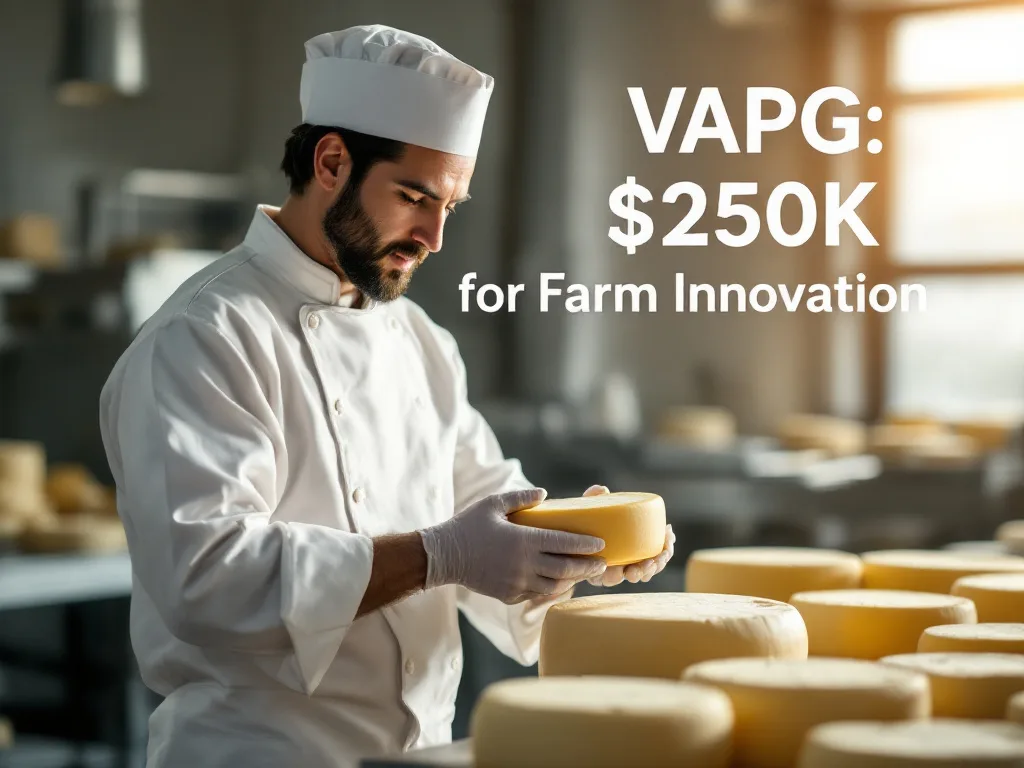
$250,000 Funding for Agricultural Value-Added Projects
Donor: United States Department of Agriculture (USDA) Rural Development
About: The Value Added Producer Grant program presents a transformative opportunity for agricultural producers to expand their market reach and boost profitability through value-added initiatives. With approximately $30 million in available funding for 2025, this program empowers farmers, ranchers, and producers to elevate their agricultural products beyond raw commodities.
Value-added projects under this grant encompass various innovative approaches. Whether you’re planning to transform fruits into premium jams, convert milk into artisanal cheese, or market your products under special certifications like organic or grass-fed, VAPG provides the financial backing to turn your vision into reality. The program particularly excels in supporting local food systems and producer-owned enterprises that contribute to rural economic development.
The grant offers two distinct funding tracks: Planning Grants and Working Capital Grants. Planning grants, capped at $75,000, support crucial preliminary activities such as feasibility studies and business plan development. Working Capital grants, offering up to $250,000, fund operational expenses related to processing, marketing, and inventory management of value-added products. This structured approach ensures support at every stage of your value-added journey.
Success stories from past recipients demonstrate VAPG’s transformative impact. From organic grain producers accessing regional markets to dairy farmers launching ice cream enterprises, the program has proven instrumental in helping agricultural businesses thrive. USDA research shows that VAPG-supported businesses have an 89% higher survival rate after two years compared to non-recipients.
Navigating the VAPG application process requires careful attention to detail and strategic planning. Grantaura’s expert team specializes in VAPG applications, offering comprehensive support services including eligibility assessment, business plan development, financial projections, and application submission. Our grant specialists can help you craft a compelling proposal that aligns with USDA priorities while maximizing your chances of success.
Focus: Value-added processing, Agricultural product enhancement, Local food systems, Farm-based renewable energy, Organic certification, Sustainable agriculture, Rural development, Producer-owned businesses, Market expansion, Food processing
Region: United States
Eligibility:
-Independent agricultural producers who own and produce more than 50% of raw commodities
-Agricultural producer groups
-Farmer or rancher cooperatives
-Majority-controlled producer-based business ventures
-Must have at least one year of sales history
-Must demonstrate matching fund capability
-Priority categories:
–Beginning farmers or ranchers
–Socially disadvantaged farmers or ranchers
–Veteran farmers or ranchers
–Small or medium-sized family farms
–Producer cooperatives
–Mid-tier value chain projects
Benefits:
-Planning Grants up to $75,000
-Working Capital Grants up to $250,000
-Project development support
-Market expansion opportunities
-Business growth assistance
-Increased revenue potential
-Enhanced product value
-Market competitiveness improvement
Deadline: Ongoing
Terms:
-Value-Added: Agricultural products that have increased in value due to processing, marketing, or physical segregation
-LAMP: Local Agriculture Market Program, the umbrella program that includes VAPG
-Working Capital: Funds used for operating expenses, processing costs, and marketing
-Planning Activities: Feasibility studies, business plans, and marketing plan development
-Mid-tier Value Chain: Local and regional supply networks linking producers with businesses and cooperatives
-SAM: System for Award Management, required for federal grant applications
-UEI: Unique Entity Identifier, necessary for grant application
-In-kind Contribution: Non-cash contributions such as labor or materials that count toward matching requirements