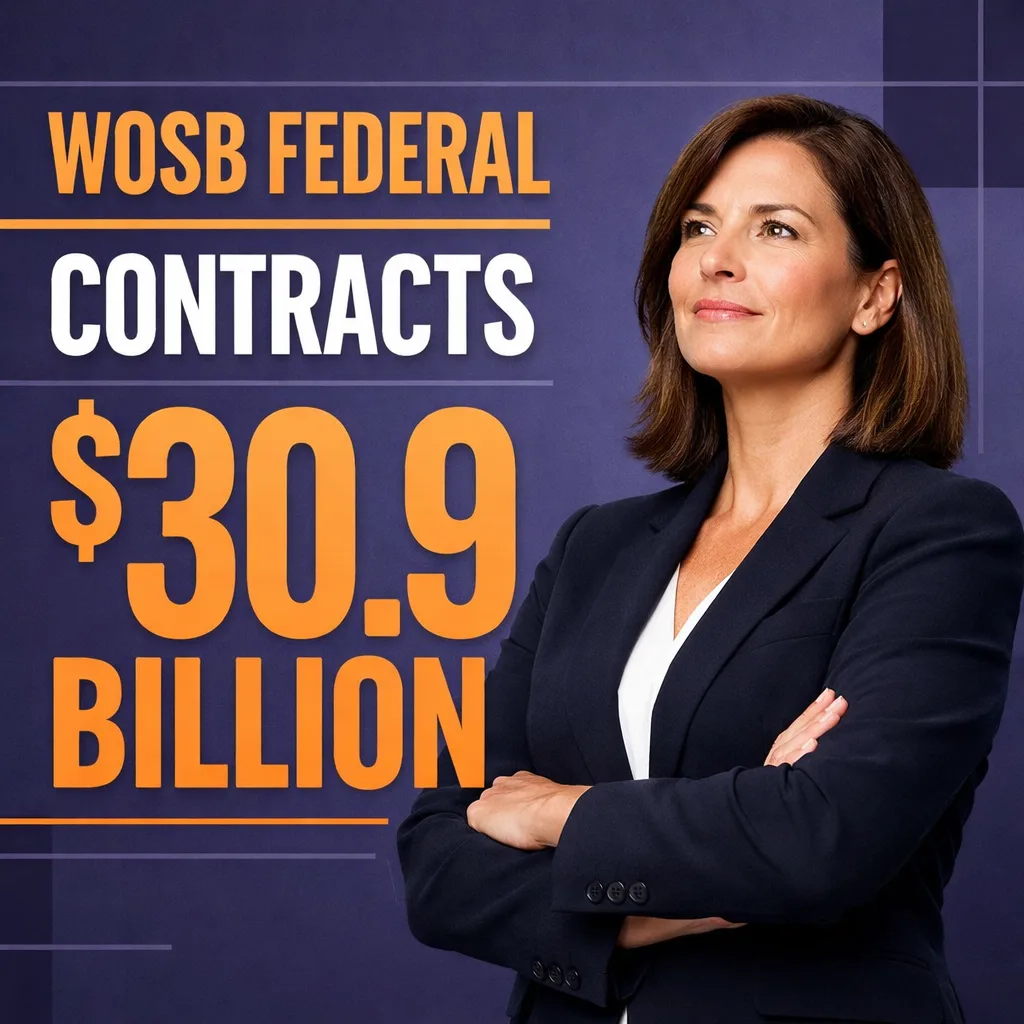
Let me tell you something straight. Banks turned down 79% of women-owned businesses seeking loans in 2022. Venture capital? Women founders captured less than 2% of VC funding that same year. But here's what most people miss while obsessing over Silicon Valley pitch decks and investor meetings - the federal government is legally required to steer 5% of all contracting dollars to women-owned small businesses. That target translated into $30.9 billion in actual contract awards during fiscal year 2023 alone.The catch? You can't just declare yourself a woman-owned business and start bidding. The WOSB Federal Contract Program operates on a certification system that verifies ownership, validates control, and matches your company to specific industry codes where data proves women face contracting barriers. Since the 2020 regulatory overhaul, every business must obtain formal certification through the SBA's MySBA Certifications portal or an approved third-party certifier before competing for set-aside opportunities.
What Makes This Different From Writing Your Company Name On A Napkin
Generic women-owned business designations don't unlock federal doors. The WOSB Federal Contract Program splits into two distinct tracks based on economic thresholds - standard WOSB certification and the more restrictive EDWOSB (Economically Disadvantaged Women-Owned Small Business) designation. Both open contract pathways that other businesses legally cannot access.
Standard WOSB certification requires majority women ownership (51% minimum), women in management control, and operation within designated underrepresented industries. EDWOSB adds financial thresholds that mirror the 8(a) Business Development program: personal net worth caps at $850,000 per owner, adjusted gross income averaged below $400,000 over three years, and total personal assets under $6.5 million. Retirement accounts don't count toward these limits.
Here's what actually happens. Contracting officers scan specific North American Industry Classification System (NAICS) codes when they need to award set-aside contracts. The SBA analyzes federal contracting data, identifies industries where women-owned businesses win contracts at disproportionately low rates, and designates those codes as program-eligible. Currently, 38 four-digit NAICS codes covering over 150 six-digit codes qualify for EDWOSB set-asides, while 45 four-digit codes spanning 200+ six-digit classifications allow standard WOSB set-asides.
Q: Can I use WOSB certification for private sector contracts?
A: No. Benefits apply exclusively to federal contracts.
Q: What if my primary industry isn't on the NAICS list?
A: You can still get certified and compete for unrestricted contracts, but won't access set-aside opportunities.
Q: Do I need separate 8(a) and WOSB certifications?
A: Yes, but 8(a) firms can use acceptance letters to streamline EDWOSB applications.
Q: How long does certification take?
A: SBA targets 90 days for complete applications.
Q: Can men own any percentage of my business?
A: Up to 49%, but women must hold ultimate management authority.
The set-aside mechanism works like this. When a contracting officer determines reasonable expectation exists that two or more certified WOSBs will submit competitive bids for a contract in an eligible industry, they can restrict competition exclusively to program participants. For contracts under sole-source thresholds where only one qualified WOSB can fulfill requirements at fair pricing, officers can award directly without competition. Manufacturing contracts allow sole-source awards up to $7 million. All other industries cap at $4.5 million.
The Certification Path That Actually Works
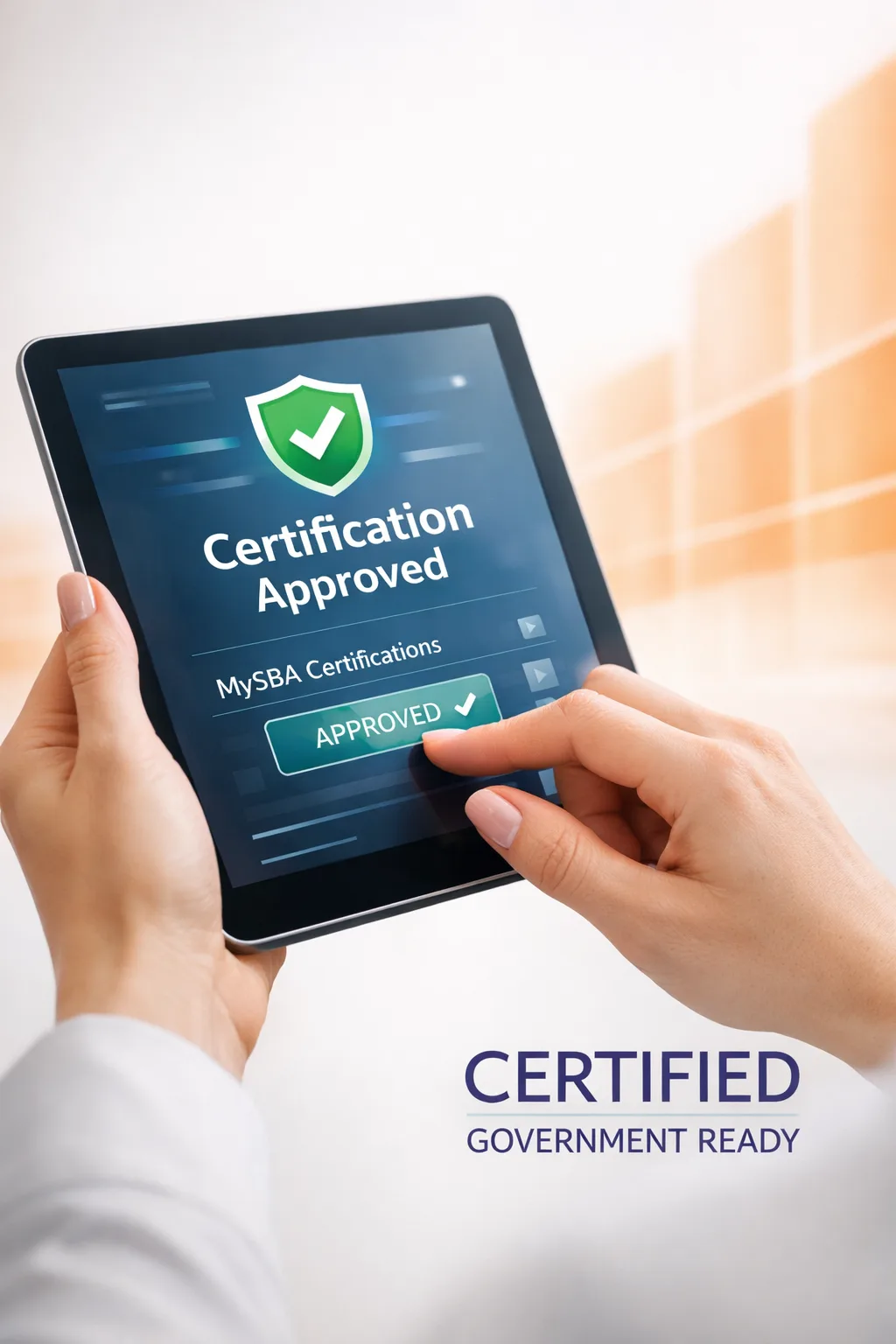
Every applicant starts at MySBA Certifications, the portal replacing the previous self-certification system that ended in October 2020. The platform walks businesses through eligibility screening, document submission, and application tracking. You'll need proof of citizenship for all women claiming the 51% ownership threshold - passports, birth certificates, or naturalization papers work. Operating agreements, corporate bylaws, or partnership documents must show women hold controlling equity stakes and voting rights.
Financial documentation varies by certification type. WOSB applicants submit business tax returns (typically three years), organizational documents, and evidence that women manage daily operations. EDWOSB candidates add personal financial statements for each woman owner, three years of personal tax returns, and detailed asset schedules. The SBA cross-references submitted information with independent research before rendering decisions.
Third-party certification remains an option through four SBA-approved organizations: El Paso Hispanic Chamber of Commerce, National Women Business Owners Corporation, U.S. Women's Chamber of Commerce, and Women's Business Enterprise National Council. These entities conduct their own verification processes following SBA standards. Once approved by a third-party certifier, you still upload proof of citizenship and certification documents to MySBA Certifications before bidding on federal set-asides.
The difference between self-declaring and formal certification shows up when contracting officers verify eligibility. Pre-2020, businesses could self-represent as WOSBs by uploading documents to a repository and hoping nobody challenged them. Now, your SAM.gov profile displays certification status pulled directly from MySBA Certifications. Officers check this status during source selection. No certification equals automatic disqualification from set-aside competitions.
Industries Where The Money Actually Flows
The SBA commissioned RAND Corporation studies analyzing five years of federal contracting data to determine where women-owned businesses face systematic disadvantages. Their methodology compares utilization rates (how often WOSBs win contracts) against availability rates (percentage of WOSBs registered in SAM.gov for that industry). When the disparity ratio drops below 0.5, that industry gets designated substantially underrepresented, triggering WOSB set-aside eligibility. Ratios between 0.5 and 0.8 mark underrepresentation, opening EDWOSB set-asides.
Computer systems design services, engineering services, construction industries, and administrative support sectors consistently show up on eligible lists. But specialized areas create opportunities most businesses overlook. Environmental remediation services, certain manufacturing subsectors, architectural services, and specific retail categories qualify based on recent analyses. The designated industries list updates every five years following new RAND studies, most recently expanding in 2022.
You can operate in any industry you want, but only contracts assigned eligible NAICS codes trigger set-aside opportunities. Smart businesses review the complete eligible industries list published in the Federal Register, cross-reference against their capabilities, and obtain multiple NAICS certifications when operations span several categories. Your primary NAICS code determines initial size standard eligibility. Secondary codes expand bidding opportunities without changing your small business status.
Real businesses doing real work. FCN Inc., Blue Tech Inc., and Sterling Computers ranked among top WOSB contract winners in fiscal 2023, focusing on computer services and IT contracting. Virginia, Maryland, California, Florida, and Texas lead in WOSB contract awards - these states combine high federal presence with robust women-owned business ecosystems.
Getting From Zero To Your First Set-Aside Win
Certification alone doesn't generate contract offers. Federal procurement operates on relationships, past performance, and strategic positioning. Your first move post-certification: register in the System for Award Management with your WOSB designation prominently featured. Update your profile to reflect every eligible NAICS code you can legitimately perform, not just your primary classification.
Build your capability statement - a one-page document showcasing core competencies, past performance, differentiators, certifications, and contact information. Federal buyers read hundreds of these. Yours needs to communicate value in 15 seconds or less. Lead with measurable outcomes from previous projects. Skip the mission statement fluff. Include your DUNS number (now Unique Entity Identifier), CAGE code, and WOSB certification status above the fold.
Track opportunities through SAM.gov's contract opportunities search. Filter by your NAICS codes and set-aside types (WOSB, EDWOSB). Small contracts below $10,000 get handled through micro-purchase procedures with simplified requirements. Anything above enters formal procurement requiring written proposals. Focus initially on contracts between $25,000 and $250,000 - large enough to matter, small enough that competition remains manageable.
Prime contracts represent the goal, but subcontracting provides faster entry. Large prime contractors face small business subcontracting requirements and actively seek qualified women-owned firms. Introduce yourself to primes winning contracts in your industry. Attend industry days, federal procurement conferences, and agency-specific matchmaking events. The SBA and APEX Accelerators (formerly Procurement Technical Assistance Centers) host regular networking connecting small businesses with contracting opportunities.
Past performance matters more than marketing materials. If you lack federal experience, pursue commercial contracts with similar scope and complexity. Many agencies accept commercial performance as relevant experience. When you do win that first federal contract, exceed expectations and document everything. Performance ratings in the Contractor Performance Assessment Reporting System (CPARS) directly impact future source selections. Exceptional ratings open doors. Marginal or negative ratings close them.
What Most Businesses Get Wrong About Maintaining Certification
Certification isn't permanent. Every three years, you undergo program examination - either by SBA or your third-party certifier. The examination reviews current eligibility across all program requirements. Ownership changed? Women stepping back from daily management? Business growing beyond size standards? Any of these triggers decertification.
Material changes demand immediate notification. Sold equity to investors? Hired a male CEO? Added non-qualifying partners? You must report these within 30 days. Failure to report means potential fraud allegations and contract termination. The examination process confirms information submitted in your most recent attestation (currently suspended but expected to resume) matches reality.
SAM.gov profile maintenance runs separately from certification maintenance. Update your SAM registration annually even if nothing changed. Expired registrations block you from receiving awards. Set calendar reminders 60 days before expiration. The update process takes 30 minutes if everything stays consistent, longer if you're adding NAICS codes or updating business structure.
Performance requirements on active contracts dictate continued eligibility. The Limitation on Subcontracting rules require that for services contracts, certified WOSBs/EDWOSBs perform at least 50% of the work with their own employees. General construction requires 15% self-performance. Special trade construction demands 25%. Violation means contract termination and potential program suspension.
Q: What happens if I grow beyond small business size standards during an active contract?
A: You remain eligible for that contract's duration but must recertify as small before exercising options or receiving new awards.
Q: Can I team with other businesses on set-aside contracts?
A: Yes, through joint ventures if the WOSB/EDWOSB partner meets size standards and manages the required percentage of work.
Q: What if a contracting officer questions my certification?
A: They can request verification from SBA. False certification carries criminal penalties.
Q: Do I need a SAM.gov registration before applying for certification?
A: Yes. Registration must be active to complete certification.
Q: Can I apply for both WOSB and EDWOSB certification simultaneously?
A: Yes. The same application addresses both, with additional financial documentation for EDWOSB.
Size protests and eligibility challenges happen. Competitors can file protests if they believe you don't meet program requirements. The SBA's Office of Hearings and Appeals reviews protests and renders binding decisions. Successful protests result in contract termination and potential debarment from future competitions. Keep thorough documentation proving eligibility from your certification date forward. This includes unchanged ownership agreements, women managers' employment records, and business tax returns showing size compliance.
The Bigger Picture Beyond Individual Contracts
Federal contracting represents one revenue stream, not your entire business model. Successful WOSB-certified firms balance federal work (30-40% of revenue typically) with commercial clients to avoid over-dependence on government cycles. Budget delays, continuing resolutions, and shifting agency priorities create payment uncertainty. Diversification protects cash flow.
Multiple certifications multiply opportunities. 8(a) Business Development program certification provides nine years of business development support and access to additional set-asides. HUBZone certification leverages underutilized business zone location advantages. Service-Disabled Veteran-Owned Small Business designation creates pathways for veteran women entrepreneurs. Each program maintains separate eligibility criteria but can stack for maximum competitive advantage.
The 5% federal goal creates sustained opportunity. Unlike temporary grant programs, the WOSB set-aside authority continues indefinitely under statutory mandate. While the government only hit the 5% target twice since 1994 (fiscal years 2015 and 2019), recent trends show growth. Fiscal 2023's $30.9 billion represents the highest dollar amount ever awarded to women-owned small businesses, even if percentage-wise the goal remains frustratingly close but unmet.
Understanding this landscape matters. The program isn't charity or a participation trophy. It's a mechanism designed to address documented procurement disparities by creating targeted competition among qualified businesses. Your job: get certified, build capability, deliver excellence, and capture contracts that grow your business sustainably.
Common Mistakes That Torpedo Applications
Incomplete documentation kills more applications than outright ineligibility. The MySBA Certifications checklist tells you exactly what SBA needs. Read it three times. Upload everything. Partial submissions get returned, restarting your 90-day clock.
Misunderstanding "control" sinks otherwise qualified businesses. Yes, your husband can own 49% and serve as CFO. No, he cannot be CEO making strategic decisions while you handle administrative tasks. The woman in the highest officer position must exercise ultimate authority over long-term direction and daily management. Org charts, employment agreements, and board minutes should demonstrate this clearly.
Revenue attribution errors create size standard problems. SBA counts affiliated business revenue when determining size. Your spouse's separate business? Potentially affiliated. Previous business you own 10% of? Potentially affiliated. Parent company relationships? Definitely affiliated. The affiliation rules (13 CFR 121.103) require careful review. Getting this wrong means denial.
NAICS code misclassification limits opportunities or triggers disqualification. Your primary NAICS determines which size standard applies. Choose based on highest revenue over the previous three years, not aspirational projects you hope to win. Intentional misclassification to qualify for a lower size standard constitutes fraud.
Ignoring the economically disadvantaged thresholds wastes time. If each woman owner's personal balance sheet exceeds EDWOSB limits, apply only for standard WOSB certification. Don't submit financial statements that automatically disqualify you from EDWOSB while leaving standard WOSB certification in limbo during appeal periods.
Strategic Moves After Certification
Capability statement distribution becomes your new marketing channel. Send to contracting officers at agencies matching your expertise. Track which offices award contracts in your NAICS codes using FPDS-NG (Federal Procurement Data System - Next Generation). Email statements quarterly with recent wins highlighted.
Teaming agreements establish subcontracting relationships before solicitations drop. Large primes need qualified small business partners. Reach out proactively offering specific capabilities they regularly subcontract. Joint ventures split work on larger contracts that exceed your individual capacity but fall within your combined capabilities.
Industry day attendance builds face recognition. When solicitations release, contracting officers remember businesses from recent industry days. Show up prepared with questions demonstrating you understand the requirement. Follow up afterward with relevant capability information.
APEX Accelerator counseling provides free expertise. These organizations exist specifically to help small businesses navigate federal procurement. They'll review your capability statement, critique proposals, identify opportunities, and explain procurement procedures. The service costs nothing. Use it.
Proposal development requires different skills than commercial sales. Federal proposals respond to specific evaluation criteria with tight page limits. Learn the format - executive summary, technical approach, management plan, past performance, price. Address every requirement explicitly. Generic marketing materials fail. Tailored responses win.
Honestly, pulling together a competitive federal proposal demands serious effort. If federal contracting represents a growth strategy worth pursuing, investing in expert assistance often pays for itself ten times over. That's precisely what we handle at Grantaura. Our team has guided businesses through 300+ successful applications, including federal contract proposals, grant submissions, and certification packages. We know what wins and what fails because we've seen both outcomes repeatedly. If you're serious about capturing your share of that $30.9 billion, expert guidance can make all the difference.
Check Your Eligibility
Before investing time in the full certification process, verify your business meets the fundamental requirements. This tool walks through the key eligibility factors in about two minutes.
More Federal Contracting Opportunities & Resources For Women-Owned Businesses
The WOSB Federal Contract Program connects to a broader ecosystem of federal contracting assistance and women entrepreneur support. These additional resources help qualified businesses maximize their federal market presence while building sustainable growth.
- 8(a) Business Development Program: Nine-year business development program offering set-aside contracts, mentorship, and training for economically disadvantaged firms (including EDWOSB-certified businesses). Combines well with WOSB certification for maximum set-aside access.
- Donor: U.S. Small Business Administration
- Focus: Business development, federal contracting, sole-source contracts, mentorship
- Deadline: Ongoing applications
- Federal Grants Category Archive: Complete collection of federal grant opportunities across agencies, including SBIR/STTR research grants, agency-specific programs, and federal funding initiatives that complement contracting revenue streams.
- Donor: Various federal agencies
- Focus: Research, innovation, community development, technology commercialization
- Deadline: Varies by program
- Fund Her Future Grant: $100,000 in combined grants plus year of business services from Block Advisors and Hello Alice for women-owned businesses demonstrating growth potential and community impact across industries.
- Donor: Block Advisors by H&R Block, Hello Alice
- Focus: Women entrepreneurs, business scaling, financial services, growth capital
- Deadline: Check program website
- CHASM Monthly Grant: $20,000 monthly grants for women-led startups without equity requirements, pitch decks, or complex applications - just straightforward funding for bold female founders ready to scale operations.
- Donor: CHASM, Daniella Pierson, Community Funders
- Focus: Women founders, startup growth, equity-free funding
- Deadline: Monthly application cycles
- Amber Grants by WomensNet: Monthly $10,000 grants plus $25,000 annual award honoring Amber Wigdahl's entrepreneurial dreams, supporting women entrepreneurs and female-led nonprofits across U.S. and Canada.
- Donor: WomensNet, Amber Grant Foundation
- Focus: Women empowerment, entrepreneurship, nonprofit leadership
- Deadline: Monthly rolling submissions
- California Business Grants & Programs: State-specific opportunities for California women entrepreneurs including technology innovation grants, creative industry support, and regional economic development initiatives.
- Donor: Various California state agencies and foundations
- Focus: Innovation, technology, creative industries, economic development
- Deadline: Varies by program
- Galaxy of Stars Grant: Free 30-second application for $2,500 grants targeting women and minority entrepreneurs nationwide, with weekly winner announcements and zero application fees or complex requirements.
- Donor: Galaxy of Stars, Hidden Star 501(c)(3)
- Focus: Women entrepreneurs, minority-owned businesses, microgrants
- Deadline: November 30, 2025
- Women Entrepreneur Grants Category: Comprehensive archive of grants exclusively for women-owned businesses, featuring corporate programs, foundation support, and specialized funding across industries and business stages.
- Donor: Multiple organizations
- Focus: Women business owners, gender equity, entrepreneurship
- Deadline: Varies by opportunity
- Sephora Beauty Grant: $100,000 unrestricted grant plus pro-bono consulting for underrepresented beauty brand founders (including women-owned businesses) demonstrating $100K+ revenue and community impact potential.
- Donor: Sephora, Fifteen Percent Pledge
- Focus: Beauty industry, CPG products, underrepresented founders, women-owned brands
- Deadline: October application window
- AAUW Career Development Grants: Up to $8,000 for women entering or advancing in high-growth STEM fields where gender gaps persist, funding certificates, credentials, and executive training leading to employment within 6-12 months.
- Donor: American Association of University Women
- Focus: STEM careers, women in technology, professional development
- Deadline: Three annual application periods
- United States Business Grants: National funding opportunities for American entrepreneurs spanning federal, state, and private foundation grants from $1,000 to $100,000+ across industries and business stages.
- Donor: Various national organizations
- Focus: Business development, innovation, economic growth
- Deadline: Varies by program
- Idea Cafe Small Business Grant: $1,000 funding for women entrepreneurs with streamlined application process requiring no business plan or application fee, supporting both existing businesses and new venture launches.
- Donor: Idea Cafe
- Focus: Women entrepreneurs, small business development, accessible funding
- Deadline: Rolling applications
- Breva Thrive Grant: Quarterly $5,000 grants for small businesses demonstrating measurable community impact in underrepresented neighborhoods, prioritizing established operations creating jobs and transforming communities.
- Donor: Breva, Cadence Financial Group
- Focus: Community impact, underserved communities, job creation, social entrepreneurship
- Deadline: Quarterly application cycles
- Start.Pivot.Grow. Micro Grant: Quarterly $2,500 non-dilutive funding for established small businesses (2+ years operation, $50K+ revenue) addressing capital gaps preventing growth and stability.
- Donor: Integrality, UPS Foundation, Dallas College Foundation, Wells Fargo
- Focus: Small business stability, operational expenses, growth capital
- Deadline: Quarterly rolling submissions
- Creative Business Boost Initiative: $5,000 grants plus 8-week virtual Boost Camp coaching for creative entrepreneurs operating 12+ months with products/services in marketplace, combining capital with specialized guidance.
- Donor: Hello Alice, Global Entrepreneurship Network, Etsy's Uplift Fund
- Focus: Creative economy, maker businesses, cultural entrepreneurship
- Deadline: Check current application period
- Nehemiah Davis Greatness Grant: Quarterly $2,500 funding plus 90 days mentorship specifically for first-time founders starting from scratch, emphasizing determination over polished presentations or revenue history.
- Donor: Nehemiah Davis
- Focus: First-time founders, early-stage startups, mentorship
- Deadline: Quarterly application cycles
- Business Grants Category Archive: Extensive database of business funding opportunities across industries, stages, and regions, providing women entrepreneurs multiple pathways to capital beyond federal contracting.
- Donor: Various organizations
- Focus: Business development, entrepreneurship, growth capital
- Deadline: Varies by opportunity
Beyond these specific opportunities, women-owned businesses can access free counseling through SBA's Women's Business Centers, SCORE mentorship, and local APEX Accelerators specializing in federal procurement assistance. The SBA's ChallengeHer initiative specifically educates women entrepreneurs on federal contracting pathways and program participation strategies.
Terms
Understanding the language of federal contracting and women-owned business certification helps navigate program requirements, communicate effectively with contracting officers, and avoid costly eligibility mistakes that delay certification or disqualify bids.
- WOSB (Women-Owned Small Business): Small business at least 51% owned and controlled by women who are U.S. citizens, operating in industries where women-owned businesses are substantially underrepresented in federal procurement based on statistical disparity analysis conducted by RAND Corporation studies.
- EDWOSB (Economically Disadvantaged Women-Owned Small Business): Subset of WOSB meeting additional financial thresholds - each woman owner's personal net worth under $850,000, adjusted gross income averaged below $400,000 over three years, and total personal assets under $6.5 million, excluding funds in official retirement accounts.
- Set-Aside Contract: Federal procurement restricted exclusively to businesses certified under specific socioeconomic programs, where contracting officers limit competition to program participants after determining reasonable expectation that two or more qualified firms will submit competitive proposals at fair market pricing.
- Sole-Source Contract: Direct contract award to single qualified business without competitive bidding process, permitted under WOSB program when only one certified firm can perform requirements at reasonable price, capped at $7 million (manufacturing) or $4.5 million (other industries).
- NAICS Code (North American Industry Classification System): Six-digit numerical code identifying specific industries and business activities, used throughout federal procurement to classify contracts, determine applicable size standards, and identify eligible set-aside programs - your primary NAICS determines which size standard applies to your business.
- Size Standard: Maximum employee count or annual revenue threshold defining small business status for specific industry, varying from $1 million to $41.5 million in receipts or 100 to 1,500 employees depending on NAICS code - businesses exceeding applicable size standard lose small business eligibility regardless of certification status.
- MySBA Certifications: Official online platform replacing previous self-certification system where businesses apply for WOSB/EDWOSB certification, upload required documentation, track application status, and manage recertification - required for all firms seeking WOSB set-aside contract eligibility after October 2020 regulation changes.
- SAM.gov (System for Award Management): Mandatory federal database registration required before receiving government contracts, containing business profile information, certifications, points of contact, and banking details - must be renewed annually and updated whenever material business information changes.
- UEI (Unique Entity Identifier): Twelve-character alphanumeric code assigned through SAM.gov registration replacing previous DUNS number system, serving as primary identifier for business transactions with federal government - required before MySBA Certifications application submission.
- Underrepresented Industry: NAICS code where RAND statistical analysis shows women-owned businesses have disparity ratio between 0.5 and 0.8, meaning WOSBs win federal contracts at 50-80% the rate their SAM.gov registration numbers would predict - triggers EDWOSB set-aside eligibility for those codes.
- Substantially Underrepresented Industry: NAICS code with disparity ratio below 0.5, indicating women-owned businesses win federal contracts at less than half the expected rate based on their availability - opens eligibility for standard WOSB set-asides in addition to EDWOSB competitions.
- Third-Party Certifier (TPC): SBA-approved organization authorized to conduct independent WOSB/EDWOSB certification following federal standards - currently includes El Paso Hispanic Chamber of Commerce, National Women Business Owners Corporation, U.S. Women's Chamber of Commerce, and Women's Business Enterprise National Council (WBENC).
- Unconditional Ownership: Equity stake held without restrictions on transfer, voting rights, or control that could limit owner's authority - women claiming 51% threshold must hold unconditional ownership, meaning no agreements granting others veto power over strategic decisions or forced buy-sell provisions favoring non-qualifying individuals.
- Day-to-Day Management: Operational control over routine business activities including hiring decisions, vendor selection, project assignments, and resource allocation - women managers must demonstrate authority over daily operations, not merely administrative or support functions subordinate to male decision-makers.
- Long-Term Decision Making: Strategic authority over business direction including capital expenditures, major contracts, business expansion, and fundamental policy choices - women in highest officer positions must exercise final authority on strategic matters, documented through board minutes, operating agreements, and organizational structure.
- Program Examination: Three-year recertification review conducted by SBA or third-party certifier verifying continued program eligibility across ownership, control, size, and NAICS code requirements - businesses must pass examination to maintain certification status beyond initial three-year period.
- Material Change: Significant alteration to business structure, ownership, management, or circumstances affecting program eligibility - includes equity transfers, management changes, size standard exceedance, or status changes requiring 30-day notification to SBA to maintain certification validity.
- Limitation on Subcontracting: Federal regulation requiring prime contractors perform minimum percentage of work with their own employees - certified WOSBs/EDWOSBs must self-perform at least 50% on services contracts, 15% on general construction, and 25% on special trade construction to comply with set-aside terms.
- FPDS-NG (Federal Procurement Data System - Next Generation): Comprehensive database tracking all federal contract actions, searchable by agency, NAICS code, contractor, location, and set-aside type - invaluable research tool for identifying which agencies award contracts in your industry and analyzing competitive landscape.
- CPARS (Contractor Performance Assessment Reporting System): Government system recording contractor performance ratings on federal contracts, accessible to contracting officers during source selection - ratings directly impact future contract awards, making consistent exceptional performance critical to sustained success.
- Size Protest: Formal challenge filed by competitor or contracting officer questioning whether contract awardee meets applicable small business size standard - protests undergo SBA Area Office review, and successful protests result in contract termination and possible program suspension.
- Eligibility Protest: Challenge questioning whether contractor meets WOSB/EDWOSB program requirements beyond size standard, including ownership structure, control relationships, or economic disadvantage thresholds - protests proceed through SBA's Office of Hearings and Appeals with binding determinations.
- 8(a) Business Development Program: Nine-year SBA certification providing business development support, training, and set-aside contract access to socially and economically disadvantaged small businesses - EDWOSB-certified firms often qualify for 8(a) and can hold both certifications simultaneously for maximum competitive advantage.
- Joint Venture: Partnership between two or more businesses formed specifically to pursue particular contract opportunity - WOSB/EDWOSB firms can joint venture with other businesses provided the certified partner manages required work percentage and joint venture agreement meets SBA regulatory requirements.
- Teaming Agreement: Arrangement where prime contractor and subcontractors outline relationship and work division before solicitation release - establishes partnerships enabling certified WOSBs to either pursue prime contracts with subcontracting support or position themselves as subcontractors to larger primes.
Author
I launched Grantaura because I kept watching women entrepreneurs slam into the same wall - incredible vision, solid business fundamentals, and absolutely no clue how to navigate the federal contracting bureaucracy that holds billions in opportunities. The women-owned business certification process isn't intuitive. The NAICS code system makes no sense until someone explains which codes actually unlock doors. Most women waste months figuring out what I could've shown them in one focused conversation.
I'm Imran Ahmad, founder of Grantaura and an entrepreneur who's spent years connecting businesses to the funding they need. Since 2021, I've worked with over 300 clients securing everything from federal set-asides to foundation grants, maintaining a 4.9 rating because I focus on what actually works instead of what sounds impressive. My background spans communication, digital strategy, and practical business development - which means I translate complex procurement regulations into actionable steps that get businesses certified, competitive, and winning contracts.
Federal contracting rewards businesses that understand the system. WOSB certification opens doors, but only if you combine certification with strategic positioning, competitive proposals, and relationships with the right contracting officers. That's precisely the guidance I provide through Grantaura's consultation services - practical, experienced advice that shortens your learning curve and accelerates your first contract win.
About Imran · Book a Free Consultation