ArtPrize Pitch Night Grant 2026: Guaranteed Venue + $10,000
ArtPrize Pitch Night awards $10,000 and a guaranteed venue to regional artists in Detroit and Oklahoma for the 2026 event.
Key Takeaways
Venue guarantee removes hardest barrier
$10,000 award per winning artist
Detroit cycle targets designers specifically
Oklahoma cycle open to all artists
Grant Overview
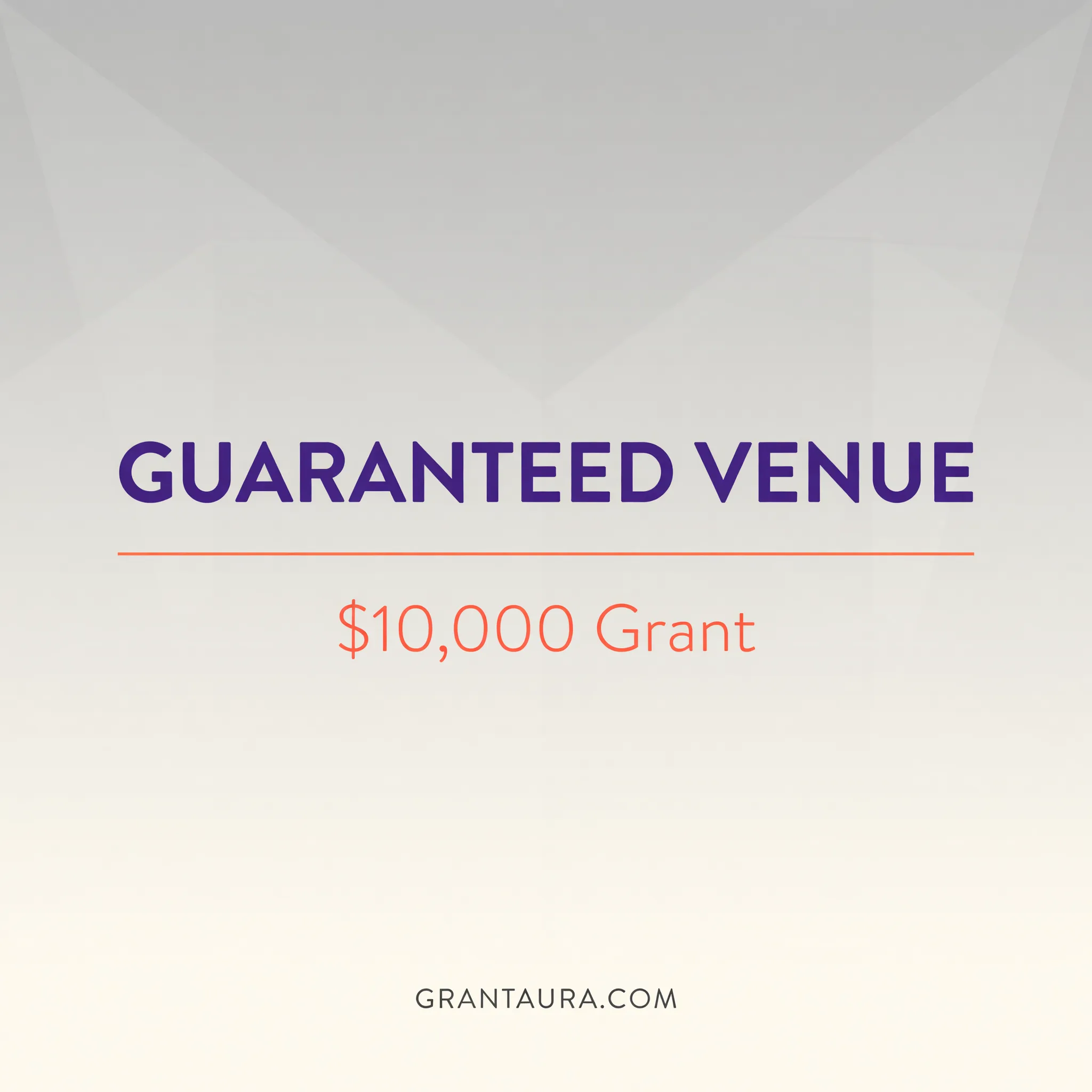
ArtPrize Pitch Night doesn't just fund your project—it guarantees you a high-visibility venue in Grand Rapids, which is normally the hardest part of participating in ArtPrize. The ArtPrize Pitch Night grant awards $10,000 to one artist per city, along with complimentary registration and hands-on venue support for the 2026 event.
But the real value isn't the money. It's the fast track into ArtPrize without the usual scramble to find a willing space. This year, artists in Detroit and Oklahoma can compete in city-specific cycles, each with its own deadline, focus, and live pitch event.
ArtPrize Pitch Night

- Grant Award
- $10,000
- Application Deadline
- Detroit March 5 2026 | Oklahoma March 30 2026
- Eligible Region
- Detroit MI, Oklahoma, Grand Rapids MI
- 18 years or older
- Must meet city-specific residency
- Detroit: Michigan resident (Wayne County preferred)
- Proposals must be design-driven
- Oklahoma: Oklahoma resident
- Open to all artist types
- Must be available for live pitch event in person
- Must be available to exhibit at ArtPrize 2026 in Grand Rapids
- $10000
- Guaranteed high-visibility venue in Grand Rapids
- Complimentary ArtPrize registration
- Hands-on venue support and coordination
ArtPrize Pitch Night Grant: Detroit vs Oklahoma
Pitch Night isn't one national competition. It's a series of city-specific cycles, each run with a local partner. For 2026, two cities are confirmed so far—Detroit and Oklahoma—with different focus areas, deadlines, and eligibility rules. Understanding which cycle fits your work is the first real decision.
Detroit Pitch Night is run in partnership with Design Core Detroit and targets designers. If your work is spatial, functional, or user-focused—think installations, environments, or objects that solve a problem or create an experience—this cycle is your lane. Wayne County residents get preference, but any Michigan designer 18+ can apply.
Oklahoma Pitch Night is broader. Run with Firehouse Art Center and Oklahoma Contemporary, it's open to artists of all disciplines living in Oklahoma. Painting, sculpture, new media, installation—all are eligible as long as the project is original and ambitious enough for a public audience.
Both cycles share the same core structure: five finalists are selected to pitch live, one winner receives $10,000 and the venue guarantee, and all winners must be available to exhibit at ArtPrize 2026 in Grand Rapids from September 17 through October 3.
Check Your Eligibility for the ArtPrize Pitch Night Grant
Before you invest time in a proposal, confirm you meet the core requirements. The eligibility checker below helps you quickly assess whether your residency, age, and availability align with what ArtPrize and its partners require. It takes less than a minute and gives you a clear answer.
If you're eligible, the next step isn't to rush to the donor's application form. It's to make sure your project concept is competitive. Submit an assessment through Grantaura and our experts will review your proposal narrative, budget, and supporting materials before you commit to the live pitch process. We catch issues that disqualify strong applicants—unclear feasibility, vague budgets, or misaligned project scope—so you show up prepared.
If you're not eligible based on location, don't stop here. Use Grantaura's matched grants tool to find similar artist funding opportunities in your region or discipline. If you're unsure—maybe your residency is borderline or your project type doesn't clearly fit—book a free consultation. We'll review your situation and tell you honestly whether Pitch Night is worth pursuing or whether another grant is a better use of your time.
What It Takes to Win the ArtPrize Pitch Night Grant
The application is short. The real filter is the live pitch. Five finalists per city get five minutes each to present their concept to a panel of local jurors. One wins. Understanding what jurors actually select—not just what the guidelines say—matters more than anything else.
Historical winners are almost exclusively installation-based or large-scale interactive works. Small 2D projects rarely win Pitch Night. If your work is wall-bound or modest in scale, think hard about how to pitch it as ambitious for its type.
Looking at past winners from 2015 through 2025, a pattern emerges. The Poetry Fox performed live poetry. Gennaro Garcia built a massive installation about extinction. Wall of 5,000 Mirrors created an immersive environment. These projects share three traits: they're visually striking, they're conceptually clear, and they're feasible within a $10,000 budget and a 17-day exhibition window.
Jurors evaluate three things, even if they don't spell this out:
- Concept clarity — Can you explain your idea in one sentence? If your pitch needs a paragraph, jurors will drift.
- Feasibility — Does your budget and timeline make sense? Proposals that overreach or under-budget raise red flags.
- Ambition — Is this project worth a venue at ArtPrize? Small, safe projects rarely make the cut.
The pitch format favors artists who can perform their idea, not just describe it. Visual impact matters. So does narrative confidence. If you freeze or ramble, you lose. If you show up with unclear visuals or no sense of budget, you lose. The application gets you into the room. The pitch wins the grant.
Q: Do I need a fully designed project to apply?
A: No. The initial application asks for a proposal—concept, budget, timeline, and visuals—but you don't need final designs. However, if selected as a finalist, you'll need a tight 5-minute pitch with clear visuals. Grantaura's experts can review your proposal narrative and visuals before you submit, ensuring your concept lands the way you intend.
Q: What if my project is more conceptual than visual?
A: Pitch Night has selected conceptually driven work, but it still needs visual or experiential impact. Think about how your concept will manifest in a physical space. If your project is text-based, performative, or process-oriented, emphasize the experience for ArtPrize visitors, not just the idea.
The Real Cost of Winning: Logistics and Budget
The $10,000 grant is real money. But it is not pure profit. Smart applicants budget for the expenses that eat into that award before they ever see a dime. Shipping is your biggest variable cost. ArtPrize does not receive or store artwork. You coordinate directly with the venue. A large sculpture shipped from Oklahoma to Michigan can cost $2,000 to $5,000 depending on size and fragility.
Insurance is not required but you would be reckless to skip it. Most venues can add a rider to their existing policy for a reasonable fee. Travel and lodging for the installation period and the event itself comes out of your grant. Grand Rapids hotels fill up fast during ArtPrize. The grant is paid as a lump sum after you win the Pitch Night event. That means you are fronting shipping and travel costs before the money arrives. Cash flow planning matters.
Create a detailed budget spreadsheet before you apply showing exactly how the $10,000 will be allocated including a 15% contingency for unexpected costs.
If the logistics complexity feels overwhelming, that is normal. Our experts help you build a realistic budget and identify hidden costs specific to your artwork type and shipping distance.
How to Apply for the ArtPrize Pitch Night Grant
The application process has two stages. First, you submit a proposal online. If selected, you pitch live. Here's what each stage involves.
Stage 1: Online Proposal
You submit via a Fillout form linked from the ArtPrize or partner page. The form asks for:
- Contact information (name, email, phone, country)
- A proposal file upload (PDF or document with your concept, budget, timeline, and visuals)
- City-specific eligibility confirmation (residency, discipline)
The proposal is your entry ticket. It needs to be strong enough to make the top five, but the real test comes later. Don't over-polish at the expense of clarity. A clear, feasible concept with modest visuals beats an ambitious mess.
Q: How detailed should my budget be?
A: Detailed enough to show you understand costs. $10,000 disappears quickly with materials, transport, lodging, and installation. A budget with vague line items like "materials $5,000" signals inexperience. Break it down: materials, fabrication, shipping, lodging, permits, contingency. Grantaura's experts can review your budget for realism and alignment with what Pitch Night jurors expect.
Stage 2: Live Pitch Event
If you're selected as a finalist, you'll pitch in person—March 26 in Detroit, April 23 in Oklahoma City. You get five minutes. Jurors ask questions. The audience watches. One winner is announced that night.
Preparation is everything. Rehearse your pitch until it's natural. Prepare visuals that explain your concept without your voiceover. Anticipate juror questions about budget, feasibility, and logistics. If your pitch relies on technology, have a backup plan.
Q: Can I use slides or video in my pitch?
A: Details vary by cycle, but most Pitch Nights allow visual support. Check the official information document for your city. Regardless of format, focus on clarity—five minutes is shorter than you think.
Timeline and Logistics for ArtPrize Pitch Night
Winning the grant is only the beginning. You then have to execute your project at ArtPrize 2026 in Grand Rapids. Here's what the full timeline looks like.
Budgeting for logistics is critical. The $10,000 grant covers your project costs, but you'll also need time. Installation typically happens in the days before September 17. De-installation happens after October 3. If you're traveling from Michigan or Oklahoma, factor in lodging, meals, and transport for you and any assistants.
Q: Does ArtPrize provide lodging or travel support?
A: The grant does not explicitly cover travel or lodging. Your budget should include these costs. ArtPrize may offer recommendations or resources, but winners are responsible for their own logistics. Planning this in advance—especially lodging in Grand Rapids during the event—prevents last-minute stress.
How This ArtPrize Artist Grant Fits the Ecosystem
Pitch Night isn't the only funding path into ArtPrize. Understanding how it compares to other grants helps you decide where to focus your energy.
Pitch Night is unique because it solves the venue problem. For most artists, securing a venue is the hardest part of ArtPrize. Pitch Night winners skip that step entirely. They also gain visibility from the pitch event itself, which can lead to future opportunities regardless of the outcome.
Strategically, winning Pitch Night positions you for larger ArtPrize prizes. The $100,000 grand prizes—public vote and juried—are awarded during the event. Having a guaranteed venue and funded project gives you a platform to compete for those awards. It's not just a grant. It's an entry point into the wider ArtPrize ecosystem.
Key Terms for the ArtPrize Pitch Night Grant
- Venue Guarantee: The commitment from ArtPrize to provide an exhibition space for Pitch Night winners. This removes the usual burden of finding and negotiating with a venue independently. The venue is assigned by ArtPrize in consultation with the winner.
- Live Pitch Format: A five-minute in-person presentation before a panel of jurors. Finalists present their project concept, budget, and visuals. The pitch is competitive and public, with one winner selected per city.
- Design-Driven Proposal (Detroit): Projects that prioritize spatial, functional, or user-focused design. This includes installations, environments, objects, or experiences that solve a problem or create interaction. Purely aesthetic or decorative work may not fit.
- Installation Art: Large-scale or site-specific artworks designed for a particular space. Most Pitch Night winners fall into this category because installations create visual impact and justify a dedicated venue.
- ArtPrize Registration: The official process of signing up as an artist or venue for the ArtPrize event. Pitch Night winners receive complimentary registration, which normally costs around $65 for individual artists.
- Community Partner: Local organizations that co-host Pitch Night events in each city. For 2026, partners include Design Core Detroit, Firehouse Art Center, and Oklahoma Contemporary Arts Center.
- Juried Selection: Evaluation by a panel of experts rather than public vote. Pitch Night winners are chosen by local art professionals who assess concept, feasibility, and ambition.
- Project Budget: A detailed breakdown of how the $10,000 grant will be spent. Should include materials, fabrication, transport, lodging, permits, and contingency. Jurors use this to assess feasibility.
- Finalist: One of five artists or designers selected from the applicant pool to pitch live. Being a finalist is an achievement, but only the winner receives funding and the venue guarantee.
- High-Visibility Venue: An exhibition space in a prominent location during ArtPrize. ArtPrize assigns venues based on project needs and available spaces. Past winners have exhibited in major downtown venues with high foot traffic.
- Residency Requirement: The rule that applicants must live in the state or region specified for each cycle. Detroit requires Michigan residency with Wayne County preference. Oklahoma requires Oklahoma residency. Proof may be requested.
- Complimentary Registration: Free entry into ArtPrize as an artist. Normally a paid step, this is included in the Pitch Night prize package.
- Pitch Night Series: The broader program of city-based pitch competitions run by ArtPrize. Each year features different cities. The series has run since 2013 and expanded over time.
- Ambitious Project: Work that demonstrates scale, risk, or vision beyond typical artist output. Pitch Night prioritizes projects that make full use of the venue and funding opportunity.
- Feasibility Assessment: Jurors' evaluation of whether the project can realistically be completed within budget and timeline. Overly complex or underfunded proposals raise feasibility concerns.
- ArtPrize Event Dates: The annual 17-day exhibition in Grand Rapids, Michigan. For 2026, dates are September 17 through October 3. Winners must be available to install and exhibit during this period.
- Public Art: Artworks created for public spaces and audiences. Pitch Night projects often qualify as public art due to their scale and venue context.
- Supporting Materials: Visuals, diagrams, or references included in the proposal to illustrate the project concept. Strong visuals help jurors understand the work quickly.
- Local Jurors: Art professionals from the host city or region who evaluate the live pitches. Juror backgrounds vary but typically include curators, artists, designers, and arts administrators.
- Grand Rapids: The city in Michigan where ArtPrize takes place. All Pitch Night winners must exhibit their work here during the event dates.
Explore More Artist Grant Opportunities
If Pitch Night isn't the right fit—or if you want to line up multiple options—Grantaura's related grants tool surfaces similar opportunities based on your discipline, location, and project type. You'll find artist grants, residency funding, and project support from other donors, all in one place. The goal is to give you choices, not just a single listing.
Expert Support for Your ArtPrize Pitch Night Application
Reading the guidelines is easy. Getting selected isn't. Most applicants who fail don't misunderstand the rules—they misjudge their own proposal. They submit concepts that are unclear, budgets that don't add up, or pitches that fall flat in front of jurors. Grantaura's experts work with you on the parts that actually determine the outcome: your narrative, your budget, your visuals, and your pitch structure.
Here's what we do that a listing cannot:
- Review your proposal narrative before you submit. We catch vague language, unclear concepts, and missing context that jurors will notice.
- Optimize your budget against what Pitch Night jurors typically expect. We flag line items that signal inexperience or risk.
- Assess your pitch structure for clarity and impact. We help you rehearse the five-minute format and anticipate juror questions.
- Identify missing documents or materials that could disqualify an otherwise strong application.
- Manage your submission timeline so you're not rushing the night before the deadline.
This isn't about reading the guidelines back to you. It's about making sure your application survives the competition. Pitch Night is public and competitive. A single unclear sentence or unrealistic budget line can cost you the opportunity. We catch those before they happen.
About the Author
Imran is the founder of Grantaura and has spent years helping artists, nonprofits, and small businesses navigate funding opportunities. He focuses on practical, honest guidance—what actually works, not what sounds good in a brochure. If you're unsure whether Pitch Night is right for your work, or if you want expert eyes on your proposal, he's the person to talk to.
About Imran · Book a Free Consultation
Grant Application Assessment
Share key details so our team can review fit and guide your next funding move.
- Human Review
- Secure Checkout
- Professional Guidance
How to apply for this grant
We are your trusted grant application partners. You can navigate the entire grant application process with our expert guidance through this simple 5-step process.
Step 1: Application Form
Fill out the "Apply for this grant" form with your information and grant requirements.
Step 2: Eligibility Assessment
Our grant experts will assess your eligibility and notify you via email.
Step 3: Expert Consultation
A dedicated grant expert will be assigned to discuss next steps for your application.
Step 4: Application Submission
Our expert will help you complete and submit your application with all required materials.
Step 5: Final Decision
The grant committee will make their decision and notify successful applicants.