Grant Overview
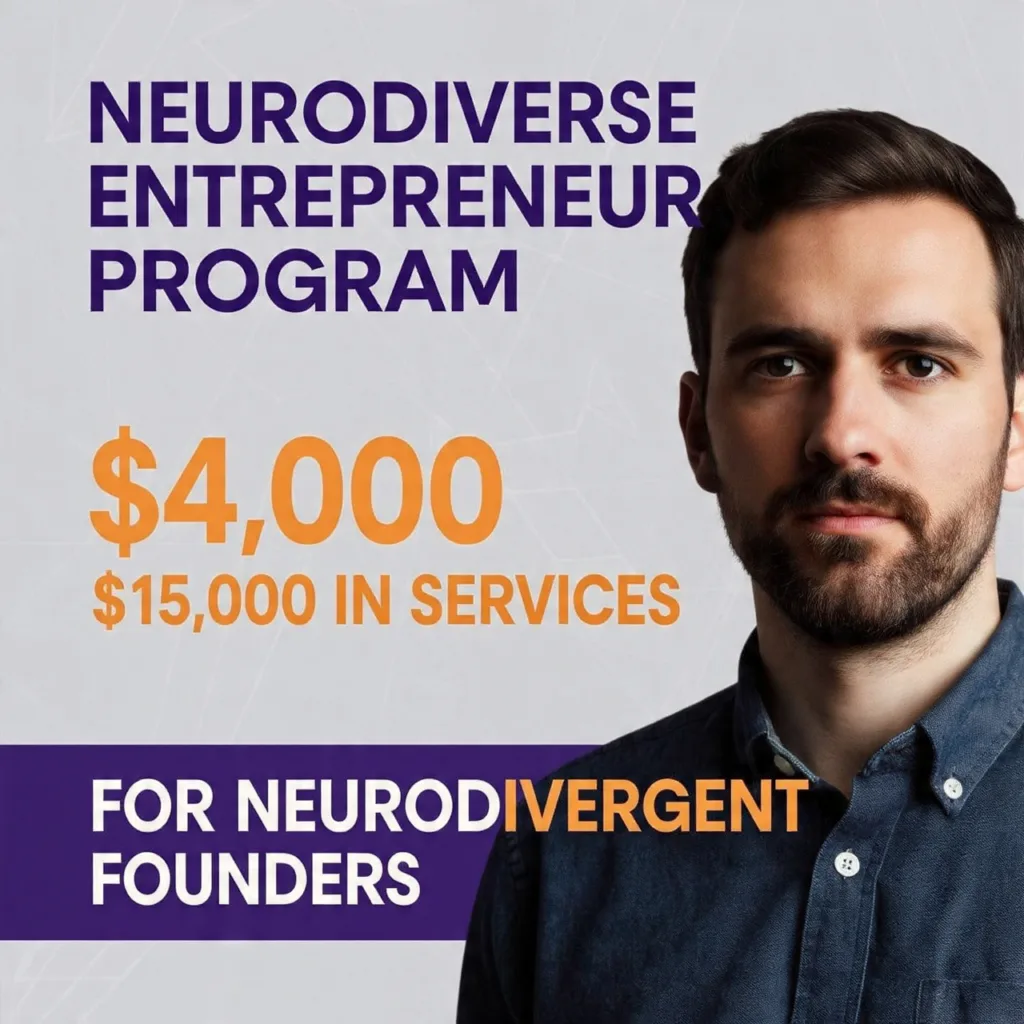
For startup and small-business founders with a neurodiverse C‑suite, this program delivers a $4,000 microgrant, a 10-week accelerator, and year-long growth support that actually moves the needle.
If you’re an entrepreneur whose brain works differently – autism, ADHD, dyslexia, or other cognitive differences – and you’ve got a business idea burning inside you, Innovation DuPage just wrote your name on nineteen thousand dollars. The Neurodiverse Entrepreneur Program (NDEP) celebrates and invests in the success of startups and small companies that have neurodiverse leaders in their C-Suite, with the goal to increase business leadership opportunities for people with developmental and/or cognitive differences such as autism, dyslexia, learning disabilities, ADD/ADHD and other related diagnoses. This isn’t charity. It’s recognition that the same brain wiring that made school tough might just make you the next breakthrough founder.
Title: Neurodiverse Entrepreneur Program (NDEP)
Donor: Innovation DuPage, Autism Angels Group, Organization for Autism Research, Autism Community Ventures
Focus: neurodiversity, autism entrepreneurship, ADHD business leadership, dyslexic founders, cognitive differences, startup acceleration, inclusive innovation, neurodiverse C-suite
Region: DuPage County, Illinois, United States
Eligibility:
– Neurodiverse leader in C-Suite position (CEO, COO, CIO, CFO, Director, founder, co-founder)
– Developmental or cognitive differences (autism, dyslexia, learning disabilities, ADD/ADHD, related diagnoses)
– New or existing Innovation DuPage member companies
— Priority for companies in greater DuPage County
– Any industry sector
– Startup or small business structure
Benefits:
– Financial Award: $4,000 microgrant from Autism Angels Group
– Mentorship: Access to Transition2Success Project’s T2S-Neurodiverse Entrepreneur Support Model ($5,000 value)
– Networking: Innovation DuPage Scale Membership ($2,700 value)
– Business Acceleration: Participation in Owner to CEO 10-week Business Accelerator Program ($7,500 value)
– Total Package Value: Over $19,000
Deadline: April 15, 2026
Neurodiverse Entrepreneur Program applicants receive a $4,000 microgrant, Innovation DuPage Scale membership, the Owner to CEO 10-week accelerator, and the T2S-Neurodiverse Entrepreneur Support Model, with applications open now and due April 15, 2026 for founders who lead or co-lead at the C‑suite level. Explore more startup-ready funds
The Power of Different Thinking
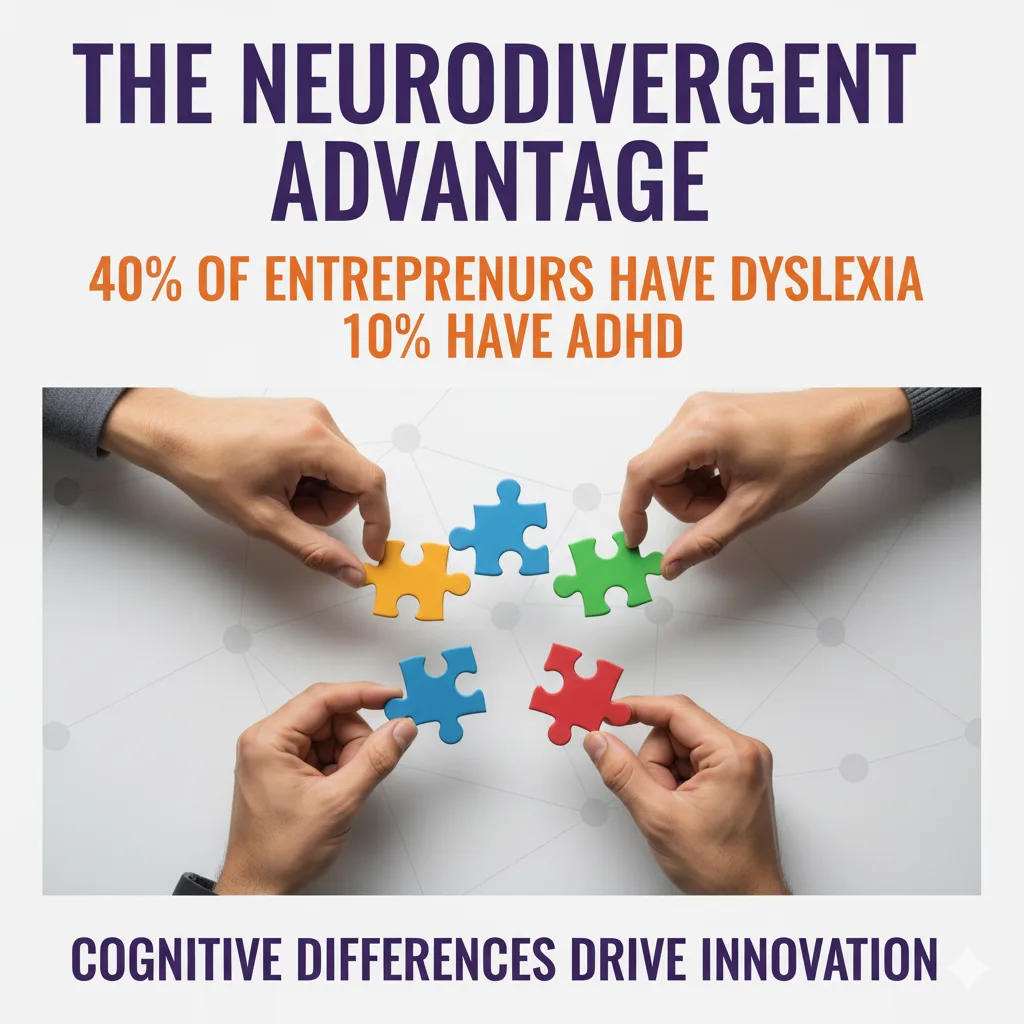
Here’s what nobody tells you about neurodiversity in business. If you reduced the global population of adults to just 100 people, 10 would have dyslexia and 4 would have ADHD. If you did the same to the population of entrepreneurs, 40 would have dyslexia and 10 would have ADHD, according to recent studies. Famous entrepreneurs with ADHD include Virgin Group founder Richard Branson, JetBlue founder David Neeleman, Ikea founder Ingvar Kamprad, Huffington Post founder Ariana Huffington, Charles Schwab and Tim Ferriss. The numbers don’t lie – something about how neurodiverse brains process information creates entrepreneurs.
Iconic founders like Richard Branson(Virgin Airlines), Charles Schwab (Charles Schwab Corporation) and Ingvar Kamprad (IKEA) credit their success to their neurodiversity. But these success stories mask a harder truth. For every Richard Branson, thousands of neurodiverse entrepreneurs struggle to access the same networks, funding, and support systems that neurotypical founders take for granted.
Innovation DuPage recognized this gap. Located in downtown Glen Ellyn, they built something different. Not another incubator that expects you to conform to neurotypical business practices. Companies with neurodiverse leaders serve as role models for future entrepreneurs while illustrating that neurodiversity can be a strength and an asset for other firms. We firmly believe that brain differences drive innovation and company success, and we want to encourage inclusive leadership teams across all business sectors.
What Makes This Funding Different
Most accelerators want polished pitch decks, smooth networking skills, flawless presentations. Things that might be torture if you’re autistic, have ADHD, or process information differently. The Neurodiverse Entrepreneur Program flips the script.
Nick L., founder of Wove and a program participant, puts it plainly: “As an autistic adult facing challenges in corporate and academic settings, entrepreneurism is vital for my self-sustainability. The capital and mentorship provided by the Neurodiverse Entrepreneur Program was critical to getting my startup off the ground. My company has become profitable just after a year.”
Q: Can I apply if I’m still developing my business idea?
A: Yes, both new and existing companies qualify.
Q: Does my whole team need to be neurodiverse?
A: No, just one C-Suite member.
Q: What industries qualify?
A: All sectors welcome.
The program doesn’t just hand you money and disappear. In addition to a $4,000 microgrant, selected companies will receive one year of Innovation DuPage Scale membership, as well as access to ID partner organizations, experts, and mentors. Autism Angels Group (a nonprofit under fiscal sponsorship of the Organization for Autism Research) brings together capital and talent to aggressively drive economic opportunities and technology-driven solutions that create a positive social impact for the autism community.
The Hidden Value: Innovation DuPage’s Scale Membership
That $2,700 membership value is conservative. Scale members get:
– Free access to $250,000+ in software discounts (AWS credits, Microsoft for Startups, HubSpot, etc.)
– Unlimited coworking space in downtown Glen Ellyn
– Monthly mentor meetings with successful entrepreneurs
– Invitation to partner events with investors and corporate buyers
– Legal and accounting office hours
For neurodivergent founders who struggle with sensory overwhelm at home or need a consistent workspace, the physical space alone is gold. The software discounts could save you $4,000 in the first month if you need enterprise tools.
The accelerator program, Owner to CEO, runs ten weeks. Past participants report revenue increases of 30-200% within six months. It’s not theoretical. You work on your actual business model, pricing, customer acquisition, and operational efficiency. NDEP participants get the same curriculum as general cohorts, but with neurodiversity-informed adjustments.
Understanding the Neurodiverse Advantage in Business
Let’s talk about why neurodiversity and entrepreneurship work so well together. It’s not inspiration porn or feel-good messaging. It’s neuroscience meeting market dynamics.
ADHD traits such as hyperactivity, divergent thinking, flexibility of thought, passion orientation and perceptual curiosity mean adults with ADHD can make excellent entrepreneurs if they can learn to focus on the right things and overcome their tendency toward distraction and procrastination. ADHD is also associated with risk-taking behaviour, high energy and the ability to multitask and switch between tasks quickly, which can be beneficial for managing multiple projects and responsibilities in a high pressure environment.
Dyslexic entrepreneurs often excel at pattern recognition that others miss. Neurodivergent people often process all the inputs before arriving at a conclusion. While both cognitive styles have their merits, bottoms-up thinking may help open up new possibilities because you focus on the details first and work your way up. A 2019 article titled ADHD-Related Neurodiversity and the Entrepreneurial Mindset found that entrepreneurs with ADHD may have better pattern recognition and visual scanning.
Autistic founders bring hyperfocus to complex problems. They spot inefficiencies in systems that neurotypical people accept as “just how things work.” They build solutions with the precision of someone who genuinely cannot tolerate bad design.
Breaking Down Traditional Barriers
Traditional employment wasn’t built for neurodiverse minds. Open offices destroy concentration for people with sensory processing differences. Meetings without clear agendas torture ADHD brains. Corporate social expectations exhaust autistic employees before they even start their actual work.
To say that all neurodistinct people would make great entrepreneurs or that a neurotypical person can’t possess the same skills that make for a successful business owner, would, of course, be wrong. But the point is, we all have unique strengths and weaknesses that we must contend with every day, and in order for any of us to succeed, we need an environment where our strengths are valued and utilized. For many neurodistinct people, their own business can be the answer. The simple ability to choose when, where, and how they work can make a huge difference in breaking down the barriers that had previously held them back.
Entrepreneurship offers something revolutionary: control. Control over your environment, your schedule, your communication style. No more masking in meetings. No more burning out from sensory overload. Just you, your strengths, and the space to build something meaningful.
Who Should Apply Right Now?
– Founders who are autistic, ADHD, dyslexic, or have other cognitive differences and hold C‑suite responsibility.
– Teams with neurodiverse cofounders who are ready to pilot process improvements, customer validation, or revenue experiments in the next 60‑90 days.
– Companies near the greater Chicago area, especially DuPage County, looking for a regional base and a serious peer cohort.
Proof Points Selection Panels Like To See?
– Clear C‑suite accountability and time commitment
– A specific use for the $4,000 that accelerates revenue or reduces risk
– A short funnel map that shows how you’ll turn the accelerator into pipeline growth
– Evidence of inclusive hiring or vendor practices, even if early-stage
Get quick feedback on your proof points
Past Winners and Their Trajectories
Looking at previous recipients reveals what success looks like in this program.
Nick L., who founded Wove, described himself as “an autistic adult facing challenges in corporate and academic settings.” For him, entrepreneurship wasn’t just an option. It was vital for self-sustainability. The capital and mentorship from the Neurodiverse Entrepreneur Program proved critical to getting his startup off the ground. Within a year, his company became profitable.
DaniMation Entertainment, led by Dani Bowman, focuses on providing animation programs for transitioning youth on the autism spectrum. Their mission revolves around educating, elevating, and empowering neurodivergent youth to turn their passion for animation into viable careers. They’re not just building a business; they’re creating pathways for others in their community.
Neurodivergent Galaxy, founded by Elizabeth Carey in Downers Grove, empowers individuals with disabilities and co-occurring mental health or substance use challenges through accessible peer support groups, personalized coaching, and self-advocacy education.
ProMedix Inc., led by CEO Scott Filer and co-founders from Oregon Health & Sciences University Medical Center, developed PeriFRL, a noninvasive blood flow monitor for rapid sepsis detection in ICUs and emergency rooms.
These aren’t lifestyle businesses or side hustles. They’re companies solving real problems with real customers, founded by people whose neurodivergent perspectives revealed opportunities others missed.
The Owner to CEO Transformation
Here’s where the program gets serious about impact. The 10-week Business Accelerator Program isn’t your standard Silicon Valley boot camp.
Access to Transition2Success Project’s T2S-Neurodiverse Entrepreneur Support Model™ ($5,000 value) provides structured support specifically designed for how neurodiverse minds process business challenges. Instead of forcing square pegs into round holes, they’ve rebuilt the holes.
Think frameworks that work with ADHD’s need for novelty. Visual planning tools for dyslexic thinkers. Clear, explicit communication structures that work for autistic processors. Real accommodations, not just lip service.
Key Accelerator Components
The program tackles the fundamentals without assuming neurotypical learning styles:
– Financial planning adapted for different processing styles
– Marketing strategies that play to neurodiverse strengths
– Operational systems that reduce executive function load
– Leadership development that celebrates different communication styles
Q: Do I need an existing business plan?
A: No formal requirements stated.
Q: Is this only for tech startups?
A: Any industry qualifies – retail, services, creative, manufacturing.
Autism Angels Group Partnership
Innovation DuPage is partnering with Autism Angels Group (AAG), the Organization for Autism Research and the Autism Community Ventures to embrace the power of neurodiversity! These partners bring to the table crucial funding for the Neurodiverse Entrepreneurship Program microgrants, as well as mentoring opportunities for participating companies.
The partnership matters because it brings together organizations that genuinely understand neurodiversity, not just accommodate it. They’ve seen what happens when you give neurodiverse founders real support instead of expecting them to adapt to neurotypical systems.
FAQs – Neurodiverse Entrepreneur Program
Q: Is this only for Illinois companies?
A: No. It’s open to member companies “across the region,” with priority to those formed in or planning operations in greater DuPage County. See Chicago growth options
Q: Do I need a formal diagnosis to apply?
A: The program centers neurodiverse leadership at the C‑suite. If you identify as neurodivergent and lead the company, apply. Related self-employment support for vets
Q: Required documents?
A: Business plan if early-stage.
Q: Mentorship details?
A: From autism experts and business pros.
Q: Ongoing after program?
A: Scale membership extends networks.
Q: What specific neurodivergent conditions qualify for this program?
A: The program accepts entrepreneurs with autism, ADHD, dyslexia, learning disabilities, ADD/ADHD, and other related cognitive or developmental differences. You need a professional diagnosis or self-identification with a documented condition.
Q: Do I need to be a DuPage County resident to apply?
A: While the program gives priority to companies planning operations in greater DuPage County, you don’t need to be a current resident. Priority means these applications receive stronger consideration during selection.
Q: Can early-stage companies apply, or do I need an established business?
A: Both startup companies and established small businesses can apply. The program welcomes new Innovation DuPage members and current members, with various stages of business development represented in successful cohorts.
Q: What happens if I don’t have a neurodivergent co-founder but want to hire neurodivergent employees?
A: The program specifically requires neurodiverse leadership in C-Suite positions. If you don’t currently have neurodivergent leaders but are interested in learning about workplace neuroinclusion, contact Program Manager Charlotte Chandok at idchandokc@innovationdupage.org.
Q: How is the $4,000 microgrant different from other funding components?
A: The $4,000 microgrant from Autism Angels Group represents direct financial support. Other components ($5,000 T2S model, $2,700 membership, $7,500 accelerator) are services and access, not cash funding.
Q: Can I apply if I’m a sole founder without co-founders?
A: Yes, individual founders can apply. You just need to demonstrate that you, as the founder, are neurodivergent and hold a C-Suite leadership position (such as CEO).
Q: What industries does the program serve?
A: The program accepts applications from companies across all industries. The key requirement is having neurodivergent leadership, not a specific business sector.
Q: How competitive is the selection process?
A: While specific acceptance rates aren’t published, the program receives significant interest and prioritizes applications demonstrating genuine neurodiversity commitment and strong business potential.
Q: Do I need to be Innovation DuPage member before applying?
A: No, the program accepts both new and current Innovation DuPage member companies. Non-members can apply and become members as part of program participation.
Q: Can international companies apply?
A: The program appears focused on U.S.-based companies, particularly those with Illinois connections. International applications should contact Innovation DuPage directly to confirm eligibility.
Q: What support is available after receiving the grant?
A: Recipients receive ongoing mentorship, business accelerator participation, peer networking, and continued access to partner resources throughout the program year.
Q: How does the T2S-Neurodiverse Entrepreneur Support Model work?
A: This model provides specialized business development support designed specifically for neurodivergent entrepreneurs, offering strategic guidance that addresses their unique strengths and challenges.
Q: Cost to apply?
A: Free.
Q: What if my company is pre‑revenue?
A: Still eligible. Focus your plan on near-term customer validation and early monetization. Micro-funding to pair with NDEP
Q: Can non-founder executives apply?
A: Yes, if you sit in the C‑suite with decision-making authority and meet membership requirements. State-level support in Illinois
Q: What is the time commitment?
A: Plan for the 10‑week Owner to CEO accelerator sessions plus mentor meetings. Improve your space in parallel
Timeline & Key Dates
– Application Deadline: April 15, 2026
– Program Start Date: June 1, 2025
– Program End Date: April 15, 2026
– Duration: Full year of support and membership
Who Actually Gets Selected?
The Neurodiverse Entrepreneurship Program is open to both new and current Innovation DuPage member companies from across the region. Priority will be given to companies formed, those or planning to establish operations within greater DuPage County.
Reading between the lines? They want founders who’ll stick around and build in the community. This isn’t about taking the money and running to Silicon Valley. It’s about creating a sustainable ecosystem where neurodiverse entrepreneurs thrive locally.
Past participants span every industry imaginable. Tech founders building assistive technology. Food entrepreneurs creating sensory-friendly dining experiences. Service providers who understand what neurodiverse clients actually need because they live it themselves.
The Application Reality
Let’s address what you’re really wondering. The application form asks about your neurodiversity and business philosophy. How these shape your organization. Why you want to participate.
They’re not looking for sob stories. They want to understand how your cognitive differences inform your business vision. How does ADHD help you spot market opportunities others miss? How does autism help you build better systems? How does dyslexia make you a better visual communicator?
Q: Will I need to disclose my specific diagnosis?
A: General cognitive differences qualify – autism, ADHD, dyslexia, learning disabilities.
Q: Can co-founders both be neurodiverse?
A: Absolutely, strengthens the application.
Support Beyond the Money
Money solves immediate problems. But sustainable growth requires more. The Innovation DuPage Scale Membership connects you to resources most neurodiverse entrepreneurs never access.
Mentors who understand why you might prefer email to phone calls. Networking events that don’t require three hours of small talk. Workspace options that actually consider sensory needs.
The program creates what Companies with neurodiverse leaders serve as role models for future entrepreneurs really means – visible proof that different brains build successful businesses.
Building Your Neurodiverse Business Case
Your application needs to communicate value, not just need. What problem does your neurodiversity help you solve better than neurotypical competitors?
Mann views being autistic and an entrepreneur as complementary because of his ability to pay close attention to the details and execute plans or ideas. Another common strength of neurodivergent people is innovation. “There’s a lot of us who think outside the box,” says Mann.
Frame your cognitive differences as competitive advantages:
– ADHD’s rapid task-switching for managing multiple projects
– Autism’s pattern recognition for spotting market inefficiencies
– Dyslexia’s visual thinking for innovative product design
– Learning differences that forced creative problem-solving skills
How the Transition2Success Model Works
The T2S-Neurodiverse Entrepreneur Support Model™ represents years of development and testing. This proprietary framework addresses specific challenges neurodivergent individuals face during major life transitions, particularly the chaotic phase of launching or scaling a business.
The model provides customizable supports tailored to individual needs rather than one-size-fits-all guidance. Some entrepreneurs need help with time management and executive function. Others struggle with networking and relationship-building. Still others face challenges with sensory overwhelm in typical business environments.
T2S meets people where they are and builds scaffolding around their specific challenges while amplifying their specific strengths.
Think of it as adaptive technology for business development. Just as screen readers make computers accessible to blind users without requiring them to develop sight, T2S makes entrepreneurship accessible to neurodivergent founders without requiring them to become neurotypical.
Financial Sustainability Planning
Four thousand dollars won’t build an empire. But combined with the training, mentorship, and network access? That’s runway for transformation.
Smart participants use the microgrant strategically:
– Technology that reduces cognitive load
– Systems that automate executive function challenges
– Marketing that plays to neurodiverse communication strengths
– Operational improvements that create sustainable growth
The real value comes from the ecosystem. Other programs might offer more money. But few understand how to support neurodiverse founders at this level.
Maximizing Program Benefits
Winners who extract maximum value do three things:
First, they engage fully with the Transition2Success Support Model. This isn’t optional enrichment – it’s core programming designed specifically for neurodiverse business challenges.
Second, they leverage the Innovation DuPage network aggressively. Every connection could unlock opportunities that neurotypical networks might gatekeep.
Third, they document everything. Your journey from idea to profitable business becomes the roadmap for the next generation of neurodiverse entrepreneurs.
Common Application Mistakes to Avoid
Neurodiverse entrepreneurs often undersell themselves. Don’t hide your differences – highlight them. The selection committee wants founders who embrace neurodiversity as strength, not overcome it as weakness.
Avoid generic business language. The term neurodiversity encompasses the idea that neurological differences, such as those seen in people with autism, ADHD, or dyslexia, for example, reflect normal variations in brain development. Your application should reflect how you actually think and communicate, not how you think business applications “should” sound.
Skip the inspiration narrative. This isn’t about overcoming disability. It’s about leveraging cognitive differences for business innovation.
Q: Should I mention struggles with traditional employment?
A: Focus on entrepreneurial vision, not employment challenges.
Q: How technical should my business description be?
A: Clear and specific beats vague and aspirational.
Post-Program Success Strategies
The program ends. Your business journey doesn’t. Successfully funded entrepreneurs build on the momentum:
Create systems while you have support. Use the accelerator period to build sustainable operations that work with your brain, not against it. Document what works. Future you will thank present you.
Network strategically within the neurodiverse business community. Other funding opportunities exist, but relationships matter more than applications.
Share your story strategically. Not every neurodiverse entrepreneur wants to be a poster child. But visible success stories change perceptions and open doors for others.
Scaling With Neurodiversity
Growth brings new challenges for neurodiverse founders. Hiring neurotypical employees who respect different leadership styles. Building company culture that celebrates cognitive diversity. Maintaining your strengths while delegating your challenges.
The Innovation DuPage network becomes invaluable here. Other neurodiverse founders who’ve navigated these waters share practical strategies, not theoretical frameworks.
Some founders build entirely neurodiverse teams. Others create hybrid structures that leverage both neurotypical and neurodiverse strengths. There’s no single model – just what works for your specific business and brain.
The Bigger Picture for Neurodiverse Entrepreneurship
As this research has shown, and from my own experience, entrepreneurship is one of the routes to my community’s economic survival. The workplace will not change overnight to start accommodating neurodiverse people, and I believe the entrepreneurship community is the space where we can see the fastest progress towards inclusivity for neurodivergent founders.
This program represents something bigger than individual grants. It’s institutional recognition that the future of innovation requires different kinds of minds.
Every successful neurodiverse entrepreneur makes it easier for the next one. Every profitable neurodiverse-led business challenges assumptions about disability and capability. Every Innovation DuPage success story rewrites the narrative about who can be an entrepreneur.
Q: Can international neurodiverse entrepreneurs apply?
A: Program focuses on U.S.-based businesses.
Q: Are there other neurodiverse entrepreneur programs?
A: Growing number nationally, but few offer this comprehensive support.
Making Your Application Stand Out
Selection committees see hundreds of applications. Yours needs to communicate three things clearly:
How your neurodiversity shapes your business vision. Not generically – specifically. If you have ADHD, explain how hyperfocus drives product development. If you’re autistic, show how pattern recognition identified your market opportunity. If you’re dyslexic, demonstrate how visual thinking influences your business model.
Why Innovation DuPage specifically? Geographic proximity matters, but so does cultural fit. Show you understand their ecosystem approach. Demonstrate commitment to the DuPage County business community.
Your growth trajectory with and without support. Paint two futures – one with the program’s resources, one without. Make the difference tangible. Numbers help, but narrative matters more.
The Google Form application asks 23 questions. Some are straightforward. Others require real thought. They want to know your philosophy on neurodiversity, not just your revenue numbers. This matters.
Question one: “Please share your company’s philosophies and experience regarding neurodiversity and how these have shaped your organization?” They’re testing whether you see neurodiversity as a PR move or a core value. Get specific. Did your autistic co-founder’s pattern recognition skills help you spot a market gap? Did your ADHD leadership’s hyperfocus during product development accelerate your launch timeline? Say that. Don’t just say “we value inclusion.”
Question two: “Why are you interested in participating in the Neurodiverse Entrepreneur Program?” Generic answers about needing money won’t cut it. What specifically about NDEP’s partner network aligns with your business? Are you building assistive tech and need Autism Angels Group’s community feedback? Are you creating educational tools and want to hire neurodivergent talent? Connect the dots.
They ask about your neurodiverse team member’s role. This isn’t for tokenism. They want to know this person has real decision-making power. If your autistic CTO owns 40% equity and controls product development, say so. If your dyslexic CEO struggled with traditional employment before launching your marketing agency, tell that story.
Disability-owned business grants sometimes focus only on the owner’s diagnosis. NDEP cares about the business potential. The revenue questions, employee count, and two-year growth plans show they want scalable ventures, not hobby projects. Pre-revenue companies can apply but need to demonstrate serious market research. Send that pitch deck, those letters of intent, that IP documentation.
At Grantaura, we help neurodiverse entrepreneurs articulate their unique value proposition. Our grant writing team understands how to translate neurodiverse strengths into compelling business cases. Sometimes you need someone who speaks both languages – neurodiversity and traditional business – to bridge that communication gap.
Quick entity map
Who funds what?
– Autism Angels Group – $4,000 microgrant
– Transition2Success Project – T2S support model access
– Innovation DuPage – Scale membership + Owner to CEO seat
Who is eligible?
– Startups or small firms with neurodiverse C‑suite leaders
– Member or soon-to-be member of Innovation DuPage, with DuPage County priority
See another inclusion-focused program
Grantaura’s Take: Is This Worth Your Time?
Look. I’ve reviewed hundreds of grants. Most are bureaucratic time-sucks. NDEP is different. The application is a Google Form, not a 50-page federal nightmare. The money is unrestricted. The services are actually valuable. And the community gets it.
But here’s the thing. Writing authentic answers about neurodiversity and business strategy is hard. You can’t fake it. You need to articulate how your neurological differences drive innovation. That’s not something you whip up in an hour.
If you’re serious about this, treat the application like a business plan exercise. It forces you to clarify your value proposition, your growth strategy, and your impact goals. That’s useful even if you don’t get funded.
Imran Ahmad here. Since 2021, I’ve helped over 300 entrepreneurs secure funding with a 4.9 rating. I’ve seen neurodivergent founders get overlooked by traditional funders because they don’t pitch like Shark Tank contestants. NDEP is built for how you actually think and work.
If you want a second pair of eyes on your application before you hit submit, that’s what we do at Grantaura. We’ll review your answers, strengthen your value proposition, and make sure your neurodiversity story lands with the selection committee. No fake promises. Just real feedback from someone who’s read more grants than most people have had hot dinners.
Book a free consultation to talk through your NDEP application strategy. Or just apply. But if you’re investing ten hours in the application, investing one more hour to get it right isn’t a bad bet.
Check Your Eligibility
Ready to see if the Neurodiverse Entrepreneur Program fits your business? Our quick assessment tool walks you through the key criteria and helps identify any gaps before you invest time in the full application.
How To Ace The Application
– Lead with the business problem and the 90‑day plan, then show how the $4,000 de‑risks it.
– Map your executive bandwidth. Note sensory or focus constraints and the adaptations your team uses. It shows you can ship in the real world.
– Commit to one measurable pipeline milestone during the accelerator window. Keep it simple: demos booked, qualified calls, or paid pilots.
Pair with a small, fast microgrant
Insider Tip
If you are pre‑revenue, present a lean, testable sales motion. One page is enough: target segment, problem statement, offer, channel, and one step that moves a stranger to a paid pilot. Then attach a crisp ask for mentor intros through ID’s network. Another ongoing option for small tests
Grantaura Can Help…
Honestly, building a clean, neurodiversity-aware growth plan while running the company is a lot. If you want a second set of expert eyes, that’s what we do at Grantaura. A focused review or a done-with-you application can change the outcome. Just something to consider. CLICK HERE to get the GRANT PROPOSAL WRITING help.
50+ Alternative Grants for Neurodiverse Entrepreneurs
- Capital and Catalyst Grant: $40,000 for Women-Owned Food & Beverage Businesses: A $40,000 non‑dilutive grant with mentorship for established women founders in CPG. Best for businesses with traction and clear growth levers.
– Donor: Enthuse Foundation, Spearhead Global
– Focus: women founders, CPG, growth capital
– Deadline: Closed July 28, 2025
- Sky’s the Limit: $2,500 Grants for Underrepresented Entrepreneurs: Targets diverse founders like those with cognitive differences, providing cash plus mentorship to scale ideas into viable businesses.
– Donor: Sky’s the Limit
– Focus: Underrepresented groups, startup support
– Deadline: Monthly
- Her Agenda Breakthrough: $5K Grants Empowering Women Entrepreneurs: Supports female-led ventures, including neurodiverse ones, with funding to overcome barriers and foster innovation.
– Donor: Her Agenda
– Focus: Women in business, leadership development
– Deadline: Ongoing
- CitizensNYC Neighborhood Business Grant: Microgrants up to $5,000 for NYC small businesses improving community impact, ideal for storefront pilots and neighborhood visibility.
– Donor: CitizensNYC
– Focus: small business, community projects
– Deadline: Closed July 25, 2025
- NSF Future Manufacturing Research Grant: Up to $3M for deep-tech manufacturing research with strong industry relevance. For research-active teams and spinouts.
– Donor: National Science Foundation
– Focus: cyber, eco, biomanufacturing research
– Deadline: Closed June 18, 2025
- L’Oréal Fund for Women: €5,000‑€300,000 for nonprofits serving vulnerable women and girls, including workforce readiness efforts.
– Donor: L’Oréal Fund for Women
– Focus: women’s resilience, anti‑violence, workforce
– Deadline: Closed April 30, 2025
- Creative Sector Flex Fund (PA): $5,000 for small arts nonprofits with flexible use, a fit for inclusive creative ventures.
– Donor: Pennsylvania Council on the Arts
– Focus: arts organizations, flexible spending
– Deadline: October 31, 2025
- Athene Black & Brown Business Summit Pitch: Cash prizes and exposure for minority-owned startups with a strong pitch story.
– Donor: West Des Moines Chamber of Commerce
– Focus: BIPOC founders, pitch competition
– Deadline: Closed May 23, 2025
- Gainbridge Assists Powered by Parity: National grants supporting girls and women in sports and education, with strong brand partners.
– Donor: Gainbridge, Parity, Women’s Sports Foundation
– Focus: sports access, education, equity
– Deadline: July 11, 2025
- TiE Women Program: Global mentoring and funding track for women entrepreneurs, chapter‑level to global finale.
– Donor: TiE Global
– Focus: women founders, mentorship, capital access
– Deadline: Varies by chapter
- Amber Grants by WomensNet: Monthly microgrants plus a $25,000 annual award for women-led businesses.
– Donor: WomensNet
– Focus: women entrepreneurs, microgrants
– Deadline: Ongoing
- She’s Connected by AT&T: $50,000 plus national exposure for one standout small business each cycle.
– Donor: AT&T Services, Inc.
– Focus: small business growth, media lift
– Deadline: Closed September 30, 2025
- Ford Foundation JustFilms: Doc funding for stories on inequality, a fit for founders running media ventures with social impact.
– Donor: Ford Foundation
– Focus: documentary, social justice
– Deadline: Closed April 10, 2025
- Nehemiah Davis Greatness Grant: $2,500 Quarterly Funding for First-Time Startup Founders: Philadelphia entrepreneur Nehemiah Davis built this quarterly grant for founders still in the “water-bottle phase” of their journey, those scribbling ideas on napkins and wondering how to turn passion into payroll. You get $2,500 cash, 90 days of direct mentorship from Nehemiah himself, and lifetime access to a founder community that actually shows up for each other. No perfect pitch deck required, just real hustle and genuine vision.
– Donor: Nehemiah Davis
– Focus: startup funding, early-stage entrepreneurs, first-time founders, business acceleration, underrepresented entrepreneurs
– Deadline: Quarterly rolling
- Emergent Ventures Grant: High-Impact Fellowship for Bold Innovators: Tyler Cowen’s program at George Mason University’s Mercatus Center funds moonshot ideas that could fundamentally change how the world works. They don’t care about your credentials, formal education, or polished business plan. What matters is whether your idea has genuine potential to scale and create meaningful change. EV has funded everyone from 13-year-old prodigies to seasoned entrepreneurs, with response times measured in days rather than months.
– Donor: Mercatus Center at George Mason University
– Focus: innovation, moonshot ideas, social impact, research, entrepreneurship, rapid deployment
– Deadline: Rolling
- Illinois Clean Energy Career Grants – Up to $750k: Large-scale funding for clean energy initiatives in Illinois schools, with disability-friendly hiring practices and neurodivergent talent recruitment focus.
– Donor: Illinois Department of Commerce
– Focus: Clean energy careers, educational development, disability inclusion
– Deadline: Annual with April 1 deadline
- Square Cornerstone Grant: $10K Business: $10,000 business grants for small businesses using Square, with disability-friendly application processes and dedicated support for entrepreneurs with disabilities.
– Donor: Square
– Focus: Small business technology, disability accommodation, business growth
– Deadline: Multiple rounds annually
- Secretsos™ Small Business Grants USA $2500 Funding: $2,500 grants specifically targeting entrepreneurs facing significant challenges, including those with disabilities and neurodivergent conditions.
– Donor: Secretsos Foundation
– Focus: Challenge-based funding, resilience building, inclusive support
– Deadline: Quarterly applications
- BizConnect Small Business Funding: $5K Grant + Mentorship: $5,000 monthly grant plus mentorship specifically designed for single mothers and entrepreneurs with disabilities, providing ongoing financial and strategic support.
– Donor: BizConnect Foundation
– Focus: Single parents, disability support, mentorship intensive
– Deadline: Monthly applications with ongoing review
- $100K Poker Power Grant Money For Small Business 2025: Large-scale funding opportunity for small business owners with innovative approaches, including those leveraging neurodivergent thinking patterns and disability experiences.
– Donor: International Foundation for Women
– Focus: Innovation funding, strategic thinking, scale-up support
– Deadline: Annual competition with quarterly eliminations
- QuickBooks $20k Small Businesss Hero Grant Program: $20,000 grants for small businesses making significant community impact, with special recognition for businesses led by or employing people with disabilities.
– Donor: Intuit QuickBooks
– Focus: Community impact, business heroism, disability inclusion
– Deadline: Annual program with multiple nomination cycles
- Apply for $25k Amazon Business Grant 2025 | US Small Biz: Up to $25,000 cash plus Amazon Business platform support for small businesses, with disability-friendly procurement processes and inclusive business practices.
– Donor: Amazon Business
– Focus: E-commerce scaling, platform integration, business technology
– Deadline: Multiple cycles throughout 2025
- Illinois OE3 Capital & Infrastructure Grant: $10,000‑$245,000 for SEDI‑owned small businesses statewide.
– Donor: Illinois DCEO
– Focus: infrastructure, equipment, property
– Deadline: Closed April 7, 2025
- Small Business Growth Initiative: Up to $30,000 with hands‑on support for Waukegan and North Chicago entrepreneurs.
– Donor: Lake County Community Foundation, A4CB
– Focus: business growth, professional development
– Deadline: Closed April 11, 2025
- Chicago SBIF: Reimbursement grants up to $250,000 for permanent improvements in eligible TIF districts.
– Donor: City of Chicago DPD
– Focus: capital improvements, property upgrades
– Deadline: Monthly windows, ongoing
- San Francisco Business Accessibility Grant: Up to $10,000 for ADA barrier removal, a smart complement to inclusive hiring goals.
– Donor: City and County of San Francisco OEWD
– Focus: accessibility, ADA compliance
– Deadline: Ongoing
- McKinsey Fast Grants: $10,000 Plus Expert Consulting for Chicago Entrepreneurs: Four promising Chicago entrepreneurs each receive $10,000 in grant funding paired with six months of dedicated mentorship from McKinsey’s industry experts. The program specifically targets underrepresented founders, including first-generation business owners and entrepreneurs from economically disadvantaged communities. Just east of DuPage County, this represents another avenue for local founders seeking both capital and world-class consulting expertise.
– Donor: McKinsey & Company, Allies for Community Business
– Focus: Chicago entrepreneurship, underrepresented founders, consulting support, business growth
– Deadline: Ongoing
- ZenBusiness Grant Program: Ongoing support and small grants for early-stage founders getting their legal and operational basics in place.
– Donor: ZenBusiness
– Focus: early-stage setup, business formation
– Deadline: Ongoing
- Idea Cafe Small Business Grant for Women Entrepreneurs: While not neurodiversity-specific, this $1,000 monthly grant welcomes women entrepreneurs including those with cognitive differences. The streamlined application process works well for neurodiverse founders who struggle with complex paperwork. No extensive documentation required.
– Donor: Idea Cafe
– Focus: Women entrepreneurs, small business
– Deadline: Monthly
- Prose AANHPI Entrepreneur Grant: AANHPI entrepreneurs with cognitive differences can access this $10,000 grant that values authentic storytelling over polished presentations. Perfect for neurodiverse founders who communicate differently but powerfully.
– Donor: Prose, Ellis Brooklyn
– Focus: AANHPI entrepreneurs, emerging brands
– Deadline: Varies
- AANHPI Entrepreneurs Grants Category: For Asian American and Pacific Islander business owners, including neurodivergent ones, seeking cultural-aligned funding.
– Donor: Various
– Focus: AANHPI business support
– Deadline: Varies for each grant in the AANHPI entrepreneurs category
- Modest Needs Self-Sufficiency Grants: Emergency Financial Relief for Working Americans: Sometimes entrepreneurs need personal financial stability before they can focus on business growth. Modest Needs provides critical financial support for working individuals caught between poverty and financial stability. If an unexpected expense threatens to derail your business launch or growth, this emergency assistance program helps working Americans avoid the downward spiral from temporary setback to devastating hardship.
– Donor: Modest Needs Foundation
– Focus: emergency assistance, financial stability, working poor, unexpected expenses
– Deadline: Ongoing
- Start.Pivot.Grow. Micro Grant: $2,500 for Established Small Businesses: Created by Goldman Sachs senior business advisor Cynthia Nevels, this quarterly grant provides $2,500 in non-dilutive funding for established small businesses facing capital gaps. If your neurodivergent-led business has been operating for a while but needs a boost to overcome specific financial hurdles, this program offers accessible funding without equity sacrifice.
– Donor: Integrality, UPS Foundation, Dallas College Foundation, Wells Fargo
– Focus: small business growth, non-dilutive funding, established businesses, financial barriers
– Deadline: Quarterly
- Big Idea Grant for Women Entrepreneurs: Monthly $1,000 Funding: YippityDoo awards one woman aged 18 or over $1,000 monthly to invest in her business or idea, plus year-long access to a wealth mindset coaching group. While smaller than NDEP, the monthly cycle means more opportunities to win. Neurodivergent women entrepreneurs can apply repeatedly, and 80% of past recipients report significant business growth within the first year.
– Donor: YippityDoo
– Focus: women entrepreneurship, monthly funding, business development, mindset coaching
– Deadline: Monthly
- Orange County Grants Location: Local funding for California-based ventures, potentially for neurodiverse leaders expanding west.
– Donor: Various
– Focus: Regional business growth
– Deadline: Varies for each grant in the Orange County
- Credibly Small Business Award: Offering up to $60,000 in business funding grants, this program doesn’t discriminate based on neurotype. Neurodiverse entrepreneurs building scalable businesses should definitely apply.
– Donor: Credibly
– Focus: Small business growth, USA entrepreneurs
– Deadline: Ongoing
- Startup Grants Category: Comprehensive collection of startup funding opportunities where neurodiverse founders can find industry-specific support. Many programs within this category welcome cognitive diversity as innovation driver.
– Donor: Various
– Focus: Early-stage businesses, innovation
– Deadline: Varies for each grant
- VR&E Self-Employment Track for Veterans: Veterans with service-connected disabilities including cognitive differences receive business planning support and resources. Specifically designed for those facing employment barriers.
– Donor: Veterans Affairs
– Focus: Veteran entrepreneurs, disability support
– Deadline: Ongoing
- Illinois Business Grants: Since Innovation DuPage prioritizes Illinois-based companies, explore this complete directory of state-specific funding. Multiple opportunities for neurodiverse entrepreneurs in the region.
– Donor: Various Illinois organizations
– Focus: Illinois businesses
– Deadline: Varies by program
- Galaxy Grant for Minorities: This $2,450 monthly grant supports minority entrepreneurs, and neurodiversity advocates successfully argue that cognitive differences qualify as minority status in business. Five-minute application process.
– Donor: Hidden Star
– Focus: Minority entrepreneurs, women
– Deadline: Monthly
- Lenovo Small Business AI Grant: Tech-savvy neurodiverse entrepreneurs can leverage this $35,000 opportunity. The program specifically prioritizes disabled-owned businesses alongside minority and women-owned enterprises.
– Donor: Lenovo, Intel, Microsoft
– Focus: AI integration, technology adoption
– Deadline: Check current cycle
- Disability Business Grants Category: Comprehensive resource specifically for entrepreneurs with disabilities including cognitive differences. Regular updates on new funding opportunities for neurodiverse business owners.
– Donor: Multiple sources
– Focus: Disability entrepreneurship
– Deadline: Varies by grant
- Creative Business Boost Initiative: Neurodiverse entrepreneurs in creative fields thrive here. The $5,000 grant plus 8-week coaching program adapts well to different learning styles and cognitive approaches.
– Donor: Hello Alice, GEN, Etsy
– Focus: Creative entrepreneurs
– Deadline: May 9, 2025
- Chicago Area Business Grants: For neurodiverse entrepreneurs near Innovation DuPage’s Glen Ellyn location, this Chicago-region directory offers proximity-based opportunities. Many programs serve the greater Chicagoland area including DuPage County.
– Donor: Various Chicago organizations
– Focus: Chicago-area businesses
– Deadline: Multiple deadlines
- Big Idea Grant for Women: Women entrepreneurs with cognitive differences benefit from this $1,000 monthly grant plus year-long wealth mindset coaching. The coaching component helps neurodiverse founders build sustainable business practices.
– Donor: YippityDoo
– Focus: Women entrepreneurs, mentorship
– Deadline: Monthly
- EmpowHer Grants: Up to $25,000 for female founders making social impact. Neurodiverse women entrepreneurs often excel at identifying unique social problems neurotypical founders miss.
– Donor: Boundless Futures Foundation
– Focus: Female entrepreneurs, social impact
– Deadline: Quarterly
- Black History Makers Grant: Black neurodiverse entrepreneurs can access this $5,000 grant celebrating diverse leadership. The program values different perspectives and communication styles.
– Donor: Citi Trends
– Focus: Black entrepreneurship, community development
– Deadline: Black History Month
- IFundWomen Universal Application: Streamlined platform where neurodiverse women submit once for multiple grant opportunities. Reduces the executive function burden of managing multiple applications.
– Donor: IFundWomen
– Focus: Women-owned businesses
– Deadline: Rolling
- National U.S. Business Grants: Comprehensive directory of nationwide opportunities for neurodiverse entrepreneurs beyond regional programs. Filter by industry, demographics, and funding amount.
– Donor: Various national organizations
– Focus: U.S. businesses broadly
– Deadline: Varies extensively
- Minority Entrepreneurs Grants Category: Curated list of opportunities for diverse business owners, including those with disabilities, to find tailored funding for growth.
– Donor: Various
– Focus: Minority-owned businesses, inclusive funding
– Deadline: Varies for each grant in the minority entrepreneurs category
- For-Profit Business Grants Category: Comprehensive database for commercial ventures, perfect for neurodiverse-led startups seeking operational support.
– Donor: Various
– Focus: Business expansion, innovation
– Deadline: Varies for each grant in the for-profit businesses category
The Neurodiverse Entrepreneur Program represents just one path forward. Grantaura’s extensive database helps neurodiverse founders identify funding opportunities that align with their unique strengths and business vision. Whether you process information differently, communicate uniquely, or simply see patterns others miss, there’s funding out there for founders like you.
Terms
- Neurodiversity: The concept that neurological differences like autism, ADHD, and dyslexia represent natural variations in human brain development rather than deficits. In entrepreneurship, these differences often translate to unique problem-solving abilities and innovative thinking patterns.
- C-Suite Leadership: Executive-level positions including CEO (Chief Executive Officer), COO (Chief Operating Officer), CFO (Chief Financial Officer), CTO (Chief Technology Officer), and other director-level roles. For this grant, having any neurodiverse individual in these positions qualifies the company.
- Cognitive Differences: Variations in how individuals process information, learn, and interact with their environment. Includes autism spectrum conditions, ADHD, dyslexia, dyscalculia, dyspraxia, and other learning differences that affect thinking patterns.
- Innovation DuPage Scale Membership: Annual membership providing access to Innovation DuPage’s resources, workspace, networking events, and partner organizations. Valued at $2,700, this membership connects entrepreneurs to the greater DuPage County business ecosystem.
- T2S-Neurodiverse Entrepreneur Support Model: Proprietary framework from Transition2Success Project specifically designed for neurodiverse business leaders. Addresses unique challenges in executive functioning, communication, and business development through neurodiversity-informed strategies.
- Microgrant: Small funding like $4,000 for quick needs. In neurodiverse entrepreneur programs, it kickstarts operations without heavy strings.
- Owner to CEO Program: Innovation DuPage’s signature 10-week accelerator helping founders transition from business owners to strategic CEOs. Covers financial management, scaling strategies, leadership development, and operational excellence.
- Executive Function: Cognitive processes including working memory, flexible thinking, and self-control that help manage daily tasks. Many neurodiverse individuals experience executive function differences that affect traditional business operations but can be supported through appropriate systems.
- Pattern Recognition: The ability to identify regularities, trends, and connections in data or situations. Many neurodiverse entrepreneurs excel at spotting patterns others miss, leading to innovative business solutions and market opportunities.
- Hyperfocus: Intense concentration on tasks of high interest, common in ADHD and autism. In entrepreneurship, hyperfocus can drive deep expertise, product perfection, and breakthrough innovations when properly channeled.
- Autism Angels Group (AAG): Nonprofit organization under Organization for Autism Research fiscal sponsorship that funds and supports autism community ventures. Provides both capital and mentorship for autism-related business initiatives.
- Sensory Processing Differences: Variations in how individuals perceive and respond to sensory input (sound, light, texture, etc.). Entrepreneurs with sensory differences often design more inclusive products and environments.
- Masking: The practice of hiding or suppressing neurodiverse traits to appear neurotypical in social or professional settings. This program reduces masking pressure by celebrating cognitive differences as business advantages.
- Neurotypical: Individuals whose neurological development and cognitive functioning fall within societal norms. Understanding neurotypical communication and business practices helps neurodiverse entrepreneurs navigate traditional business environments.
- Bottom-Up Processing: Information processing that starts with details before forming conclusions, common in autism and some learning differences. This thinking style often leads to more thorough analysis and innovative solutions in business contexts.
- Risk-Taking Behavior: Tendency to pursue opportunities despite uncertainty, often heightened in ADHD. In entrepreneurship, calculated risk-taking drives innovation and first-mover advantages in emerging markets.
- Social Enterprise: Business model that prioritizes social impact alongside profit. Many neurodiverse entrepreneurs create social enterprises addressing accessibility, inclusion, or neurodiversity-related challenges.
- Accommodation: Modifications to environment, communication, or processes that enable full participation. Business accommodations might include flexible scheduling, written communication preferences, or sensory-friendly workspaces.
- Stimming: Self-stimulatory behaviors (fidgeting, rocking, hand-flapping) that help regulate sensory input or emotions. Progressive workplaces recognize stimming as a legitimate self-regulation tool rather than unprofessional behavior.
- Twice-Exceptional (2e): Individuals who are both gifted and have learning differences or disabilities. Many successful neurodiverse entrepreneurs are 2e, combining exceptional abilities with unique processing challenges.
Author
When I look at programs like the Neurodiverse Entrepreneur Program, I see more than funding – I see recognition of untapped potential. Growing up in an education system built for one type of learner, then entering a business world designed for one type of thinker, I witnessed firsthand how many brilliant minds get overlooked simply because they process information differently. Through Grantaura, I’ve worked with entrepreneurs whose ADHD fuels their ability to juggle multiple ventures, whose autism drives them to build perfectly systematic solutions, whose dyslexia pushed them toward visual innovation. These aren’t obstacles to overcome – they’re competitive advantages waiting to be leveraged. The tragedy isn’t that neurodiverse individuals struggle in traditional systems. It’s that those systems miss out on the innovations these minds could contribute if given the right support. That’s why I’ve dedicated Grantaura to making grant funding accessible to all entrepreneurs, regardless of how their brains work.
About Imran · Book a Free Consultation