




Recommended
Full Application support
From USD 41.40
- Application prepared for this grant
- Requirements reviewed before submission
- Submission handled on your behalf
You will review the exact price, payment timing, and refund policy before checkout.
Find funding opportunities, check your eligibility, and submit professional applications with expert support.
Choose your audience and we'll show you the most relevant grant paths.
Sign in to keep saved grants, profile details, application work, and support requests in one place.
Start with a quick fit check.
Check Eligibility
Energy retrofit funding for northeastern Minnesota projects with contractor-payment and inspection steps to plan before work begins.

Your next step
Review your fit first, then choose the level of help you want. You can start with an eligibility assessment, talk through the opportunity with an expert, or get full application support.
Sign in to pin this grant with deadline alerts, matched-grant context, and a task tracker tied to this opportunity.
Sign in to save this grant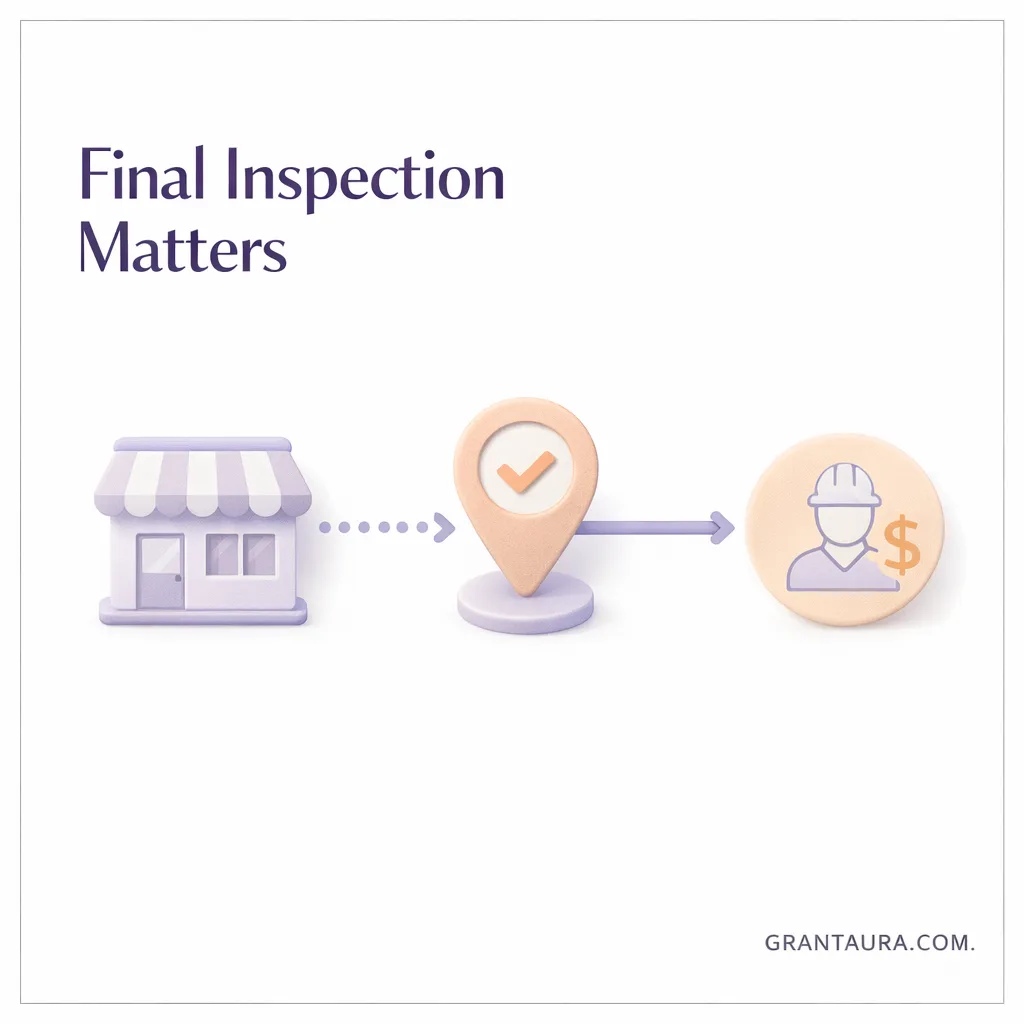
Do not let the headline amount do the thinking. This program turns on two early checks: exact Iron Range Resources and Rehabilitation service-area fit and no work before approval and site inspection.
The project site must be inside the Iron Range Resources and Rehabilitation service area or Taconite Assistance Area in northeastern Minnesota.[4] That is not the same as “Minnesota” and it is not even safely the same as a whole county name.
Several eligible-search counties are only partly relevant. The careful move is city or township verification, especially for Lake, Cook, St. Louis, Itasca, Aitkin, Crow Wing, and Koochiching area projects where a boundary assumption can waste real prep money.[5]
Verify the exact city or township before requesting bids or paying for project prep. A northern Minnesota address is not enough by itself.
Important Note
Use the fit check below before you start chasing documents. If it points to eligible, move toward the application submission modal. If it lands on unsure, treat that as a contact or expert-consultation problem. If it looks ineligible, compare other grant opportunities or request matched grants research instead of forcing a bad fit.
FY27 Business Energy Retrofit grants range from $2500 to $25000, with support structured around one-third of eligible project cost up to a $75000 project ceiling.[2] That is useful money, but it is not full project funding.
The funding model has one more cash-flow detail: the grant amount is paid directly to the awarded contractor or vendor after completion and final inspection, not handed to the applicant as general reimbursement cash.[1]
The FY27 program budget is $1500000. AEOA and IRRR sources also show a special roof rule: roofing is capped at one-third of cost up to $10000, so a roof-heavy project needs separate math before the applicant assumes the full top amount applies.[3]
One more warning. Older outreach material and secondary pages can still point to older cap values. Do not build your project budget around stale $20000 or $60000 references when the current FY27 source set supports $2500 to $25000.
Current FY27 sources include small business owners with 100 employees or fewer, Tribal governments, and nonprofits located inside the eligible service area.[6] Tenants may have a path too, but they need written property-owner consent.
The application evidence also points to a “locally owned and operated” business checkbox, but the supplied source set does not define that phrase. I would not guess it. For application questions, the current contact route is Noah Ningen at noah.ningen@aeoa.org.[6]
Do not simplify the entity rules too far. Current guidelines include nonprofits and Tribal governments but the application form also flags government city church and general housing exclusions. Edge cases should ask AEOA before spending on bids or starting work.
Important Note
Two other edge cases deserve early attention. Vacation rentals by owner are not eligible. City Economic Development Authority, multifamily, housing, church, and government-related projects should be verified before anyone pays for documents or commits to a contractor.
Repeat applicants and multi-site owners should also slow down: one project per applicant per year is the default rule, and extra projects need case-by-case grant-administrator approval before the project begins. The applicant organization and contractors should also be active and in good standing with the Minnesota Secretary of State, and property taxes should be paid and current.[7]
BER supports energy-efficiency, renewable-energy, or energy-related upgrades to eligible commercial properties.[8] The supported examples are practical: lighting, air sealing, appliances, motors, equipment, insulation, ventilation, heating, cooling, windows, doors, generators for business use, disaster-related remodeling, and renewable energy.
Good scope is not “anything inside the building.” The energy logic has to be visible. A general remodel may include eligible pieces, but the application should not hide weak energy reasoning inside a bigger construction story.
Do’s
Don’ts
Electric vehicle installations have their own friction point: the applicant must show other state, federal, and power-company funding sources have been exhausted first.[9]
Work cannot begin before approval and site inspection.[10] That is the expensive mistake. A project can be useful, urgent, and well-priced, then still create grant risk if the applicant starts too early.
Wait for approval and site inspection Keep bids ready without starting work Save approval records Treat submission as a request
Must Do
Do’s
Don’ts
The official process includes a site visit, photos of existing conditions, bid review, contractor licensing or registration checks, insurance review, a pre-construction conference, and verification that the applicant has the other two-thirds of funding ready.[11] Application submission alone is not permission to start.
BER is not a one-form-only process; it moves from initial application to inspection, pre-construction clearance, project work, closeout, and contractor or vendor payment.
Stage 1 verify service area and prepare application release supporting documents prevailing-wage bids owner consent and energy account release Stage 2 submit through the AEOA-linked route and prepare before opening the online flow Stage 3 complete site visit and pay the $500 fee at initial inspection Stage 4 finish bid review contractor checks pre-construction conference and funding verification Stage 5 complete work after clearance and gather closeout documents Stage 6 AEOA pays the awarded contractor or vendor after final inspection
Required Steps
The full online form length is not confirmed in the supplied sources. That is why I would treat the first form as the start of a staged file, not the whole application burden.
BER payment goes directly to the awarded contractor or vendor after completion and final inspection, so the applicant still has to document the remaining two-thirds and move through contractor and closeout checks.[12]
This is not applicant-direct cash. Plan around the non-grant share the $500 fee timing and closeout paperwork before work begins.Important Information
Expect the paperwork to touch several people: applicant, property owner if tenant, contractor, banker or lender, and AEOA. The official process names contractor direct deposit material, insurance, sworn construction statement, lien waiver, final invoice, certified payroll or prevailing-wage compliance, and a completion certificate.
Ask the contractor early whether they can prepare state-funded commercial prevailing-wage compliant bids and complete certified payroll lien waiver final invoice insurance and direct deposit documents.
Expert Tip
Business Energy Retrofit is not framed as a one-time annual deadline in the supplied source set. The program uses open-year-round intake with twice-yearly reviews, and the current visible date should be checked here: .[13]
That does not mean timing is casual. Review windows matter because the project cannot safely begin until approval and site inspection are complete.
Official FY25 evaluation evidence reports 87 grants, 108 businesses impacted, 25 communities and townships served, and a 3.1 to 1 public-to-private funding ratio.[14] The official IRRR page also names Victual in Crosby as a BER recipient. I would treat this as program reality, not approval odds.
I would read these as proof that the program has been used for real commercial projects, not as proof that a new applicant will be selected. BER still comes back to site fit, scope fit, timing, bids, and closeout readiness.
Starting work before approval and site inspection can block the project. The second common mistake is thinking the award comes straight to the applicant, then discovering late that payment moves to the contractor or vendor after completion.
Other traps are quieter: assuming every Minnesota site qualifies, trusting stale cap language, missing prevailing-wage compliant bids, lacking two-thirds funding verification, skipping good-standing or property-tax checks, ignoring form-level entity conflicts, or using older contact names from historical sources.
My blunt read: if the project is good but the sequence is messy, fix the sequence first. BER rewards preparation. It punishes premature spending.
Apply if the exact project site is inside the IRRR service area, the applicant type is clean, the work has not started, the energy-saving scope is clear, taxes and good standing are current, and the contractor can handle prevailing-wage compliant bids plus closeout paperwork.
Pause if the location is only probably eligible, the project is mostly general remodeling, the contractor cannot speak to certified payroll or lien waivers, the applicant is trying to stack multiple projects, or the remaining two-thirds of funding is still vague.
Ask first if the applicant is a nonprofit with government or church ties, a Tribal government with a complex facility, a city EDA, a housing project, a tenant without owner paperwork, an EV project that has not exhausted other funding, or a case that turns on “locally owned and operated” without a clear source definition.
Best BER fit: eligible site plus clean applicant type plus energy-saving scope plus no work started plus compliant bids plus contractor paperwork readiness.Summary
BER has enough moving parts to punish a casual application plan: boundary verification, project-scope proof, prevailing-wage bids, two-thirds funding verification, contractor insurance and direct deposit paperwork, tenant consent, fee timing, and closeout documents after the initial application and release.
Start a BER readiness assessment if you want a pre-application review of geography, work-start risk, project fit, bid readiness, and document sequencing. Your Grant Assessment fee is non-refundable, but the base assessment fee can be deducted once toward the same grant’s Full Application when you choose the optional checkbox at checkout.
Commercial policy reminder: this is not a guarantee of funding, not legal or financial advice, and not a promise that Grantaura can submit on your behalf without AEOA confirmation.
Expert consultation makes the most sense for edge cases: entity conflicts, tenant consent, contractor paperwork, EV funding exhaustion, roof-heavy scopes, and cash-flow planning around the direct contractor or vendor payment path.
These answers use current FY27 official AEOA and IRRR source evidence; where the supplied sources do not confirm a detail, the gap is named instead of guessed.
The program uses open-year-round intake with twice-yearly reviews. Check the current visible date here: .
Current FY27 sources support $2500 to $25000, structured as one-third of eligible project cost up to a $75000 project ceiling.
Yes. The project site must fit the IRRR service area or Taconite Assistance Area. County-level assumptions are not safe enough.
Current FY27 guidelines include nonprofits and Tribal governments, but form-level exclusions create edge-case risk for government, city, church, and housing-related facilities. Ask AEOA before spending on prep if your entity is not a clean small-business case.
For application questions, the current contact route in the supplied sources is Noah Ningen at noah.ningen@aeoa.org. For accessibility or accommodation requests, the supplied source set names Jordan Metsa.
A tenant can have a path if written property-owner consent is in place.
Do not treat that as safe. The supplied sources say work cannot begin before approval and site inspection.
The grant amount is paid directly to the awarded contractor or vendor after completion and final inspection.
The exact official count is not stated. Expect application and release materials, owner consent if tenant, prevailing-wage compliant bids or proposals, funding verification, contractor documents, insurance, direct deposit material, lien waiver, final invoice, certified payroll or prevailing-wage compliance, and completion certificate.
The supplied source set places the $500 AEOA application fee at the initial inspection and says it is processed at project closing. It should be treated as a cash-flow and timing item, not the first thing to pay before the site fit is clear.
Roofing has a separate one-third cap up to $10000. EV installations require proof that other state, federal, and power-company funding sources have been exhausted.
This is not clean enough for a broad yes or no from the supplied sources. Current guidelines include some applicant types that appear to conflict with form-level exclusions, so these cases should be confirmed with AEOA before spending on bids or project work.
The supplied sources do not confirm third-party submission permission. A grant writer can help prepare and review materials, but submission authority should be confirmed with AEOA.
Imran Ahmad writes this page with the same habit he brings to grant research generally: check the source, then check what the source forces the applicant to do next. For BER, my practical view is simple. Do not let the $25000 number outrun the boundary check, the approval-before-work rule, or contractor readiness.
If BER is close but not quite right, compare it with Minnesota business pollution prevention funding, Minnesota job creation funding, and District 7 exterior improvement funding before forcing your project into the wrong program.
We are your trusted grant application partners. You can navigate the entire grant application process with our expert guidance through this simple 5-step process.
Fill out the “Apply for this grant” form with your information and grant requirements.
Our grant experts will assess your eligibility and notify you via email.
A dedicated grant expert will be assigned to discuss next steps for your application.
Our expert will help you complete and submit your application with all required materials.
The grant committee will make their decision and notify successful applicants.



Check your saved details, answer the grant questions, and see your next steps.
Send yourself a private link so you can return to this grant form with your details ready.
Enter your email. We will send a one-time code to verify. No account needed.
Enter the 6-digit code we just sent. It expires in 10 minutes.
We'll save your progress and send a reminder to your account email when you're ready to continue.
Check your inbox. Your resume link is valid for 14 days.
Now
PendingComplete your profile to begin matching.
Profile -> Matching -> Choose grants -> Quote -> Verify -> Pay
Profile data is saved in your browser and synced to secure storage when available.
Selection preview
No grants selected yet.
Soft estimate
Estimate only. Final pricing appears in Quote step.
Quote expiry
Quote timer starts after pricing is generated.
Verification
Verification status appears here once quote is confirmed.
Success snapshot
Success milestones appear here after confirmation.
What happens next
After quote confirmation, verify your email and complete secure payment.
Application support
You provide the details. Our team prepares, reviews, and submits the application for you.
From USD 41.40
You will review the exact price, payment timing, and refund policy before checkout.
Find out if you qualify. Results typically within 24 hours.
USD 5.99 one-time
Share the grant publicly, send us the link, and we will assess your application at no cost.
Free
The donor does not charge this fee. Grantaura's price covers hands-on preparation, review, and submission support.
You will see the exact price before payment. Funding is not guaranteed.
Need help deciding? Ask us by email
Deduction shown at checkout if your same-grant assessment is on file.
Choose payment plan
Due to the approaching deadline, submission is not guaranteed. Full refund if we cannot complete it.
Completing your payment in a new tab...
If the payment page didn't open, use the manual link below.
Check your email
Need a hand? We can continue this for you.
Leave your details and we'll send a resume link so you can pick up right where you left off.
Processing payment
Please don't close this window.
Payment complete
Payment unsuccessful