Funded
Aerospace and Defense Accelerator
$200,000
Find funding opportunities, check your eligibility, and submit professional applications with expert support.
Choose your audience and we'll show you the most relevant grant paths.
Sign in to keep saved grants, profile details, application work, and support requests in one place.
Start with a quick fit check.
Check Eligibility
AEDC and OSD administer five grant programs, two investment instruments, and four training reimbursements for Arkansas businesses.

Your next step
Review your fit first, then choose the level of help you want. You can start with an eligibility assessment, talk through the opportunity with an expert, or get full application support.
Sign in to pin this grant with deadline alerts, matched-grant context, and a task tracker tied to this opportunity.
Sign in to save this grantIn December 2025, AEDC announced $2 million awarded to 12 Arkansas accelerator programs.[1] Useful evidence, but easy to misread. That money did not go directly to individual startups. The larger Arkansas Small Business Grant question is not “where is the free money?” It is: which AEDC or OSD funding path actually fits your applicant type?
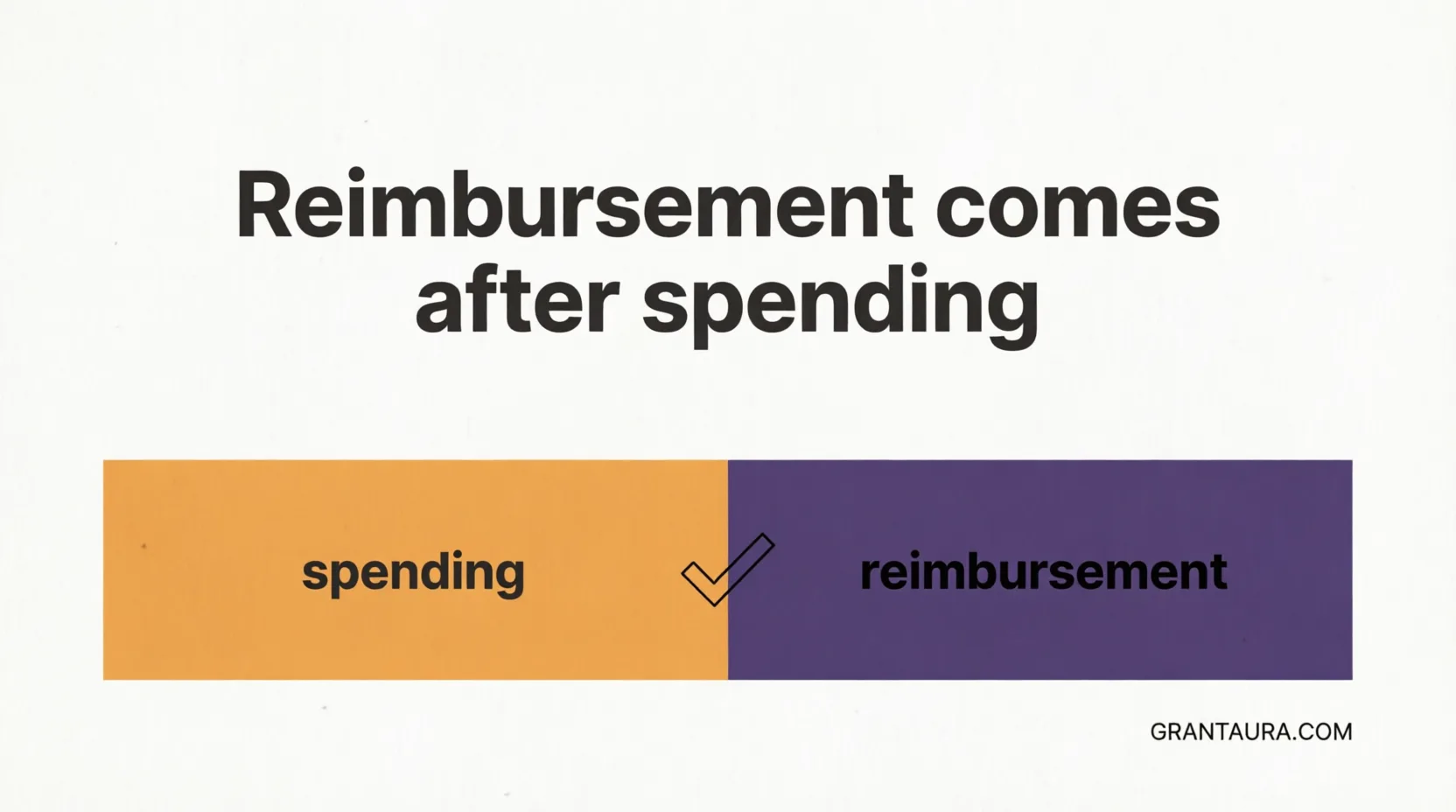
Confirmed AEDC grant awards are reimbursable. The applicant spends eligible money first, documents it, then receives payment after verification.[2] That cash-flow rule changes the decision before the application even starts.

CRITICAL APPLICANT WARNING: All AEDC grants are reimbursable. Applicants must front costs and submit invoices for payment. No upfront disbursements.
PROGRAM SELECTION NOTE: The Accelerator Grant funds accelerator/incubator organizations, not individual startups seeking direct funding. Individual startups should apply through funded accelerators, not directly to AEDC.
SBIR: The SBIR Matching Grant requires a federal SBIR award as a prerequisite. Applicants must secure federal funding before applying for the state match. The application should not be completed unless the incentive has been offered by the AEDC Director.
SCIP CLASSIFICATION: SCIP is structured as an equity/royalty investment, not a traditional grant. Include in the article but clearly distinguish from grant programs.
Arkansas grant funding is split by applicant type. A founder, a university, an accelerator operator, an SBIR company, and an employer with training costs are not entering the same doorway.
If one row does not match your applicant type, skip it. That single move saves more time than reading every program page in full.
Confirmed AEDC grants are reimbursable. You incur eligible project costs, keep documentation, submit invoices or required proof, and receive payment after verification. OSD training grants also require documented expenses. Plan cash flow before you spend application time.[2]
Important Note
If your business cannot carry the spending before reimbursement, eligibility alone may not help. That is not a small detail. It is the trap door under the application.
Need a fit check before you burn hours?
The Accelerator Grant is awarded to organizations running full-time, immersive accelerator programs that mentor and accelerate startup businesses. Individual founders and individual startups do not apply directly for Accelerator Grant funds. If you are a startup seeking direct capital, check other Arkansas funding opportunities instead.[3]
Important Note
AEDC awarded $2 million to 12 accelerator programs in December 2025, after awarding $2.1 million to 11 accelerator programs in December 2024.[1][4] The maximum award is $250,000 per program, but verified awards often sit below that cap.
Eligible accelerator programs must serve AEDC-targeted sectors such as manufacturing, software design, computer processing, customer service, scientific and technical services, agriculture, biotechnology, or transportation logistics.[3]
Application materials include AEDC-prescribed forms, statement of work, project dates, budget justification, funding request, proof of legal organization, and good standing with the Arkansas Secretary of State.[3] Board review includes timing rules that can involve a 45-day supplemental review period and a 30-day forwarding timeline where applicable.[5]
Deadline: periodic. December award announcements are verified, but they are not proof of a fixed application deadline.
If your accelerator fits a targeted sector, state that alignment directly in the statement of work. Do not make AEDC infer it. Need help positioning the application?
Expert Tip
The SBIR Matching Grant application should not be completed unless the incentive has been offered by the AEDC Director.[6] That is the sequence. Federal SBIR first. Director-offer path second. State match after that.
The caps are specific: up to $50,000 for Phase I and up to $100,000 for Phase II.[6] The state match does not replace the federal award.
Two rules make or break fit. At least 51% of matching grant funds must be spent in Arkansas.[7] The principal investigator or project manager must be an Arkansas resident or employee. If the work is mostly outside Arkansas, this path weakens fast.
Deadline: periodic. No open universal application window is verified; the Director-offer sequence controls the practical next step.
If you already hold a federal SBIR Phase I or Phase II award, contact AEDC before preparing a full state match packet. The Director-offer rule is not decorative. Contact: Esperanza Massana-Crane, (501) 682-7684.
Expert Tip
TTAG can cover up to $3,750 of a $5,000 technology-transfer project, with applications reviewed every two weeks and projects limited to 90 days.[8] Small grant. Strict use case.
The enterprise covers the remaining $1,250 cost-share. Each enterprise is limited to two TTAG awards per state fiscal year. TTAG will not fund fixed assets or costs primarily for training.
Confirm the problem is technology-transfer based and not mainly training or equipment Confirm the project can finish within 90 days Confirm fewer than two TTAG awards this fiscal year Confirm the $1250 enterprise cost-share is available Confirm a qualified resource provider is identified Confirm signatures from enterprise and provider Prepare W-9 before submission
Must Do
TTAG is probably the fastest operational AEDC grant path, but only if the scope is narrow and clean. Not sure?
Basic Research and Business Incubator funding is aimed at Arkansas-based colleges, universities, and university-affiliated incubator environments. Not normal small-business operating expenses.
The Basic Research Grant funds up to 60% of total project cost for Arkansas-based colleges and universities.[9] The institution must cover the remaining 40% through cash or in-kind contribution. The Business Incubator Program supports university incubators fostering technology-based enterprises, but the maximum Incubator award amount is not published in the source set.
Available sources do not verify a maximum dollar amount for the Business Incubator Program. Contact AEDC’s Division of Science and Technology for current details: Esperanza Massana-Crane, (501) 682-7684.
Important Information
SCIP and TDP can provide capital for Arkansas technology enterprises, but they are not ordinary grant programs.
SCIP is structured as equity or royalty investment and can reach up to $500,000 for technology enterprises unable to secure traditional capital.[11] A fully developed business plan, financial projections, and economic impact statement matter here.
TDP provides up to $100,000 as royalty financing with a 0% to 5% royalty rate and a 10-year end date.[10] The project must show a clear idea-to-prototype-to-production path and cannot duplicate eligibility for another AEDC program.
Do not include SCIP or TDP inside true grant totals. SCIP is equity or royalty investment. TDP is royalty financing. Both require a different preparation mindset than reimbursable grants.
Important Note
OSD training grants reimburse documented employee-training expenses through a separate eligibility path from AEDC technology programs.[12]
OSD has four main tracks. Grow Our Own provides up to $250,000 per quarter for Arkansas businesses with 250 or fewer employees and can reimburse up to 75% of allowable training expenses. Customized Technical can provide up to $250,000 per fiscal year. Professional Development can provide up to $50,000 per fiscal year and can reimburse up to 50% of allowable training expenses. Skills Gap addresses regional workforce gaps; funding is not pre-determined.[12]
As of June 2026, the OSD Submittable portal shows no open calls for submissions.[12] That does not mean the program is permanently closed. Contact OSD before planning training reimbursement: (501) 683-1152 or aceosdgrants@arkansas.gov.
Important Information
The eligibility checker routes by program type first. Eligible results lead to the application submission modal. Unsure results route to expert consultation. Ineligible results point toward More Grants or matched-grant research.
Still unsure which Arkansas path fits?
Verified source material shows $4.1 million awarded across 23 Accelerator Grant recipients in 2024 and 2025.[1][4] This winner evidence applies to the Accelerator Grant only.
These recipients were confirmed through official grant program records.
Grant recipients
Who received this grant
Funded
Aerospace and Defense Accelerator
$200,000
Funded
Arkansas Global Cycling Accelerator
$125,000
Funded
Arkansas Lithium Technology Accelerator
$200,000
Funded
The Business-Driven Accelerator
$200,000
Funded
Conductor 10X Growth Accelerator
$200,000
Funded
Fuel AI/ML Innovation Accelerator
$200,000
Funded
Fuel HealthTech Accelerator
$200,000
Funded
MaternaTech
$200,000
Funded
Plug and Play Supply Chain Accelerator
$125,000
Funded
ScaleUp Accelerator
$150,000
Funded
Arkansas Global Cycling Accelerator
$125,000
Funded
Arkansas Lithium Technology Accelerator
$150,000
Funded
East West Works
$125,000
Funded
Fuel AI/ML
$150,000
Funded
Fuel HealthTech
$150,000
Funded
Fuse Accelerator
$150,000
Funded
gALPHA and Gbeta
$200,000
Funded
OZ Retail Accelerator
$200,000
See all grant recipients
View all 23 recipients
Funded
ScaleUp Accelerator
$150,000
Funded
Veteran-Owned Small Business Accelerator
$200,000
Funded
10X Growth Accelerator
$200,000
There is no single AEDC application for every funding path. Start with the hard gate.
Accelerator path: confirm you operate a full-time immersive accelerator program SBIR path: confirm federal SBIR Phase I or Phase II award first TTAG path: confirm technology-transfer scope and 90-day completion OSD path: confirm training expense documentation and portal status Basic Research path: confirm Arkansas college or university status SCIP path: prepare full business plan and financials TDP path: confirm idea-to-prototype-to-production plan
Required Steps
A Grant Assessment can review program fit, reimbursement readiness, document gaps, and next-step strategy before you approach the donor platform.
Your Grant Assessment fee is non-refundable, but the base assessment fee can be deducted once toward the same grant’s Full Application when you choose the optional checkbox at checkout.
Do’s
Don’ts
No. The Accelerator Grant funds organizations that run accelerator programs. A founder who does not operate an accelerator is not the direct applicant.
TTAG has a rolling biweekly review cadence. For Accelerator, SBIR, TDP, Basic Research, and Incubator programs, a fixed 2026 application calendar is not verified. Use periodic and contact AEDC for current status.
Some are true grants. Some are not. Accelerator, SBIR Matching, TTAG, Basic Research, and Business Incubator are grant paths. SCIP is investment. TDP is royalty financing. OSD tracks are training reimbursements.
Then most AEDC grant paths may be a poor fit even if the applicant category looks right. Reimbursement means cash comes after eligible spending and documentation.
OSD training grants may still be relevant if the need is workforce training. Most AEDC science and technology programs require sector alignment.
Reimbursable means payment after eligible spending,Director-offer means AEDC must invite the SBIR match step,Technology transfer means a qualified provider helps solve a technical problem,Cost-share means the applicant covers part of the project,Equity or royalty investment is not a traditional grant
Summary
Before jumping to AEDC or OSD, use Grantaura to narrow the path. The wrong program is not just a small mistake here. It changes the applicant, documents, timing, and cash-flow plan.
Explore related pages: Arkansas grant opportunities, Lab to Launch SBIR support, Giga Accelerator Grants, grants for for-profit businesses, and Hartford Small Business Accelerator Grant.
Grantaura can help with grant research, fit review, document preparation, business plan development, and application-stage support when a program’s hard gate actually matches your situation.
Grantaura’s research team synthesized AEDC rules, regulations, press releases, and OSD documentation. This page reflects the best available evidence as of June 2026. Where source evidence is thin, including Business Incubator max award amounts, OSD Skills Gap limits, and fixed 2026 deadline calendars, we state uncertainty instead of making the page sound cleaner than the evidence.
We are your trusted grant application partners. You can navigate the entire grant application process with our expert guidance through this simple 5-step process.
Fill out the “Apply for this grant” form with your information and grant requirements.
Our grant experts will assess your eligibility and notify you via email.
A dedicated grant expert will be assigned to discuss next steps for your application.
Our expert will help you complete and submit your application with all required materials.
The grant committee will make their decision and notify successful applicants.



Check your saved details, answer the grant questions, and see your next steps.
Send yourself a private link so you can return to this grant form with your details ready.
Enter your email. We will send a one-time code to verify. No account needed.
Enter the 6-digit code we just sent. It expires in 10 minutes.
We'll save your progress and send a reminder to your account email when you're ready to continue.
Check your inbox. Your resume link is valid for 14 days.
Now
PendingComplete your profile to begin matching.
Profile -> Matching -> Choose grants -> Quote -> Verify -> Pay
Profile data is saved in your browser and synced to secure storage when available.
Selection preview
No grants selected yet.
Soft estimate
Estimate only. Final pricing appears in Quote step.
Quote expiry
Quote timer starts after pricing is generated.
Verification
Verification status appears here once quote is confirmed.
Success snapshot
Success milestones appear here after confirmation.
What happens next
After quote confirmation, verify your email and complete secure payment.
Application support
You provide the details. Our team prepares, reviews, and submits the application for you.
From USD 41.40
You will review the exact price, payment timing, and refund policy before checkout.
Find out if you qualify. Results typically within 24 hours.
USD 5.99 one-time
Share the grant publicly, send us the link, and we will assess your application at no cost.
Free
The donor does not charge this fee. Grantaura's price covers hands-on preparation, review, and submission support.
You will see the exact price before payment. Funding is not guaranteed.
Need help deciding? Ask us by email
Deduction shown at checkout if your same-grant assessment is on file.
Choose payment plan
Due to the approaching deadline, submission is not guaranteed. Full refund if we cannot complete it.
Completing your payment in a new tab...
If the payment page didn't open, use the manual link below.
Check your email
Need a hand? We can continue this for you.
Leave your details and we'll send a resume link so you can pick up right where you left off.
Processing payment
Please don't close this window.
Payment complete
Payment unsuccessful