Grant Overview
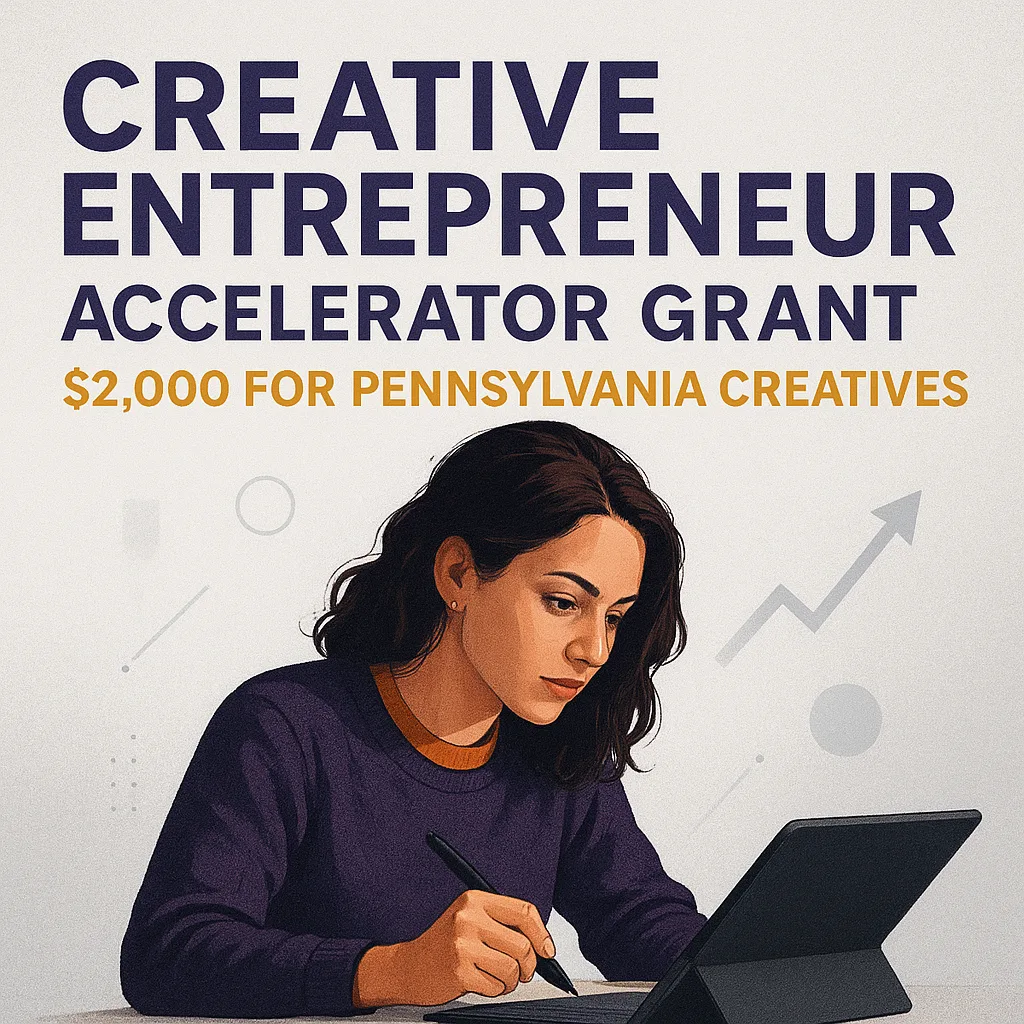
Creative Entrepreneur Accelerator Grant: Pennsylvania's $2,000 Small Business Funding for Artists, Designers & Creative Professionals Transitioning in 2026
Revolutionary funding opportunity brings $2,000 plus free business consulting to Pennsylvania's creative entrepreneurs earning under $200K - but major program changes coming fall 2026The Creative Entrepreneur Accelerator Grant is designed for creative entrepreneurs who aspire to start their own for-profit business or who operate an existing for-profit micro business. For creative professionals in Pennsylvania struggling to bridge the gap between artistic passion and financial stability, this unique grant offers something most funding programs overlook - actual support that meets you where you are. The program pairs access to existing small business consulting services with $2,000 grants, recognizing that money alone doesn't build sustainable creative businesses.Pennsylvania's creative sector just got handed both opportunity and uncertainty. PA Creative Industries is working to revise the Creative Entrepreneur Accelerator (CEA) program design and anticipates sharing details in the fall of 2026. But if you're ready to move now, the window is still open through December 31, 2026. This program advances recovery and increased opportunity within a rapidly changing economic environment - particularly crucial as creative professionals navigate economic headwinds that hit artistic ventures hardest.The creative sector adds $30 billion to Pennsylvania's economy and employs more than 189,000 people statewide. Yet individual creative entrepreneurs often struggle to access traditional business resources. The Creative Entrepreneur Accelerator Grant fills this critical gap by combining financial support with strategic business development assistance designed specifically for creative ventures. Unlike conventional small business programs that force artists into ill-fitting frameworks, this initiative understands that creative businesses operate differently - irregular income patterns, project-based work cycles, and the constant balance between commercial viability and artistic integrity.
Title: Creative Entrepreneur Accelerator Grant
Donor: Pennsylvania Creative Industries, Pennsylvania Council on the Arts, Pennsylvania Partners in the Arts
Focus: creative entrepreneurs, micro business funding, small business development, arts funding, creative industries, business consultation, startup support, Pennsylvania grants
Region: Philadelphia, Pittsburgh, Harrisburg, Allentown, Erie, Reading, Scranton, Bethlehem, Lancaster, Pennsylvania, United States
Eligibility:
- Must be at least 18 years of age
- Current Pennsylvania resident for at least one year
- Business must have gross revenue less than $200,000
- Operate a for-profit micro business or intend to form one
- Work in eligible creative industries:
-- Marketing & advertising professionals
-- Architecture firms & architects
-- Visual arts, galleries, artists, artisans & makers
-- Product, interior, graphic, fashion designers
-- Film, video, animation, TV & radio businesses
-- Digital game developers & programmers
-- Music producers, venues, musicians & performers
-- Publishing, content creators, editors & writers
- Can only receive funding once every three years
Benefits:
- Financial Award: $2,000 unrestricted grant (no repayment required)
- Mentorship: Free consultation services and business plan review from local small business development organizations
- Networking: Connection to regional PPA partner organizations and referral coordinators
Deadline: December 31, 2026
What Makes This Creative Entrepreneur Accelerator Grant Different
Here's something most grant programs won't admit - throwing money at creative businesses without guidance is like giving an artist paintbrushes but no canvas. Creative entrepreneurs first receive consultation services from and business plan review by a local small business development organization at no cost, with referral coordinators helping with the how-tos of starting a business, development of a sound business plan, and business growth and sustainability strategies.
The genius behind this Creative Entrepreneur Accelerator Grant structure? It recognizes creative entrepreneurs aren't just small business owners with artistic hobbies. You're navigating a unique ecosystem where traditional business metrics often fail to capture true value creation. Creative entrepreneurs are invaluable assets to communities, leading innovation, delivering creative products and services, generating economic opportunity, and building community identity.
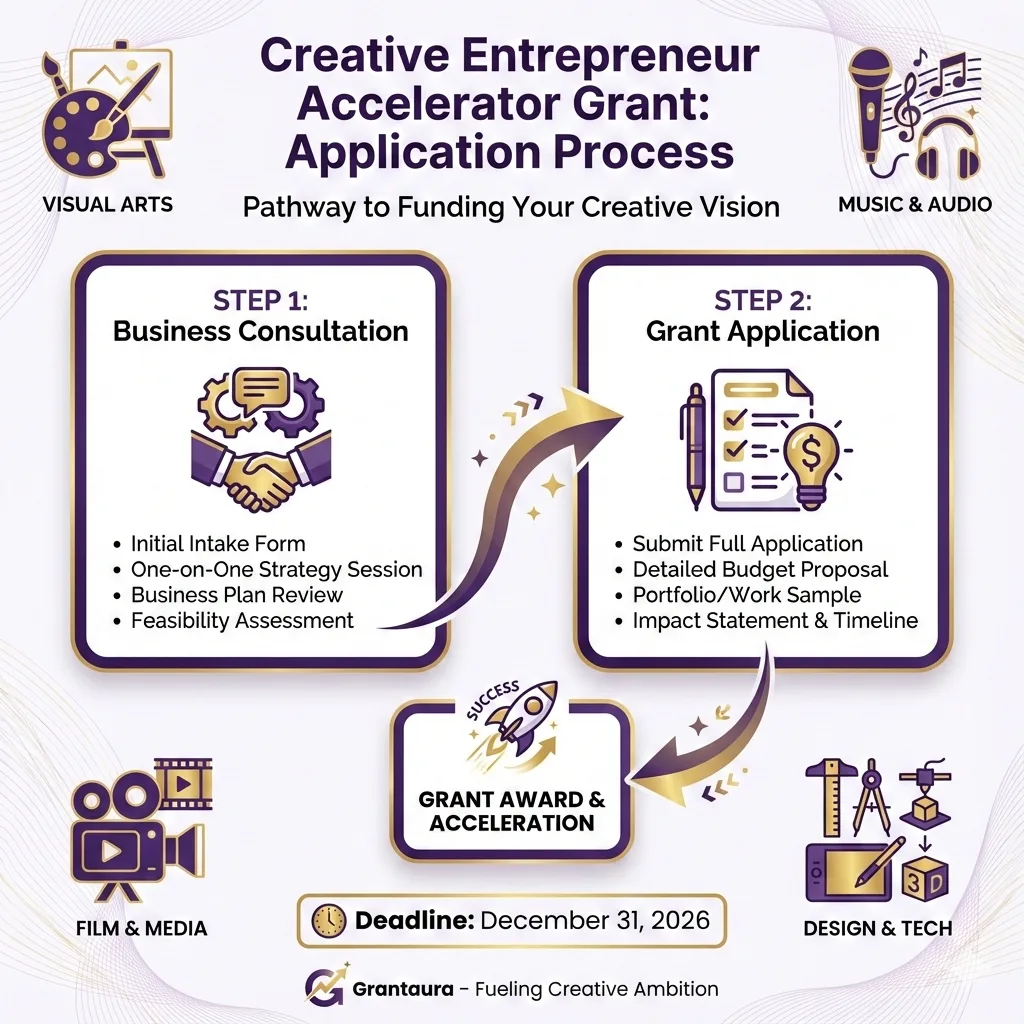
The Two-Step Application Process That Actually Makes Sense
Forget the typical grant maze where you submit blindly and hope for the best. The Creative Entrepreneur Accelerator Grant flips the script with a process that builds your business foundation before you even apply.
Step one starts with a mandatory consultation. Once a referral coordinator has reviewed a creative entrepreneur's business plan, they will refer the creative entrepreneur to the regional PPA partner organization. This isn't bureaucratic red tape - it's strategic preparation. Following the mandatory consultation with an approved Referral Coordinator, they will determine if your project is appropriate to move forward with a formal application to the Creative Entrepreneur Accelerator program.
Upon receiving the referral, the PPA partner will send application materials to the creative entrepreneur. Only after proving your business concept's viability do you move to the actual grant application. Smart? Absolutely. Because it means everyone who reaches the application stage has already strengthened their business foundation through professional guidance.
Who Really Gets Funded Through This Program
55% of the funds available for distribution in this program have been reserved for Black, Indigenous, or persons of color (BIPOC), or individuals residing in low-income communities. This deliberate equity focus isn't just checking boxes - it's acknowledging systemic barriers that have historically excluded diverse creative voices from business opportunities.
The Creative Entrepreneur Accelerator Grant serves an impressively broad spectrum of creative industries. Eligible applicants must participate in creative fields such as marketing, architecture, visual arts, crafts, design, film and media, digital games, music, entertainment, publishing, or a similar creative field. That flexibility matters because creative entrepreneurship doesn't fit neatly into traditional industry categories.
For example, a graphic designer creating digital products while teaching online workshops fits perfectly. So does a musician producing beats while running a small recording studio. Or a craftsperson selling handmade goods while developing DIY tutorials. The program recognizes modern creative businesses often blend multiple revenue streams.
Revenue and Residency Rules
Your business must generate less than $200,000 in gross revenue. That's total incoming money before expenses, not profit. If you're pulling $195,000 but spending $180,000 on costs, you still qualify. But once you cross that $200,000 threshold, you're out. The program focuses on micro businesses and early-stage ventures, not established companies with proven revenue streams.
You need one full year of Pennsylvania residency before applying. This isn't about where your business operates but where you physically live. College students who moved to Pennsylvania for school don't automatically qualify unless they've been there 12 months. Remote workers who relocated during the pandemic need to prove they've been Pennsylvania residents for a year.
One restriction that trips people up: you can only receive this grant once every three years. If you got CEA funding in 2023, you're ineligible until 2026. Pennsylvania tracks this through the application system, so trying to apply through multiple regional partners won't work.
Understanding the $200,000 Revenue Cap
Applicant's business must have gross revenue less than $200,000. Some might see this ceiling as limiting, but it's actually strategic positioning. This Creative Entrepreneur Accelerator Grant targets the crucial growth phase where businesses have proven market viability but haven't yet reached sustainable scale.
Think about it - at under $200,000 annual revenue, most creative businesses operate on razor-thin margins. One equipment breakdown, one slow season, one lost client can destabilize everything. That $2,000 grant might seem modest compared to some funding opportunities like CIROC's $500K Blue Dot Creative Residency, but for a micro business, it can mean the difference between survival and closure.
Q: Can I apply if I'm just starting my creative business?
A: Yes, the program accepts entrepreneurs who intend to form a business.
Q: What if I was funded three years ago?
A: Creative entrepreneurs are eligible to receive funding through the Creative Entrepreneurs Accelerator Program once every three years.
Q: Do nonprofits qualify?
A: Non-profit organizations are not eligible for funds through this program.
Major Program Changes Coming in 2026-2027
Pennsylvania Creative Industries just dropped significant news about the Creative Entrepreneur Accelerator Grant's future. They plan to centralize administration of the CEA program statewide and anticipate sharing details in the fall of 2026. Currently, the program operates through regional Pennsylvania Partners in the Arts organizations, but that decentralized model is ending.
What does this mean for applicants? First, if you're eligible now, don't wait. The current program structure runs through December 31, 2026, and nobody knows exactly what the revised version will look like. Pennsylvania Creative Industries recently adopted a new strategic framework with an updated mission to empower, connect, and amplify creatives and the agency vision is that Pennsylvania becomes the national leader among states for creative communities, with five key focus areas: asset development, workforce development, community development, visibility, and policy.
Timeline and Key Dates
Current grant recipients must complete all requirements by December 31, 2026. The grant term is through August 15, 2026 and your grant agreements remain unaffected for those already in the program. New applicants should begin the referral coordinator consultation process immediately, as these preliminary steps can take several weeks.
2024 Creative Entrepreneurs: Grants have concluded and if you have not submitted your financial report and receipts, please get in touch. This reminder highlights the program's strict reporting requirements - something future applicants should note.
The Two-Step Process Nobody Warns You About
Here's where this grant diverges from typical funding programs. You can't just fill out an application and submit it directly to Pennsylvania Creative Industries. The process requires two distinct stages, and skipping the first one disqualifies you automatically.
Stage One: Business Consultation and Referral
First, you connect with what Pennsylvania calls a "referral coordinator" - typically someone from a Small Business Development Center or similar organization in your region. These coordinators provide free business consulting services. You'll discuss your business concept or existing operation, work through financial projections, refine your value proposition, and develop or improve your business plan.
This isn't a quick phone call. Expect multiple sessions. The coordinator needs enough time to understand your business model and assess whether you've thought through the fundamentals. They're looking at market viability, financial sustainability, competitive positioning, and growth strategy. If your plan has holes, they'll push you to fix them before moving forward.
Only after the referral coordinator reviews and approves your business plan will they formally refer you to the regional Pennsylvania Partners in the Arts organization. That referral is your ticket to the actual grant application. Without it, you can't proceed.
Stage Two: Application and Award
Once the PPA partner receives your referral, they send you the official application materials. This part is more straightforward since you've already done the heavy lifting in stage one. The application itself focuses on confirming eligibility and gathering information needed for the award agreement.
After the PPA partner reviews your complete application and confirms everything checks out, they execute a grant award agreement with you and process the $2,000 payment. The timeline varies by region depending on application volume and administrative capacity, but most recipients see funding within a few weeks of completing stage two.
Q: Can I skip the business consultation if I already have a solid plan?
A: No. The referral coordinator review is mandatory regardless of your experience level.
Q: Does the $2,000 have spending restrictions?
A: Yes. You'll need to submit receipts and final reports showing how funds were used for approved business purposes.
Q: Which Pennsylvania counties participate?
A: All Pennsylvania counties have access through regional PPA partners, though specific coordinators vary by location.
Q: What if my business serves clients nationally but I live in Pennsylvania?
A: That's fine. Your business location matters, not your client geography.
Q: Can I apply if I have a day job and run my creative business part-time?
A: Yes, as long as your creative venture is a legitimate for-profit business.
Strategic Considerations Before Applying
$2,000 isn't life-changing money, but it can be strategically deployed. The question becomes: how do you maximize this relatively small grant to generate outsized impact?
Equipment and Tools
Many creative entrepreneurs use CEA funding to purchase essential equipment they've been delaying. A photographer might buy lighting equipment. A graphic designer might upgrade software subscriptions. A musician might invest in recording gear. These purchases have lasting value that continues generating returns long after the grant money is spent.
Marketing and Brand Development
Others pour the funding into marketing initiatives - professional website development, branding packages, social media advertising, portfolio photography. For businesses trying to establish market presence, $2,000 directed toward strategic marketing can accelerate visibility and client acquisition considerably.
Inventory and Materials
Product-based creative businesses - artisans, makers, fashion designers - often face cash flow constraints around inventory. The grant can fund material purchases that allow you to produce more inventory, fulfill larger orders, or test new product lines without depleting operating reserves.
Professional Development
Some recipients invest in skills development - workshops, courses, certifications, or conference attendance that builds capabilities directly applicable to business growth. If a specific skill gap limits your business potential, using grant funding to close that gap makes strategic sense.
Q: Can I use the grant for business registration fees and legal costs?
A: Yes, legitimate startup costs including registration and legal services typically qualify.
Q: What about using funds for booth space at art markets or trade shows?
A: Generally yes, if you can demonstrate how the market participation advances business development.
Q: Can the money cover rent or utilities for a studio space?
A: Possibly, but operational expenses like rent are often less preferred than capital investments or growth initiatives.
Q: Is hiring a contractor or freelancer for specific projects allowed?
A: Usually yes, especially if the contracted work directly supports business launch or growth objectives.
Regional Differences Across Pennsylvania
While the Creative Entrepreneur Accelerator Grant maintains consistent statewide eligibility criteria, implementation varies by region. The Greater Philadelphia Cultural Alliance administers this grant on behalf of the PA Council on the Arts for Philadelphia, Bucks, Chester, Delaware, and Montgomery counties.
The Arts Council is administering this grant for Allegheny, Beaver, Greene, and Washington counties in Western Pennsylvania. Each regional partner brings unique resources and connections to their local creative communities.
In Central Pennsylvania, Centre Foundation administers Creative Entrepreneur Accelerator Program grants in Centre, Clearfield, Clinton, and Huntingdon counties. Meanwhile, the Creative Accelerator program offers support in York, Adams, Franklin, and Fulton Counties.
These regional variations matter because each Pennsylvania Partners in the Arts organization has different application timelines, referral coordinators, and supplementary resources. Smart applicants research their specific regional partner's approach before beginning the process.
The Hidden Value of Business Plan Development
For the purposes of the Program, "viable business plan" means evidence of planning directed at forming a for-profit business or pursuing sustainable growth opportunities with evidence of planning taking a variety of forms. Don't panic if you've never written a formal business plan - that's exactly why the consultation requirement exists.
Many creative entrepreneurs resist business planning, viewing it as corporate nonsense that stifles creativity. But here's the reality check - a solid business plan for creative ventures isn't about conforming to Wall Street expectations. It's about articulating your unique value proposition in language that resonates with both artistic integrity and market reality.
The referral coordinators understand creative business models. They won't force you into templates designed for traditional retail or manufacturing. Instead, they help translate your creative vision into sustainable business strategy. Project-based pricing for freelancers. Licensing models for designers. Multiple revenue streams for performing artists. Real-world frameworks that actually work for creative professionals.
Q: How long does the consultation process take?
A: Varies by coordinator, but typically 2-4 weeks from initial contact to referral.
Q: Can I choose my referral coordinator?
A: Referral Coordinators for the Arts Council include Chatham University, the University of Pittsburgh, and Bridgeway Capital - you select based on your needs.
Q: What if my business plan gets rejected?
A: If the Referral Coordinator does not approve of your business plan, they will indicate why on the referral form.
Q: Is the consultation really free?
A: Business consultation services will be provided at no cost to prospective applicants.
Comparing Creative Funding Opportunities
The Creative Entrepreneur Accelerator Grant occupies a unique niche in Pennsylvania's funding landscape. Unlike the Creative Business Boost Initiative offering $5,000 plus coaching, this program specifically targets Pennsylvania residents with mandatory local consultation requirements.
For those seeking larger awards, options like Nehemiah Davis's Greatness Grant provides $2,500 quarterly with national eligibility, though it lacks the structured business development component. The Creative Entrepreneur Accelerator Grant's strength lies in combining modest funding with substantive business guidance tailored to creative industries.
Consider too that some artists might qualify for multiple programs. A filmmaker could pursue this grant for business development while simultaneously applying for documentary-specific funding. A fashion designer might combine this with industry-specific opportunities. Strategic grant stacking can transform that initial $2,000 into comprehensive business support.
Making Your Application Stand Out
Referral of a creative entrepreneur by a Referral Coordinator does not guarantee that a grant will be made. Even with coordinator approval, your application must compete for limited funds. Here's what separates successful Creative Entrepreneur Accelerator Grant applications from the rejection pile.
First, demonstrate clear community impact. Creative entrepreneurs lead innovation, deliver creative products and services, generate economic opportunity, and build community identity. Show how your business creates value beyond personal profit. Does your design studio train local youth? Does your music venue showcase emerging artists? Community connection matters.
Second, articulate specific fund usage. Vague statements about "growing my business" won't cut it. Detail exact equipment purchases, specific marketing campaigns, or precise operational improvements. Reviewers want confidence their $2,000 investment will generate measurable results. Consider how programs like Breva's Thrive Grant evaluates community impact for inspiration.
Q: Should I emphasize my artistic achievements or business potential?
A: Both - show how artistic excellence drives business success.
Q: How detailed should my budget be?
A: Appropriateness of proposed budget and use of funds is a key evaluation criterion.
Understanding Fund Usage Restrictions
While the Creative Entrepreneur Accelerator Grant provides relatively flexible funding, certain restrictions apply. Funds must support business formation or development. This means personal expenses, debt repayment, or non-business activities won't qualify.
Eligible uses of grant funds include professional fees for workshops, consultants, and career coaching, plus participation in events, trade shows, festivals. Think strategically about maximizing impact. That $2,000 could cover a professional website redesign, purchase essential software subscriptions, fund materials for product development, or secure booth space at a major craft fair.
Some creative entrepreneurs make the mistake of spreading funds too thin. Instead of trying to address every business need, focus on one transformative investment. Which single improvement would most dramatically advance your business? A professional photo shoot for your portfolio? Specialized equipment that opens new service offerings? Marketing campaign to reach untapped audiences? Choose wisely.
The Equity Focus: Understanding Priority Funding
This program advances and prioritizes the Pennsylvania Council on the Arts' overarching value of diversity, equity, and inclusion and prioritizes investment in creative entrepreneurs who identify as Black, Indigenous, or persons of color (BIPOC) or those located in and whose work benefits low-income communities.
This isn't tokenism - it's acknowledging real disparities in creative industry access. Traditional funding mechanisms often require collateral, credit scores, or professional networks that systematically exclude marginalized communities. The Creative Entrepreneur Accelerator Grant actively counters these barriers.
55% of the funds available have been reserved for BIPOC or individuals whose income falls below the Federal Poverty Income Level, hoping to prioritize investment in creative entrepreneurs who are located in or whose work benefits socially or economically disadvantaged communities. If you qualify for priority consideration, make sure your application clearly indicates this status.
Success Stories and Program Impact
While specific recipient data remains limited, Previous examples of CEA grantees can be seen in Greater Pittsburgh Arts Council Awards $88,000 in State Grants to Creative Business Owners. These success stories reveal the program's transformative potential for creative micro-businesses across diverse disciplines.
The multiplier effect of even modest funding becomes clear when examining outcomes. A jewelry maker uses their grant to purchase professional display cases, leading to acceptance at prestigious craft shows. A graphic designer invests in specialized software, enabling higher-paying corporate clients. A musician buys recording equipment, eliminating expensive studio rental costs. Small investments, significant returns.
Building on Your Creative Entrepreneur Accelerator Grant Success
Receiving this grant positions you for additional opportunities. The business plan developed through consultation strengthens applications for other funding. The credibility of state grant receipt opens doors with private funders. The professional networks accessed through PPA partners create ongoing support systems.
Consider exploring larger grants like Skip's $10K Summer funding as your business grows beyond the $200,000 revenue threshold. Or investigate location-specific opportunities through Pennsylvania's comprehensive grant landscape.
Navigating the Referral Coordinator Network
Penn State SBDC – Serving Centre and Clinton Counties, PennWest Clarion SBDC – Serving Clearfield County, St. Francis SBDC – Serving Huntingdon County, PA Wilds Center for Entrepreneurship – Serving Clearfield, Clinton and northern Centre Counties. Each coordinator brings unique expertise and resources.
Selecting the right referral coordinator can significantly impact your experience. Some specialize in traditional business planning, others understand creative industry nuances better. Research their backgrounds, ask about their experience with creative businesses, and choose based on alignment with your specific needs.
Don't hesitate to contact multiple coordinators before committing. If you do not have a solid business plan and are looking for assistance in building a better business plan, please reach out to either Michelle Price at Chatham University or Victoria Hassett at the University of Pittsburgh. The right match makes the consultation process productive rather than frustrating.
Q: How many referral coordinators can I work with?
A: Typically one, though you can explore options before choosing.
Q: What documents should I bring to consultation?
A: Financial records, business registration, portfolio samples, and rough business ideas.
Q: Can referral coordinators help after grant submission?
A: Referral Coordinator services are available on an ongoing basis.
Preparing for Program Transitions
With major changes coming to the Creative Entrepreneur Accelerator Grant structure, strategic timing becomes crucial. Current intelligence suggests the revised program will centralize operations, potentially streamlining some processes while eliminating regional variations that many applicants find valuable.
Pennsylvania Creative Industries adopted a new strategic plan to empower, connect, and amplify creatives, investing resources in five key areas: Asset Development, Workforce Development, Community Development, Visibility, and policy. Understanding these priorities helps position your application within broader state objectives.
Smart applicants are moving now rather than waiting for the new structure. The current system's regional approach means established relationships with local PPA partners and referral coordinators. These connections might not transfer to a centralized model. Plus, Updates on the spring 2026 grant cycle will be shared as soon as they become available, with funding pending passage of the Commonwealth Budget - suggesting potential uncertainty ahead.
Check Your Eligibility
Before diving into the application process for the Creative Entrepreneur Accelerator Grant, use our eligibility tool to instantly determine if you qualify. This interactive assessment evaluates your residency status, business revenue, industry classification, and previous funding history to provide immediate guidance on your application readiness.
More Creative Entrepreneur Accelerator Grant Opportunities for Pennsylvania Artists and Creative Professionals
- Honeycomb Credit Breakthrough Grant: $10,000 for Creative Business Expansion: Perfect for established creative entrepreneurs ready to scale beyond the micro-business phase with non-repayable funding for equipment, renovation, or second locations. Pittsburgh-based program with national reach supporting transformative growth projects.
- Donor: Honeycomb Credit
- Focus: Business expansion, equipment purchase, scaling operations
- Deadline: Rolling
- Start.Pivot.Grow. Micro Grant: $2,500 Quarterly for Creative Solopreneurs: Designed for creative professionals operating solo or with one employee, this quarterly opportunity provides operational funding without complex requirements. Ideal complement to Pennsylvania's accelerator program.
- Donor: Start.Pivot.Grow.
- Focus: Operational expenses, business stability
- Deadline: Quarterly rolling deadlines
- Arts & Culture Grants Database: Comprehensive collection of funding opportunities specifically for creative professionals including visual artists, performers, writers, and multimedia creators. Updated regularly with new opportunities.
- Donor: Various
- Focus: All creative disciplines
- Deadline: Varies for each grant in the arts & culture category
- Idea Cafe $1,000 Women's Creative Business Grant: Streamlined application process for women creative entrepreneurs with no business plan required initially. Monthly awards support diverse creative ventures from craft businesses to digital arts.
- Donor: Idea Cafe
- Focus: Women-owned creative businesses
- Deadline: Monthly
- Stan's Dare To Dream $120K Creative Entrepreneur Challenge: Massive funding opportunity for digital creative entrepreneurs including content creators, online educators, and creative service providers. Includes lifetime platform access plus mentorship.
- Donor: Stan
- Focus: Digital creative businesses, online entrepreneurs
- Deadline: Annual competition
- Pittsburgh Creative Business Funding Directory: Regional guide to grants, loans, and support programs available to creative entrepreneurs in Western Pennsylvania including city-specific initiatives.
- Donor: Multiple Pittsburgh organizations
- Focus: Pittsburgh-area creative businesses
- Deadline: Varies for each program in Pittsburgh
- Modest Needs Emergency Grants for Working Creatives: Emergency assistance for creative professionals facing unexpected expenses that threaten business stability. Covers equipment repairs, workspace issues, or temporary income gaps.
- Donor: Modest Needs Foundation
- Focus: Emergency business expenses
- Deadline: Ongoing
- Philadelphia Creative Industries Grant Programs: City-specific funding opportunities for creative entrepreneurs in the Philadelphia metropolitan area including neighborhood development initiatives.
- Donor: Various Philadelphia organizations
- Focus: Philadelphia creative economy
- Deadline: Varies for each grant in Philadelphia
- Progressive $50K Vehicle Grant for Mobile Creative Businesses: Major funding for creative entrepreneurs needing vehicles for business operations like mobile studios, craft fair vendors, or performance equipment transport.
- Donor: Progressive Insurance
- Focus: Vehicle-dependent creative businesses
- Deadline: June 20, 2025
- Small Business Grants for Creative Ventures: Broader small business funding opportunities that welcome creative industry applications, expanding options beyond arts-specific programs.
- Donor: Various business funders
- Focus: All small businesses including creative
- Deadline: Varies for each grant
- Music Creation Grants up to $10,000: Though Toronto-based, this program model shows what dedicated creative industry funding looks like, inspiring Pennsylvania musicians to seek similar opportunities.
- Donor: Toronto Arts Council
- Focus: Music creation and recording
- Deadline: September 2, 2025
- Black History Makers $5,000 Creative Business Grant: Celebrates Black creative entrepreneurs making community impact through innovative ventures in arts, design, media, and cultural industries.
- Donor: Citi Trends
- Focus: Black-owned creative businesses
- Deadline: February (Black History Month)
- Central Pennsylvania Creative Economy Resources: State capital region funding for creative businesses including government contracts, cultural tourism initiatives, and economic development programs.
- Donor: Harrisburg area organizations
- Focus: Central PA creative industries
- Deadline: Varies by program
- EmpowHer $25K Grants for Women Creative Entrepreneurs: Substantial funding for women-led creative businesses addressing social issues through art, design, media, or cultural programming.
- Donor: Boundless Futures Foundation
- Focus: Women-owned social impact creative businesses
- Deadline: Quarterly
- Funding-Ready Preparation Grant: $1,500 for Creative Business Development: Strategic grant helping creative entrepreneurs prepare for larger opportunities by covering business registration, planning, and foundational expenses.
- Donor: Grantaura
- Focus: Grant readiness preparation
- Deadline: June 15, 2025
Beyond the Creative Entrepreneur Accelerator Grant, Pennsylvania's creative professionals can access numerous funding streams through Grantaura's comprehensive database. Whether you're a visual artist in Scranton, a musician in Erie, or a designer in Lancaster, opportunities exist at local, state, and national levels. The key is understanding which programs align with your current business stage and growth objectives. Remember that grant funding works best as part of a diversified financial strategy - combine multiple smaller grants, explore different program types, and build relationships with funders who understand creative business models.
Terms
- Creative Entrepreneur: For this grant program, individuals operating for-profit businesses in creative industries including arts, design, media, architecture, publishing, and entertainment sectors. Not limited to traditional artists but encompasses all professionals whose primary value creation stems from creative or intellectual property.
- Micro Business: Small-scale enterprises with minimal employees and revenue under $200,000 annually. These businesses often operate from home offices, shared workspaces, or small studios with owner-operators handling most functions personally.
- Pennsylvania Partners in the Arts (PPA): Regional organizations contracted by Pennsylvania Creative Industries to administer grant programs locally. Each PPA partner serves specific counties and maintains relationships with local creative communities, referral coordinators, and business development resources.
- Referral Coordinator: Designated small business development professionals who provide free consultation services and business plan review for Creative Entrepreneur Accelerator Grant applicants. Often affiliated with Small Business Development Centers, universities, or economic development organizations.
- Business Plan: Strategic document outlining creative venture objectives, market analysis, revenue models, and growth strategies. For creative businesses, plans must balance artistic vision with commercial viability while demonstrating sustainable operations.
- Gross Revenue: Total income generated before expenses, taxes, or deductions. For creative businesses, includes all income streams: product sales, service fees, licensing, commissions, teaching, and performance earnings.
- Creative Industries: Economic sectors generating value through creativity, skill, and talent with potential for wealth creation through intellectual property. Pennsylvania recognizes eight primary categories for this accelerator grant program.
- BIPOC Priority Funding: Reserved allocation of 55% of available Creative Entrepreneur Accelerator Grant funds for Black, Indigenous, and People of Color applicants, addressing historical inequities in creative industry funding access.
- Low-Income Communities: Geographic areas identified by Small Business Administration criteria where median household income falls below regional averages, qualifying residents for priority funding consideration.
- Fiscal Year Funding Cycle: Pennsylvania's July 1 to June 30 budget period determining grant availability. Current FY 2025-2026 funding continues through December 31, 2026, with program restructuring planned for FY 2026-2027.
- Program Centralization: Upcoming transition from regional PPA administration to statewide management by Pennsylvania Creative Industries, potentially affecting application processes, eligibility, and fund distribution starting fall 2026.
- Business Consultation Services: Professional guidance covering business formation, planning, marketing, financial management, and growth strategies specifically tailored to creative industry challenges and opportunities.
- For-Profit Requirement: Stipulation excluding nonprofit organizations from Creative Entrepreneur Accelerator Grant eligibility, focusing support on commercial creative ventures generating taxable revenue.
- Three-Year Restriction: Policy limiting Creative Entrepreneur Accelerator Grant recipients to one award every three years, ensuring broader distribution of limited funds across Pennsylvania's creative community.
- Pennsylvania Creative Industries: State agency powered by Pennsylvania Council on the Arts, responsible for supporting and developing the Commonwealth's creative sector through grants, programs, and policy initiatives contributing $30 billion annually to state economy.
- Grant Reporting Requirements: Mandatory documentation of fund usage and business outcomes required from all recipients, typically including receipts, financial reports, and impact assessments submitted to regional PPA partners by specified deadlines.
- Eligible Creative Activities: Approved uses of grant funds including professional development, equipment purchase, marketing materials, workspace improvements, inventory development, and other investments directly supporting creative business growth.
- Application Window: Period when Creative Entrepreneur Accelerator Grant applications are accepted, varying by region but generally following referral coordinator approval. Current cycle continues through December 2026 pending program restructuring.
- Economic Impact Metrics: Measurements demonstrating creative business contributions to local economies including job creation, community revitalization, cultural tourism, and multiplier effects from creative industry spending.
- Strategic Framework Priorities: Pennsylvania Creative Industries' five focus areas guiding future funding: asset development, workforce development, community development, visibility, and policy advancement for creative sector growth.
Author
Working with creative entrepreneurs through Grantaura has shown me something crucial - the gap between artistic brilliance and business sustainability often comes down to access. Not just funding access, but access to guidance that respects creative business models rather than forcing them into conventional frameworks. The Creative Entrepreneur Accelerator Grant gets this balance right. Having helped numerous Pennsylvania artists navigate grant applications, I've watched this program transform tentative creative ventures into thriving businesses. The combination of modest funding with mandatory business consultation creates a multiplier effect that pure money alone never achieves. As Pennsylvania reimagines this program for 2027 and beyond, my hope is they'll preserve what makes it special - meeting creative entrepreneurs exactly where they are, with support that honors both their artistic vision and economic realities.
If you're considering applying, don't let the modest $2,000 amount fool you. Sometimes the smallest investments, properly guided, yield the most transformative results. About Imran · Book a Free Consultation