Most small business owners find this program by accident. They're scrolling LinkedIn at 11 PM after a brutal day, see a graduate's post about doubling revenue, and think it sounds too good to be real.
Here's what actually happens. Goldman Sachs partners with community colleges and universities across 19 locations, plus runs a national online cohort. They're not handing out participation trophies. The application process filters for business owners who've already proven they can execute, not dreamers still working on their pitch deck.
The $75,000 revenue threshold exists for a reason. You need actual operational complexity to benefit from what they're teaching. If you're still figuring out basic bookkeeping or haven't made your first sale, this program won't fix that. But if you're pulling six figures and wondering why growth feels stuck, or you've hired three people and suddenly can't manage them all, that's the sweet spot.
Babson College has ranked number one for entrepreneurship education for 27 consecutive years. When Goldman Sachs was designing this initiative back in 2009, they didn't want to create another generic small business training. They wanted the best. Babson's curriculum isn't theoretical business school nonsense. It's the Entrepreneurial Thought & Action methodology, which basically means you learn by doing.
Faculty teaching these courses come from three pools. You've got Babson professors who literally wrote the textbooks on entrepreneurship. You've got Goldman Sachs professionals who work with businesses at scale every day. Then you've got successful business owners who graduated from previous cohorts and came back to mentor.
The Real Story Behind America's Most Impactful Small Business Program
The program was launched in the face of mounting criticism over Goldman Sachs' large bonus payouts after repaying (with interest) $10 billion in TARP funds it received from the U.S. Treasury. Cynical origins? Maybe. But what emerged transcended corporate reputation management to become something genuinely transformative.
Goldman Sachs' CEO Lloyd Blankfein, Berkshire Hathaway's Warren Buffett and Harvard Business School professor Michael Porter are the chairs of the program's advisory council. When you get those three names in a room, you're not playing around with feel-good initiatives. You're building something that works.
Here's what separates this from every other "free business training" pitch flooding your inbox. The curriculum was designed by Babson College - consistently ranked as the nation's top entrepreneurship school. Not some random online course platform. Not a recycled corporate training manual. Actual entrepreneurship experts who understand what small business owners need to scale successfully.
What Actually Happens in the Program
Forget death-by-PowerPoint lectures about theoretical business models. Through the program, participants gain practical skills in topics such as negotiation, marketing, and employee management that can immediately be put into action.
The curriculum breaks down into modules that address real problems you're facing right now:
Vision & Strategy isn't about writing mission statements nobody reads. It's identifying concrete growth opportunities hiding in your current business model. One participant discovered they were losing 30% margin on their biggest product line - fixing that single issue covered their annual revenue goal.
Money & Metrics goes beyond basic bookkeeping. Goldman Sachs 10,000 Small Businesses is designed for business owners who are passionate about taking their business to the next level, looking for applicants who are poised to grow and create jobs in their communities.
Q: Do I need perfect credit to qualify?
A: No credit check required for the education program.
Q: What if my business is service-based with no inventory?
A: All business types welcome - service, product, B2B, B2C.
Q: How much time commitment are we really talking about?
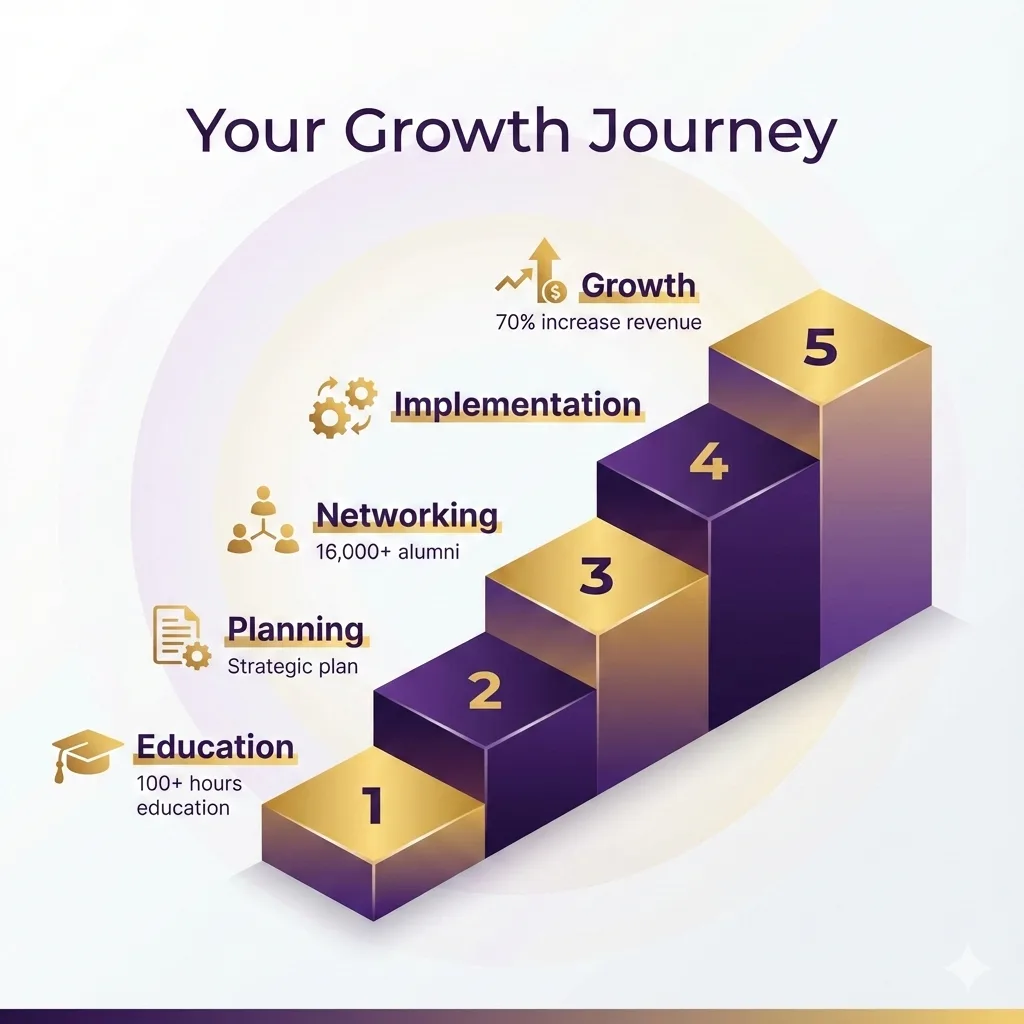
A: The curriculum includes more than 100 hours of practical, peer-learning education typically spread over 12-16 weeks.
The Start.Pivot.Grow. Micro Grant might give you $2,500 for immediate needs, but this program transforms your entire business foundation.
Marketing & Sales Module: Beyond Social Media Tricks
Most business owners think marketing means posting on Instagram three times a week and hoping for the best. The 10,000 Small Businesses approach flips this completely.
During the course of the program, every business owner develops a customized Growth Plan to direct their organization's strategy. Not a generic template. Not a fill-in-the-blank document. A real, actionable roadmap based on your specific business, market, and resources.
Take negotiations training. They don't teach you to be tougher or louder. Those selected to participate benefit from 100 hours of practical business and management education, delivered in three residential sessions and through online sessions. You practice with actual scenarios from your business. That vendor who won't budge on pricing? That client demanding endless revisions? You'll leave knowing exactly how to handle them.
The Alumni Network Nobody Talks About
Everyone mentions the 16,000+ alumni. What they don't explain is how this network actually functions. This isn't LinkedIn connections you never contact. The community allows you to strengthen connections made during the program, leverage the community to uncover opportunities, collaborate, share experiences and exchange ideas, while building upon your experience through webinars, clinics and workshops curated specifically for small businesses.
Alumni report doing actual business with each other - not just networking. A restaurant owner in Miami sources specialty ingredients from a fellow graduate's import business in Seattle. A marketing consultant in Detroit partners with a web developer from the Rhode Island cohort. Real deals, real revenue.
Application Timeline and Cohort Structure
Applications for either the national (online) or local (in-person) cohorts must be submitted approximately 3 months before the cohort's start date. Applicants can choose to apply to a future cohort during the application process.
Local programs typically run:
- February application deadline for May-August cohort
- June deadline for September-December session
- October deadline for January-April program
The National Cohort is delivered through a combination of in-person and online learning twice annually to businesses who are located beyond reasonable driving distance of the local programs.
Who Gets In (And Who Doesn't)
Let me save you some time. If your company has existed for two or more years, employs two people (including the owner) and has revenue of $75,000 or more, you may qualify for this no-cost program.
But meeting minimum requirements doesn't guarantee acceptance. Selection committees look deeper. They want businesses with genuine growth potential, not just survival stories. If you're content staying small, this isn't for you. If you're ready to scale but need the tools and network to get there - now we're talking.
Some hard truths about who struggles in the program:
- Solo operators who can't delegate fail to implement what they learn
- Businesses dependent on a single client rarely have bandwidth for growth planning
- Owners seeking quick cash injections get frustrated by the education-first approach
The Nehemiah Davis Greatness Grant works great for first-time founders. But 10,000 Small Businesses wants proven operators ready for their next level.
Beyond the Classroom: Clinical Learning Experiences
The program includes specialized clinics that simulate real business challenges:
Financial Statements Clinic teaches you to read between the lines of your own numbers. Not textbook examples - your actual P&L, balance sheet, cash flow. One participant discovered they were essentially running three businesses under one roof, with only one profitable segment subsidizing the others.
You Are the Lender puts you in the bank's shoes. You review actual small business loan applications, learning to spot red flags lenders see in your paperwork. Suddenly that rejection letter makes sense - and more importantly, you know how to fix it next time.
The legal clinic connects you with local attorneys who understand small business challenges. Not $500/hour corporate lawyers, but professionals who get that your "legal budget" might be whatever's left after payroll.
Geographic Reach and Local Partnerships
The program currently operates in Arkansas, Baltimore, Cincinnati, Cleveland, Columbus, Dallas, Dayton, Detroit, Houston, Iowa, Miami, Minnesota, Missouri, New Hampshire, North Dakota, New Orleans, New York, Rhode Island, Salt Lake City, South Dakota and West Virginia.
Each location partners with local institutions. The program is run in partnership with the Said Business School at Oxford University, the Aston Centre for Growth at Aston University, Leeds University Business School at University of Leeds, and the Manchester Metropolitan University Business School.
In Baltimore, Goldman Sachs and Bloomberg Philanthropies announced a five-year, $10 million commitment to expand the initiative, with Johns Hopkins University as host and the Community College of Baltimore County and Morgan State University participating as providers of recruitment and educational support. The Baltimore site is the first location to partner with a four-year institution and a Historically Black College or University.
Q: What if I'm not near a program location?
A: Apply for the National Cohort - fully online with periodic in-person meetups.
Q: Can I choose any location or just my nearest?
A: Generally you apply to your regional program, but exceptions exist.
Q: Are all locations equally competitive?
A: Acceptance rates vary by location and applicant pool each cycle.
The Growth Plan: Your Business Blueprint
Every participant develops a Growth Plan. Sounds simple. It's not. This isn't your typical business plan that sits in a drawer. Every business owner develops a customized Growth Plan to direct their organization's strategy.
The plan addresses five critical questions:
1. Where can you realistically be in 18 months?
2. What specific obstacles block that path?
3. Which resources (capital, talent, systems) unlock growth?
4. How will you measure progress monthly?
5. What's your backup when Plan A fails?
Alumni consistently cite the Growth Plan as the program's most valuable output. Not the knowledge, not the network - the actual document that guides every decision post-graduation. The Honeycomb Credit Breakthrough Grant provides $10,000 for expansion, but without a growth plan, that money might disappear into daily operations instead of driving real change.
Success Metrics That Matter
Baltimore program alumni report a combined annual revenue of more than $340 million and over 7,000 employees. That's one city's cohort. Not Fortune 500 numbers, but real economic impact in communities that need it.
The program tracks what happens after graduation:
- Revenue growth at 6, 18, and 30 months
- Job creation (full-time and part-time)
- Business survival rates
- Alumni collaboration and partnerships
- Access to additional capital
But here's the metric nobody advertises: confidence. Graduates consistently report feeling more confident in their decision-making, more comfortable with financial analysis, more strategic in their growth approach. Hard to measure, impossible to fake.
Funding Your Participation
Goldman Sachs 10,000 Small Businesses UK is offered on a fully funded basis. The same applies to U.S. programs - zero tuition, zero fees. Even materials are covered.
But "free" doesn't mean "no cost." You're investing time - significant time. Travel expenses for in-person sessions. Coverage for your business while you're in class. The opportunity cost of not taking that big contract because you're in session.
Budget for the real costs:
- Travel and accommodation (if in-person program)
- Business coverage during your absence
- Time to complete assignments and implement learning
- Mental bandwidth to absorb and apply new concepts
Some participants use Creative Business Boost Initiative funding to cover operational expenses while they focus on the program.
International Expansion and Variations
The model has expanded globally. Goldman Sachs launched 10,000 Small Businesses UK originally offered in Yorkshire, the North West, the Midlands and London. The programme is now delivered nationally in partnership with Saïd Business School (University of Oxford) and Aston Business School.
In the UK, the programme targets businesses employing at least five full-time employees with revenue of at least £250,000, and a maximum of £15 million. Eligible companies need to have been operating for at least three years and be high growth. The applicant must be the most senior decision maker and, in most cases, the majority shareholder with majority control.
The UK version's higher thresholds reflect different market dynamics, but the core approach remains: practical education, peer learning, growth planning.
Common Misconceptions About 10,000 Small Businesses
Myth 1: It's mainly for tech startups
Reality: Participants run restaurants, construction companies, daycare centers, manufacturing plants. Traditional businesses often benefit more than tech companies.
Myth 2: You need an MBA to keep up
Reality: The program assumes no formal business education. Street smarts often trump book smarts in peer discussions.
Myth 3: It's really about getting a loan from Goldman Sachs
Reality: Goldman Sachs doesn't directly lend to participants. The education and network help you access capital from various sources.
Myth 4: Online cohorts are inferior to in-person
Reality: National cohort alumni report similar success rates and often build stronger bonds through intentional virtual networking.
Making the Most of Your Application
Selection committees read hundreds of applications. Stand out by being specific, not inspirational. Skip the "I've always dreamed of..." narrative. Focus on concrete growth plans, specific challenges you face, measurable goals you're pursuing.
Strong applications include:
- Exact revenue growth targets (percentage and dollar amount)
- Specific number of jobs you plan to create
- Clear explanation of what's blocking growth currently
- Evidence you've already tried to solve these challenges
Weak applications feature:
- Vague aspirations about "taking it to the next level"
- Complaints about the economy or competition
- Requests for capital without plans for deployment
- Unclear business model or revenue sources
Timeline: From Application to Alumni Status
The journey from application to graduation typically spans 6-8 months:
Months 1-2: Application and Review
Submit application, provide additional documentation if requested, possibly interview with selection committee.
Month 3: Acceptance and Preparation
Receive acceptance, complete pre-program assessments, arrange business coverage, connect with incoming cohort.
Months 4-6: Program Participation
Attend sessions, complete assignments between modules, develop Growth Plan, build peer relationships.
Month 7+: Implementation and Alumni Engagement
Execute Growth Plan, access alumni resources, participate in continuing education, leverage network for growth.
Check Your Eligibility
Before diving into the application process, take a moment to assess whether your business meets the program's criteria. The eligibility tool below will help you determine if you're ready for this transformative opportunity.
More Business Grants
- Breva Thrive Grant: $5,000 Quarterly for Community-Focused Businesses: Perfect for established small businesses already creating measurable community impact who need capital to expand their social mission. Unlike 10,000 Small Businesses' education focus, Breva provides immediate cash for operations.
- Donor: Breva, Cadence Financial Group
- Focus: Community impact, job creation
- Deadline: Quarterly (Jan 31, Apr 30, Jul 31, Oct 31)
- Progressive Vehicle Grant: $50,000 for Commercial Transportation Needs: Small businesses requiring vehicle acquisition get substantial funding plus 12-week coaching - ideal complement to 10,000 Small Businesses education for service or delivery companies.
- Donor: Progressive, Hello Alice
- Focus: Vehicle purchase, business expansion
- Deadline: June 20, 2025
- Business Grants Category: Comprehensive Funding Directory: Explore hundreds of active grant opportunities for established businesses across all industries and growth stages. Find programs that align with your post-graduation growth plans.
- Donor: Various
- Focus: All business types and stages
- Deadline: Varies for each grant
- EmpowHer Grant: Up to $25,000 for Women-Led Social Impact Businesses: Female entrepreneurs creating social change can access significant capital plus advisory support - excellent for 10,000 Small Businesses graduates ready to scale impact.
- Donor: Boundless Futures Foundation
- Focus: Women entrepreneurs, social impact
- Deadline: February 16, 2025
- Skip $10k Grants: Open-Category Business Funding: No-restrictions $10,000 grant welcoming all U.S. entrepreneurs regardless of industry or stage - simpler alternative for those needing quick capital without extensive education components.
- Donor: Skip
- Focus: General business growth
- Deadline: Ongoing
- ZenBusiness $5K Grant: New Business Formation Support: Recently formed businesses (3-6 months old) using ZenBusiness services qualify for funding plus financial management tools - great pre-qualifier for future 10,000 Small Businesses application.
- Donor: ZenBusiness
- Focus: New business support
- Deadline: January 1, 2025
- United States Grants Location Hub: National Opportunities: Access all nationwide grant programs available to American small businesses, including federal, corporate, and foundation funding aligned with various growth stages.
- Donor: Multiple sources
- Focus: U.S.-based businesses
- Deadline: Varies by program
- Idea Cafe Grant: $1,000 for Women Entrepreneurs: Simple application process for women-owned businesses at any stage - ideal micro-grant to cover program participation expenses while attending 10,000 Small Businesses.
- Donor: Idea Cafe
- Focus: Women entrepreneurs
- Deadline: Monthly
- Secretsos Small Business Grant: $2,500 Quarterly: Flexible funding for underserved entrepreneurs with no complex requirements - practical support for covering business expenses during intensive education programs.
- Donor: Secretsos
- Focus: Underserved entrepreneurs
- Deadline: Quarterly
- McKinsey Fast Grants: $10K Plus Elite Mentorship in Chicago: Chicago entrepreneurs receive world-class consulting support alongside capital - similar high-touch model to 10,000 Small Businesses but with geographic focus.
- Donor: McKinsey & Company, A4CB
- Focus: Chicago businesses
- Deadline: Contact for dates
- USA Funding-Ready Grant: $1,500 Foundation Building: Preparation-focused grant helping entrepreneurs develop documentation and plans needed for larger opportunities like 10,000 Small Businesses - strategic first step.
- Donor: Grantaura
- Focus: Grant readiness preparation
- Deadline: June 15, 2025
- Startup Grants Category: Early-Stage Funding Options: Browse opportunities for newer businesses working toward the 2-year requirement for 10,000 Small Businesses - build your foundation while preparing for future program participation.
- Donor: Various
- Focus: Early-stage companies
- Deadline: Multiple deadlines
- Snow Hill Business Grant: Up to $5,000 for Local Growth: Location-specific program supporting business expansion and facility improvements - demonstrates the local economic development approach many 10,000 Small Businesses sites embrace.
- Donor: Snow Hill Area Chamber
- Focus: Local business development
- Deadline: Check website
- Prose AANHPI Grant: $10,000 for Asian American Founders: Targeted support for Asian American, Native Hawaiian, and Pacific Islander entrepreneurs with mentorship component similar to 10,000 Small Businesses model.
- Donor: Prose, Ellis Brooklyn
- Focus: AANHPI entrepreneurs
- Deadline: August 2, 2025
- Wish Local Program: $500-$2K for Black-Owned Retail: Black-owned brick-and-mortar stores with under 20 employees access grants plus marketplace platform - addresses specific demographic Goldman Sachs also prioritizes.
- Donor: Wish Local
- Focus: Black-owned retail businesses
- Deadline: Rolling basis
Ready to explore more funding opportunities that complement your business education journey? Grantaura's free platform connects growth-minded entrepreneurs with vetted grant opportunities updated daily. Whether you're preparing for 10,000 Small Businesses or seeking additional capital post-graduation, our comprehensive database helps you identify and secure the funding that matches your growth trajectory.
Terms
- Cohort: A group of business owners who go through the program together, typically 20-30 participants who become your peer learning network. Not just classmates but future business partners and advisors.
- Growth Plan: The customized strategic document each participant develops during the program outlining specific, measurable business expansion goals for the next 18 months. More actionable than a traditional business plan.
- Module: Individual topic-focused segments of the curriculum covering areas like financial management, marketing, or operations. Each builds on previous learning while addressing immediate business challenges.
- Business Advisor: One-on-one mentor assigned to help you apply classroom concepts to your specific business situation. Often successful entrepreneurs or industry experts volunteering their expertise.
- Peer Learning: Educational approach where business owners learn from each other's experiences and challenges. Often more valuable than traditional lectures because solutions come from real-world testing.
- National Cohort: Online version of the program for businesses located far from physical sites. Combines virtual learning with periodic in-person gatherings for networking and intensive workshops.
- Local Program: In-person version hosted at specific geographic locations through partnerships with colleges and universities. Provides face-to-face interaction and stronger local business connections.
- Revenue Threshold: The minimum $75,000 annual revenue requirement ensuring participating businesses have proven market viability. Demonstrates you're beyond startup phase and ready for scaling.
- Business Support Services: Additional resources beyond classroom education including legal clinics, accounting guidance, and connections to lending institutions. The ecosystem helping you implement what you learn.
- Alumni Network: The 16,000+ program graduates who provide ongoing support, business partnerships, and expertise access after graduation. Your lifetime professional community and informal board of advisors.
- Practical Business Education: Curriculum focused on immediately applicable skills versus theoretical knowledge. Every lesson connects directly to challenges you're facing in your business right now.
- Capital Access: Not direct lending but education about funding options, preparation for loan applications, and connections to appropriate financing sources. Understanding what lenders want before you need them.
- Small Business: In program context, companies with 2+ employees and $75,000+ revenue but still in growth phase. Not Fortune 500 subsidiaries or lifestyle businesses content with current size.
- Rolling Admission: Continuous application acceptance with multiple start dates annually versus single yearly deadline. Apply when you're ready, not when calendar dictates.
- No-Cost Program: Completely funded by Goldman Sachs Foundation meaning zero tuition, fees, or material costs. Only investment is your time and travel expenses for in-person components.
- Babson College: Nation's top-ranked entrepreneurship school that designed the curriculum. Their methodology focuses on entrepreneurial thought and action versus traditional MBA theory.
- Job Creation: Primary program goal beyond individual business growth - strengthening communities through employment opportunities. Success measured in people hired, not just revenue increased.
Author
Looking at the landscape of small business funding, I see the same pattern everywhere - promising programs that sound transformative but deliver marginal results. That's why Goldman Sachs 10,000 Small Businesses caught my attention differently. Through my work at Grantaura helping entrepreneurs navigate the overwhelming world of business grants and growth capital, I've watched hundreds of business owners struggle with the same fundamental challenge: they know how to do their work brilliantly, but nobody taught them how to run a business that scales. This program addresses that gap with unusual directness.
The 100 hours of practical education isn't revolutionary because of its length - it's the focus on immediately applicable skills that makes the difference. When a restaurant owner learns to read their P&L properly and discovers they've been losing money on their signature dish for three years, that's the kind of revelation that changes trajectories. My mission at Grantaura has always been making legitimate funding opportunities accessible to businesses that traditional systems overlook, and this program exemplifies that possibility when done right. About Imran · Book a Free Consultation