Grant Overview
Property owners in downtown Miami can get up to $2,500 reimbursement for exterior lighting upgrades that enhance pedestrian safety and meet city standards
The Miami DDA will reimburse property owners for the cost of materials and labor, up to $2,500 for replacement of the existing lights or installation of the lights which comply with the City's illuminations standards. Property owners finally have a chance to upgrade those ancient lighting fixtures without eating the entire cost. Let's be honest - most building owners in downtown Miami have been staring at those flickering, outdated lights for years, knowing they need an upgrade but hesitant about the expense. This Miami Downtown Lighting Grant solves that problem. Well-lit streets play an important role in creating a safer environment for the downtown residents and sustaining foot traffic which is crucial for the small business community. The City has enacted legislation establishing citywide illumination standards to ensure adequate lighting on the public right-of-way to provide for the safety of residents, workers, and others. The grant covers everything from buying new LED fixtures to paying the electrician who installs them, making this one of the most practical small business funding opportunities available to Miami property owners today.
Title: Downtown Lighting Grant Program
Donor: Miami Downtown Development Authority (Miami DDA)
Focus: exterior lighting, commercial property improvement, public safety, pedestrian lighting, LED conversion, building illumination, urban lighting, streetscape enhancement
Region: Downtown Miami, Miami, Miami-Dade County, Florida, United States
Eligibility:
- Property owner within Miami DDA District boundaries
- Person with written authorization from property owner
- Property must be located within the Miami DDA District
- All improvements must comply with City's Illumination Standards
Benefits:
- Financial Award: Up to $2,500 reimbursement for materials and labor
- Covers replacement of existing lights or installation of new lights
- Includes removal of obstructions like awnings that prevent lighting
Deadline: Ongoing
Who Actually Gets This Miami Lighting Grant Money?
Here's what the Miami DDA isn't advertising loudly. Grants through the Program are subject to availability of funds within Miami DDA's yearly budget. That means once the money runs out for the year, you're waiting until the next budget cycle. Smart property owners are already preparing their applications for the new year.
Think your property qualifies? It probably does if you own any commercial building in downtown Miami. But there's a catch - Property must be located within the boundary of the Miami DDA District. Compliance with Illumination Standards: All improvements must comply with the City's Illumination Ordinance.
The boundaries aren't just "somewhere downtown." The Miami DDA District has specific borders, and if you're even one block outside, you're out of luck. Before spending time on the application, verify your property sits within the official district map available on the Miami DDA website.
Q: Can tenants apply for this grant?
A: Yes, with written permission from the property owner.
Q: What if my building already has some lighting?
A: You can replace existing lights to meet new standards.
Q: Do I pay upfront and get reimbursed?
A: Yes.
The Real Story Behind Miami's Push for Better Lighting
The Miami DDA recognizes the importance of the proper lighting of the pedestrian's pathways which is a critical factor in the quality of the nighttime pedestrian environment. The Miami DDA is committed to help downtown residents and visitors to navigate and enjoy businesses in the community while keeping patrons and properties safe.
This isn't just bureaucratic talk. Downtown Miami has transformed dramatically over the past decade. More residents. More businesses. More foot traffic at all hours. Yet many properties still operate with lighting systems from the 1980s. Or worse.
The statistics back this up. The exterior lighting of downtown Miami's iconic One Flagler building was funded in part by the Miami Downtown Development Authority's (DDA) Property Improvement Grant Program administered by the Downtown Miami Partnership (DMP). When flagship properties like One Flagler need grant support for lighting upgrades, it shows how widespread this need really is across downtown Miami.
What Exactly Can You Buy With This Grant Money?
Supply and installation of new/additional exterior building lighting (including lighting material, equipment, installation labor), - Replacement of existing lighting with new lighting to comply with the city's illuminations standards, - Removal of awning, canopy, arcade, overhang, or other projections
Basically, if it lights up your building's exterior and the sidewalk around it, this grant probably covers it. LED conversions are particularly popular since they slash energy costs while meeting illumination requirements. One property manager recently told me their monthly electricity bill dropped by $400 after switching to LEDs - the grant essentially paid for itself in six months through energy savings alone.
Why Downtown Miami Needs Better Lighting Right Now
Downtown Miami has been pushing hard to become a 24-hour urban core, not just a business district that empties out at 6 PM. The Miami DDA's facade improvement initiatives already proved that small physical upgrades can shift how people experience a neighborhood. Lighting works the same way, except the stakes are higher. A dim sidewalk doesn't just look uninviting. It actively discourages the evening economy that keeps restaurants, bars, and retail shops viable.
The City of Miami enacted illumination standards for one reason: too many property owners were installing cheap fixtures that created dark pockets, glare problems, and uneven coverage. These standards specify foot-candle measurements for different zones, color temperature ranges, and fixture placement rules. Most property owners don't speak that language, which is exactly why the Miami DDA designed this grant to absorb some of the financial pain of compliance.
What the Illumination Standards Actually Require
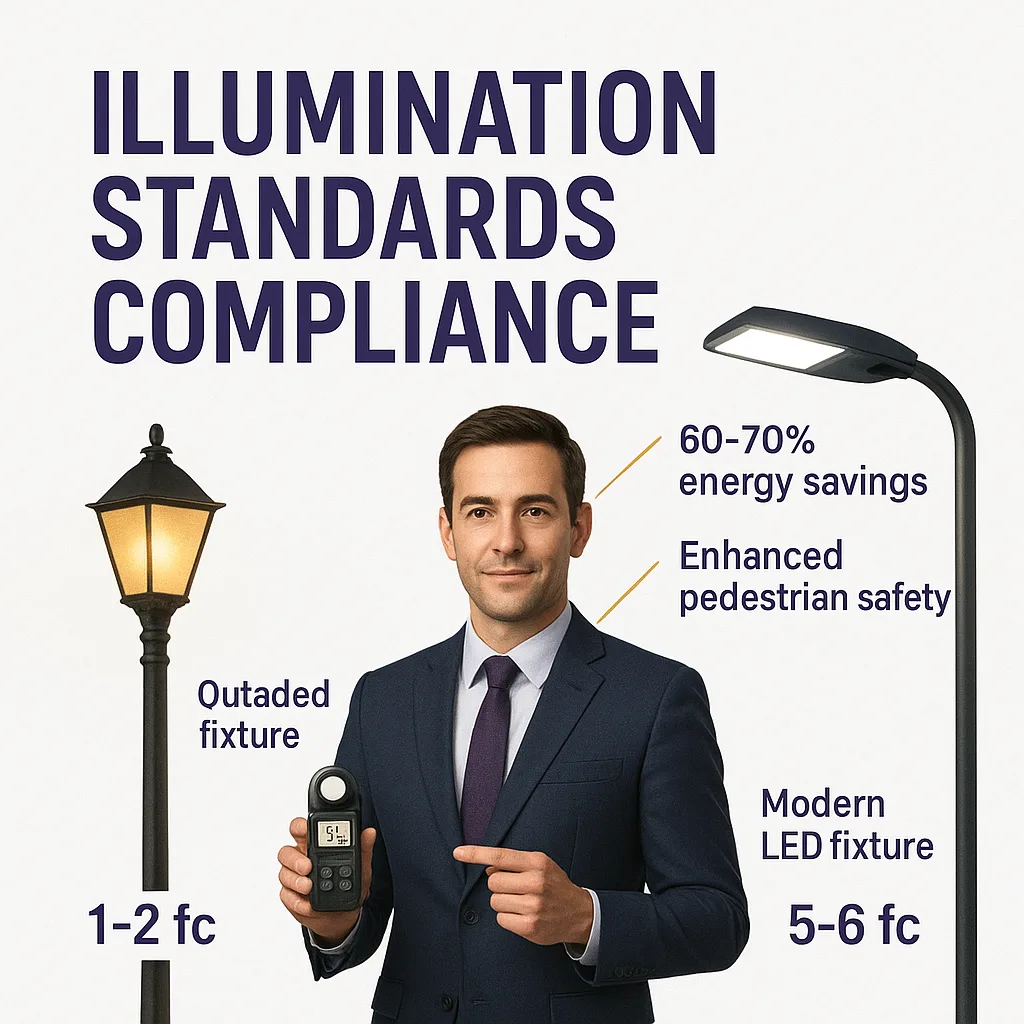
Miami's illumination code isn't a suggestion. It's enforceable law with measurable thresholds. The standards typically mandate minimum light levels on pedestrian pathways adjacent to your building, usually measured in foot-candles. A foot-candle is the amount of light that hits one square foot of surface from a candle one foot away, but in practice you'll need a light meter or a professional to verify compliance. The code also restricts upward light spill to reduce sky glow and requires shields on fixtures to prevent glare that blinds pedestrians or drivers.
Here's where property owners trip up. You can't just bolt a floodlight to your building and call it done. The light must reach the public right-of-way without creating harsh shadows or bright spots that leave adjacent areas even darker by contrast. If you have an awning, canopy, or overhang blocking downward light, the grant will actually pay to remove it. That's how serious the Miami DDA is about eliminating obstacles to proper illumination.
Who This Grant Actually Serves
This isn't for residential homeowners trying to light up their backyard. The Miami Downtown Lighting Grant targets commercial property owners, mixed-use building operators, and anyone who controls a structure that fronts a public street within the DDA district. If you're a tenant, you need written authorization from your landlord to apply. If you're a property management company, you can apply on behalf of the owner with documentation proving you have permission.
The ideal candidate owns a building with outdated exterior lighting, no lighting at all, or fixtures that violate current code. Maybe you bought a property with dim yellow bulbs that barely illuminate the entrance. Or you're dealing with broken fixtures you've been putting off replacing because the cost seemed prohibitive. This grant was designed for exactly that situation, assuming your property sits within the Miami DDA boundaries and doesn't have liens or code violations that would disqualify you immediately.
Geographic Boundaries Matter More Than You Think
The Miami DDA district doesn't cover all of Miami. It's a specific zone roughly bordered by I-395 to the north, Biscayne Bay to the east, the Miami River to the south, and I-95 to the west. But those boundaries shift slightly depending on the exact street, so you need to verify your property's location using the official district map provided by the Miami DDA. Properties one block outside the boundary don't qualify, even if they face the same lighting challenges.
If you own property elsewhere in Florida and wonder why similar grants don't exist, it's because downtown development authorities operate independently. Miami's DDA has its own budget and priorities. Other Florida cities might offer facade improvement programs or beautification grants, but lighting-specific funding remains rare outside Miami's program.
How the Reimbursement Model Changes Your Planning
Most grants force you to apply, wait for approval, and then spend money. This one flips the process. You design the lighting upgrade, get quotes, submit your application, receive conditional approval, complete the work, and then get reimbursed. That means you need capital upfront. If you're operating on tight cash flow, the three-month completion window after approval could stress your finances even though reimbursement is coming.
But there's a strategic advantage to this model. You control the contractor selection and the timeline. You're not waiting for a government procurement process or dealing with approved vendor lists. Hire whoever you trust, as long as they can document costs and comply with the illumination standards. Just keep every receipt, every invoice, every permit, because the final report requires proof of payment for the full project cost.
Application Process: Less Painful Than You'd Expect
Getting this Miami Downtown Lighting Grant doesn't require a PhD in bureaucracy.
First, gather your documents. Proof of property ownership / property owner's written authorization. Plus you'll need before photos showing your current lighting situation (or lack thereof), proposed lighting designs with specific fixture locations, and professional cost estimates breaking down materials versus labor.
Eligible applicants can apply for the Program by completing a short application on-line and uploading the necessary documentation. A checklist of required documents will be used to evaluate applications. For those applications determined to be eligible for the Program funds, awards will be disbursed as quickly as possible, until the fund is completely depleted.
The keyword here? "Short application." Unlike federal grants requiring 50-page narratives, this application focuses on the essentials. What lighting are you installing? Where? How much will it cost? Done.
Q: How long does approval take?
A: Varies, but typically within 30-60 days.
Q: Can I start work before approval?
A: No - wait for written approval first.
Q: What if my project costs more than $2,500?
A: You pay the difference.
Q: Is there a minimum project cost?
A: No stated minimum.
Q: Can I apply multiple times for different properties?
A: Yes, if you own multiple eligible properties.
Timeline and Key Dates
While the program accepts applications year-round, timing matters. Applications get processed first-come, first-served. Grant funds will be disbursed upon completion of the approved lighting improvements and submission of the Final Report.
After conditional approval, you have three months to complete the work. Miss that deadline without an approved extension? Your grant disappears. The process flows like this: Submit application with all documents, receive conditional approval via email, sign Grant Acceptance Agreement with Miami DDA, obtain necessary permits, complete installation within 90 days, submit Final Report with after photos and paid invoices, then receive your reimbursement check.
Most successful applicants report the entire process from application to reimbursement check takes 4-6 months. Plan accordingly if cash flow is tight.
Professional Lighting Design: Worth Every Penny
The guidelines strongly recommend hiring a professional lighting designer. Why? Because randomly slapping up some Home Depot flood lights won't cut it. The City's illumination standards specify exact foot-candle measurements at specific distances from your building. Get it wrong, and your application gets rejected.
Professional designers know these standards inside out. They'll calculate exact fixture placement, recommend specific products that meet code, and produce the technical drawings your application needs. Yes, it's an upfront cost. But considering you're getting reimbursed up to $2,500, the designer fee essentially comes back to you.
Plus, good lighting design does more than meet minimum standards. Strategic illumination highlights architectural features, creates ambiance that attracts customers, and can even deter crime. Properties with professional lighting consistently see increased foot traffic and higher lease rates.
Hidden Benefits Nobody Talks About
Beyond the obvious safety improvements, upgraded lighting transforms your property's market value. Real estate appraisers consistently note that modern exterior lighting increases property values by 3-5%. On a million-dollar building, that's a $30,000-50,000 bump from a $2,500 grant investment.
Insurance companies love it too. Several Miami property owners reported lower liability premiums after documenting their lighting improvements. Better lighting means fewer slip-and-fall claims, fewer crime incidents, and happier insurance adjusters.
Then there's the tenant satisfaction factor. Downtown Miami supports and recognizes businesses, residents, and visitors so each has information related to downtown enhancements and current initiatives. Your commercial tenants will appreciate customers feeling safer approaching their businesses after dark. Retail stores particularly benefit since proper lighting extends shopping hours into the evening.
Energy savings add up fast with LED conversions. While the grant covers installation costs, you keep the monthly savings forever. Properties switching from metal halide to LED typically see 60-70% reductions in lighting electricity costs. Over five years, that could mean $20,000+ in savings.
Q: Do LED lights qualify for the grant?
A: Yes, if they meet illumination standards.
Q: Can I use the grant for decorative lighting?
A: Only if it also serves safety/illumination purposes.
Q: What about smart lighting systems?
A: Yes, if they comply with standards.
Common Mistakes That Kill Applications
Learning from others' failures saves time and frustration. The biggest application killer? Starting work before approval. An accepted application does not guarantee receipt of a grant funds. Conditional approval means exactly that - conditional. Wait for the signed agreement before ordering a single light bulb.
Another frequent mistake involves incomplete documentation. Missing one required photo or forgetting the property ownership proof delays everything. Create a checklist and double-check before submitting. The Miami DDA won't chase you for missing documents; they'll just move to the next application.
Some owners submit lighting plans that clearly violate code requirements. Lights mounted too high. Insufficient coverage at property edges. Wrong color temperature for the district. These get rejected immediately. This is why professional designers earn their fees - they prevent these basic but fatal errors.
Properties with outstanding code violations face automatic disqualification. Before applying, resolve any open violations on your property. The Miami DDA checks this, and they will find that unpermitted roof deck or expired fire inspection.
Strategic Timing for Maximum Impact
While applications stay open year-round, strategic timing improves your chances. Budget years for the Miami DDA typically start in October. Submitting applications early in the fiscal year means more available funds. By June or July, the money often runs low.
Consider seasonal factors too. Completing lighting work during Miami's dry season (November through April) avoids weather delays. Contractors also tend to be less busy during these months, potentially offering better rates.
Coordinate with other property improvements if possible. Upgrading lighting while renovating facades or replacing signage creates comprehensive curb appeal improvements. Some property owners have successfully combined this grant with other facade improvement programs for maximum impact.
The Competition You're Really Facing
The Miami Downtown Development Authority ("Miami DDA") is an independent agency of the City of Miami, focused on improving the quality of life for stakeholders, residents, and visitors in Downtown Miami through business development, infrastructure and capital improvements, and the provision of services. Through its programs and initiatives – as well as its partnerships with other government entities and organizations – the Miami DDA is strengthening Downtown Miami's position as an international center for commerce, culture, and tourism.
You're not just competing against other property owners for these funds. The Miami DDA runs multiple grant programs, all drawing from similar budget pools. Understanding this broader context helps position your application strategically.
Properties demonstrating the greatest safety needs often receive priority. If your building sits on a particularly dark stretch or near high-pedestrian areas like schools or transit stops, emphasize this in your application. Document current safety concerns with photos and incident reports if available.
Mixed-use properties combining retail and office space tend to score well since improvements benefit multiple stakeholder groups. If your building houses both businesses and residential units (where applicable), highlight how lighting improvements serve diverse community needs.
Working With Contractors: Insider Tips
Not all electrical contractors understand the City's illumination standards. Before hiring anyone, ask specifically about their experience with Miami DDA lighting projects. Contractors who've successfully completed these projects before know exactly what the inspectors want to see.
Get multiple bids, but don't automatically choose the lowest. Remember, if the work doesn't meet standards, you won't get reimbursed. A slightly higher bid from an experienced contractor beats redoing the entire project out of pocket.
Request references from other Miami DDA grant recipients. Good contractors will gladly provide these. Call those references and ask about timeline adherence, quality of work, and whether they passed inspection on the first try.
Include contingency planning in your contractor agreement. What happens if certain fixtures become unavailable? Who handles permit delays? Address these scenarios upfront to avoid project stalls that could blow your three-month completion deadline.
Q: Can I act as my own contractor?
A: Yes, but you need proper licenses and permits.
Q: What if the contractor damages other property elements?
A: That's between you and the contractor - not covered by grant.
Q: Should I pay the contractor before getting reimbursed?
A: You'll need to show paid invoices for reimbursement.
Q: Can contractors apply on my behalf?
A: No, property owners must apply directly.
Q: Are contractor markups covered by the grant?
A: Yes, as part of total project cost.
Q: What about contractor warranties?
A: Not required but highly recommended.
Beyond the Basics: Advanced Strategies
Sophisticated property owners are combining lighting grants with energy efficiency incentives. Florida Power & Light offers rebates for LED conversions that stack with the Miami DDA grant. Between the two programs, some owners cover 80-90% of their lighting upgrade costs.
Consider applying for multiple properties simultaneously if you own several buildings in the district. While each property needs its own application, coordinating installations can negotiate better contractor rates through volume discounts.
Document everything obsessively. Before photos from multiple angles. Progress photos during installation. After photos in both daylight and darkness. Detailed invoices breaking down every component. This documentation not only ensures smooth reimbursement but also provides evidence for insurance adjustments and property tax appeals.
Think beyond basic compliance. The best applications propose lighting designs that enhance the entire block, not just individual properties. Showing how your improvements contribute to broader neighborhood safety and aesthetics can strengthen your application.
Long-term ROI Calculations Most Owners Miss
The obvious returns include energy savings and property value increases. But smart owners calculate less obvious benefits. Reduced maintenance costs from longer-lasting LEDs. Lower vacancy rates from improved curb appeal. Decreased security expenses when better lighting deters crime.
One downtown Miami property manager documented everything. After lighting upgrades: 15% reduction in vacancy rates, 20% decrease in reported safety incidents, $500 monthly energy savings, 25% reduction in lighting maintenance calls. Total annual benefit? Nearly $30,000 from a $2,500 grant investment.
These numbers matter when approaching lenders for property improvements or refinancing. Banks love seeing proactive property management and documented returns on improvement investments. Several owners leveraged their lighting upgrades into better loan terms.
Future-Proofing Your Lighting Investment
Technology changes fast. Today's cutting-edge fixtures become outdated within five years. Choose systems allowing easy upgrades without complete replacement. Modular LED systems where you can swap components beat integrated units requiring full replacement.
Smart controls are increasingly expected, not optional. Tenants want lighting that adjusts automatically based on time, weather, and occupancy. While the grant might not cover all smart features, installing infrastructure that supports future upgrades positions your property ahead of the curve.
Consider climate resilience too. Miami faces increasing severe weather. Choose fixtures rated for hurricane conditions. Yes, they cost more initially. But replacing damaged lights after every storm quickly exceeds that premium. Plus, insurance companies increasingly require weather-resistant fixtures in their policies.
The city's illumination standards will likely tighten over time. Installing fixtures that exceed current minimums by 20-30% ensures compliance for years without additional upgrades.
Some forward-thinking owners are already installing infrastructure for color-changing LED systems. While not required now, the ability to change lighting colors for holidays or special events could become a competitive advantage.
Getting Help With Your Application
Questions regarding the program guidelines and the application process should be directed to ace@miamidda.com with the subject line "Downtown Lighting Grant Program." Don't hesitate to reach out before submitting. The Miami DDA staff can clarify requirements and prevent application errors.
Many successful applicants recommend attending Miami DDA public meetings. While not required, showing up demonstrates serious commitment to downtown improvement. You'll also hear about upcoming program changes and network with other property owners sharing installation tips and contractor recommendations.
Professional grant writers might seem excessive for a $2,500 grant. But if you own multiple properties or plan combining multiple improvement grants, professional help ensures maximum funding. Plus, experienced grant writers know exactly how to frame your project for approval.
Common Questions Property Owners Ask
What If I Rent Out My Property?
Q: I own the building but my tenant runs a business there. Can I still apply?
A: Yes. Property ownership is what matters, not occupancy. You can complete the lighting work and receive reimbursement regardless of whether you occupy the space yourself or lease it to tenants.
Q: Will the lighting upgrades increase my property taxes?
A: Exterior lighting improvements typically don't trigger property tax reassessments in Florida unless they're part of a major renovation that substantially increases the building's value. Consult your tax advisor for specifics.
Q: Can I use solar-powered lights to avoid electrical work?
A: Only if they meet the illumination standards' foot-candle requirements, which most solar fixtures struggle to achieve. The code cares about light output, not power source.
Application Logistics
Q: How long does application review take?
A: The Miami DDA doesn't publish official timelines, but most applicants report hearing back within two to three weeks if their application is complete.
Q: Can I apply if I'm in the process of buying the property?
A: Not until closing is complete and you're the legal owner. The Miami DDA verifies ownership through public records.
Q: What happens if my project costs less than $2,500?
A: You receive reimbursement for actual costs only. If your total project is $1,800, that's what you get reimbursed.
Technical Questions
Q: Do I need separate metering for the new lights?
A: No. The fixtures connect to your building's existing electrical system.
Q: Can I install decorative lighting instead of standard fixtures?
A: As long as it meets illumination standards. Decorative doesn't mean non-compliant, but you'll need photometric data proving the fixtures provide adequate light.
Q: What if my building is historic?
A: Historic buildings in Miami often face additional restrictions from preservation boards. Factor in extra approval time and potentially higher costs for fixtures that match the building's architectural style.
Check Your Eligibility
Before diving into contractor quotes and design work, verify your property qualifies. The tool below walks through eligibility requirements specific to the Miami Downtown Lighting Grant. Answer a few questions about your property location, ownership status, and current code compliance to see whether you should proceed with a full application.
More Grant Opportunities
- Breva Company Quarterly Business Grant: Small businesses in downtown Miami creating community impact can secure $5,000 quarterly funding. Perfect for business owners whose properties need various improvements including lighting and storefront upgrades.
- Donor: Breva, Cadence Financial Group
- Focus: Community impact, business growth
- Deadline: Rolling quarterly
- New Jersey Small Business Property Improvement Grant: While specific to New Jersey, this $50,000 reimbursement program for facility upgrades provides an excellent model for what property improvement grants can achieve. Miami property owners can study this program's structure for insights.
- Donor: New Jersey Economic Development Authority
- Focus: Property improvements, equipment
- Deadline: Rolling
- Florida Business Grants Directory: Comprehensive listing of all active grant opportunities for Florida businesses and property owners. Includes state-level programs that complement local Miami initiatives.
- Donor: Various
- Focus: Multiple business categories
- Deadline: Varies for each grant
- Progressive Commercial Vehicle and Business Grant: Miami small businesses can leverage this $50,000 grant for vehicle purchases and operational improvements that could include lighting and facility upgrades as part of business expansion.
- Donor: Progressive, Hello Alice
- Focus: Business expansion, commercial vehicles
- Deadline: June 20, 2025
- San Francisco Business Accessibility Grant Model: Though California-based, this $10,000 accessibility improvement grant showcases how property improvement grants work in major cities, offering valuable comparison for Miami property owners.
- Donor: City and County of San Francisco
- Focus: ADA compliance, accessibility
- Deadline: Rolling
- Property Improvement Grants Category: Browse all available property improvement and infrastructure grants across the United States that might have programs applicable to Miami commercial properties.
- Donor: Multiple organizations
- Focus: Property enhancement, infrastructure
- Deadline: Varies for each opportunity
- Skip Summer Business Development Grant: Miami entrepreneurs and property owners focusing on summer season improvements can apply for this $10,000 grant that supports various business growth initiatives including facility enhancements.
- Donor: Skip
- Focus: Business growth, seasonal improvements
- Deadline: Ongoing
- Miami Area Business Grants: Complete collection of grants specifically available to Miami-based businesses and property owners, updated regularly with new opportunities.
- Donor: Various
- Focus: Local Miami business support
- Deadline: Varies by program
- Illinois Infrastructure Grant Comparison: Study this $245,000 infrastructure grant program to understand how other states support property improvements, providing context for maximizing Miami opportunities.
- Donor: Illinois DCEO
- Focus: Infrastructure, equipment, property
- Deadline: April 7, 2025
- Start.Pivot.Grow Micro Business Grant: Miami small business owners can access $2,500 quarterly for operational expenses that could complement lighting improvement projects.
- Donor: Integrality, UPS Foundation
- Focus: Small business operations
- Deadline: Rolling quarterly
- Honeycomb $10K Business Breakthrough Grant: Downtown Miami businesses planning major improvements including lighting upgrades as part of expansion can apply for this $10,000 non-repayable grant.
- Donor: Honeycomb Credit
- Focus: Business expansion, improvements
- Deadline: Rolling
- Infrastructure Development Grants: Explore nationwide infrastructure grants that may include lighting and utility improvements for commercial properties in urban areas like Miami.
- Donor: Federal and state agencies
- Focus: Infrastructure modernization
- Deadline: Various
- Lenovo Small Business Technology Grant: Miami businesses can get $35,000 for technology upgrades that could include smart lighting systems and building automation.
- Donor: Lenovo, Intel, Microsoft
- Focus: Technology, AI integration
- Deadline: Rolling
- Idea Cafe Women Entrepreneur Grant: Female property owners in Miami can access this $1,000 grant for various business improvements including initial lighting assessments.
- Donor: Idea Cafe
- Focus: Women entrepreneurs
- Deadline: Monthly
- South Florida Regional Grants: Comprehensive directory of grants available throughout South Florida region including Miami-Dade County.
- Donor: Multiple sources
- Focus: Regional development
- Deadline: Ongoing updates
- Nehemiah Davis Quarterly Startup Grant: New Miami business owners can secure $2,500 plus mentorship for various startup costs including facility preparations.
- Donor: Nehemiah Davis
- Focus: First-time entrepreneurs
- Deadline: Quarterly
Finding the right grant opportunity goes beyond just the Miami Downtown Lighting Grant. Property owners should explore multiple funding sources to maximize their improvement budgets. Grantaura maintains an extensive database of grant opportunities updated daily, helping you identify programs that align with your specific property improvement goals. Whether you're upgrading lighting, enhancing facades, or making accessibility improvements, combining multiple grants can transform your property while minimizing out-of-pocket expenses.
Terms
- Miami DDA (Downtown Development Authority): An independent agency of the City of Miami focused on improving downtown through business development and infrastructure improvements. Understanding the DDA's broader mission helps frame stronger grant applications.
- Illumination Standards: Specific technical requirements set by the City of Miami for exterior lighting, measured in foot-candles. These standards ensure adequate visibility for pedestrian safety.
- LED Retrofitting: The process of replacing traditional lighting fixtures with energy-efficient LED technology. Most Miami Downtown Lighting Grant recipients choose LED solutions for long-term savings.
- Foot-Candle: A measurement unit for illumination equal to one lumen per square foot. Miami's standards specify minimum foot-candle levels at various distances from buildings.
- Right-of-Way Lighting: Illumination covering public sidewalks and streets adjacent to private property. The grant specifically targets improvements to right-of-way visibility.
- Photometric Plan: A technical drawing showing predicted light levels from proposed fixtures. Professional lighting designers create these plans to demonstrate code compliance.
- Light Pollution: Excessive or misdirected artificial light that impacts neighboring properties or the night sky. Grant applications must show fixtures minimize light pollution while meeting standards.
- Color Temperature (Kelvin): The appearance of light ranging from warm (2700K) to cool (6500K). Miami standards often specify acceptable color temperature ranges for different districts.
- Reimbursement Grant: A funding structure where recipients pay upfront costs then receive payment after project completion and verification. The Miami lighting grant operates on this reimbursement basis.
- Grant Acceptance Agreement: The legal contract between Miami DDA and grant recipients outlining project requirements, timelines, and payment terms. This document makes the grant award official.
- Final Report Documentation: The package of photos, invoices, and project details submitted after completion to trigger grant reimbursement. Incomplete documentation delays or prevents payment.
- CASp Inspection: Certified Access Specialist inspection ensuring lighting improvements don't create accessibility barriers. While not always required, CASp approval strengthens applications.
- Lumen Output: The total amount of visible light emitted by a source. Higher lumen fixtures may be needed for larger properties to meet Miami's illumination requirements.
- Fixture Efficacy: The ratio of lumens produced to watts consumed, measuring energy efficiency. High-efficacy fixtures maximize both grant value and ongoing energy savings.
- Dark Sky Compliance: Design principles that reduce upward light spillage and glare. Some Miami districts encourage dark sky friendly fixtures for environmental benefit.
- Occupancy Sensors: Motion-activated controls that adjust lighting based on pedestrian presence. Smart controls can enhance safety while reducing energy consumption.
- Conditional Approval: Initial grant acceptance pending completion of specific requirements. Property owners shouldn't begin work until conditional approval becomes final.
- District Boundaries: The specific geographic limits of the Miami DDA jurisdiction. Properties must fall within these boundaries to qualify for the lighting grant.
- Emergency Egress Lighting: Illumination specifically designed to guide building evacuation during emergencies. While primarily an interior concern, exterior egress lighting may qualify for grant funding.
- Vandal-Resistant Fixtures: Lighting designed to withstand intentional damage or tampering. Downtown Miami properties often benefit from these durable options despite higher initial costs.
Author
When I started Grantaura, property improvement grants like the Miami Downtown Lighting Grant were exactly the type of opportunity I wanted to highlight for business owners. Having worked with over 300 clients seeking various forms of funding, I've seen firsthand how a relatively modest grant can trigger transformative changes for a property. Just last month, a Miami property owner told me their lighting upgrade not only qualified for this grant but also helped them secure better insurance rates and attract a major retail tenant who specifically cited the improved evening visibility.
The Miami Downtown Lighting Grant represents something bigger than just $2,500 - it's about property owners investing in their community's safety and vibrancy. My team at Grantaura specializes in helping property owners identify and secure grants exactly like this one, understanding that sometimes the smallest improvements create the biggest impacts on a business's bottom line. About Imran · Book a Free Consultation