Grant Overview
For marginalized culinary entrepreneurs, this program delivers essential funding and specialized training to overcome barriers and drive lasting business success.
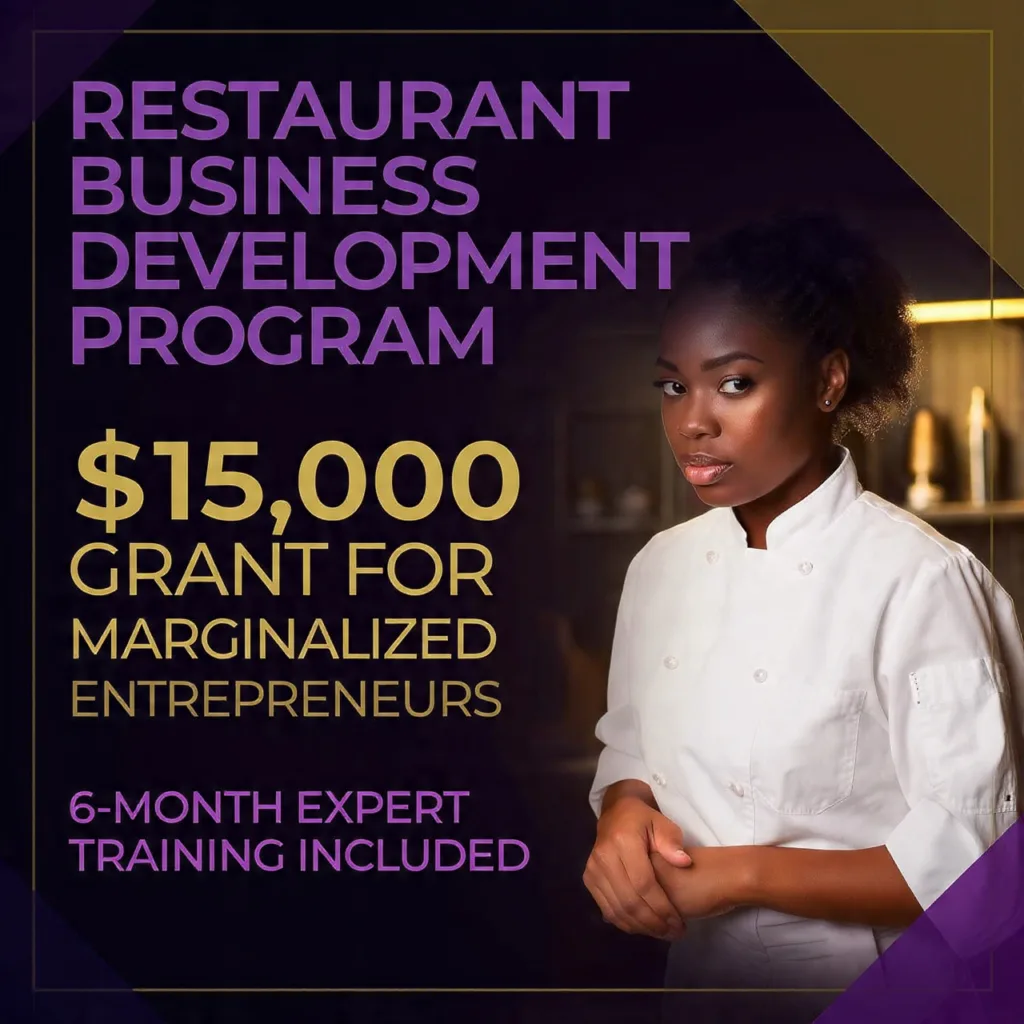
The Restaurant Business Development Program offers $15,000 in comprehensive support to marginalized culinary businesses across the United States and Puerto Rico that have been operating for at least two years with more than four employees. Run by Feed the Soul Foundation, this program combines intensive financial education, marketing training, and operations consulting specifically designed to help restaurants, food trucks, bakeries, bars, and ghost kitchens overcome the unique challenges facing minority-owned food businesses today.
Title: Restaurant Business Development Program
Donor: Feed the Soul Foundation
Focus: restaurant business development, culinary business support, marginalized entrepreneurs, food service businesses, business consulting, financial literacy, marketing training, operational sustainability, minority-owned restaurants
Region: United States, Puerto Rico
Eligibility:
– Culinary business (restaurant, food truck, bakery, bar/lounge, pop-up stand, ghost kitchen)
– At least 51 % owned by marginalized founders
— BIPOC, women, LGBTQ+, immigrants, or other under-represented groups
– Located and operating in the U.S. for 24 + consecutive months
– Staff of 5 + (owner included)
– Active accounting software (QuickBooks or similar) in daily use
– Willing to attend two-hour virtual classes July–December
– Able to share last three years of financials
– Must complete an electronic application plus the Pre-Business Assessment if shortlisted
Benefits:
– Financial Award: $15,000 total value package including $10,000 financial stipend and approximately $15,000 in business development services
– Training Program: 6 months of structured business development education and support
— Financial Education: 3 months of hands-on small business financial education and consulting
— Marketing Training: 1 month of specialized marketing and advertising training for culinary businesses
— Operations Support: 2 months of human resources and operations training
— Expert Consultation: Direct access to subject matter experts throughout 6-month cohort program
– Business Tools: Guidance on inventory management, theft reduction, advertising strategies, expansion planning, and standard operating procedures
Deadline: April 15, 2025
Restaurant Business Development Program 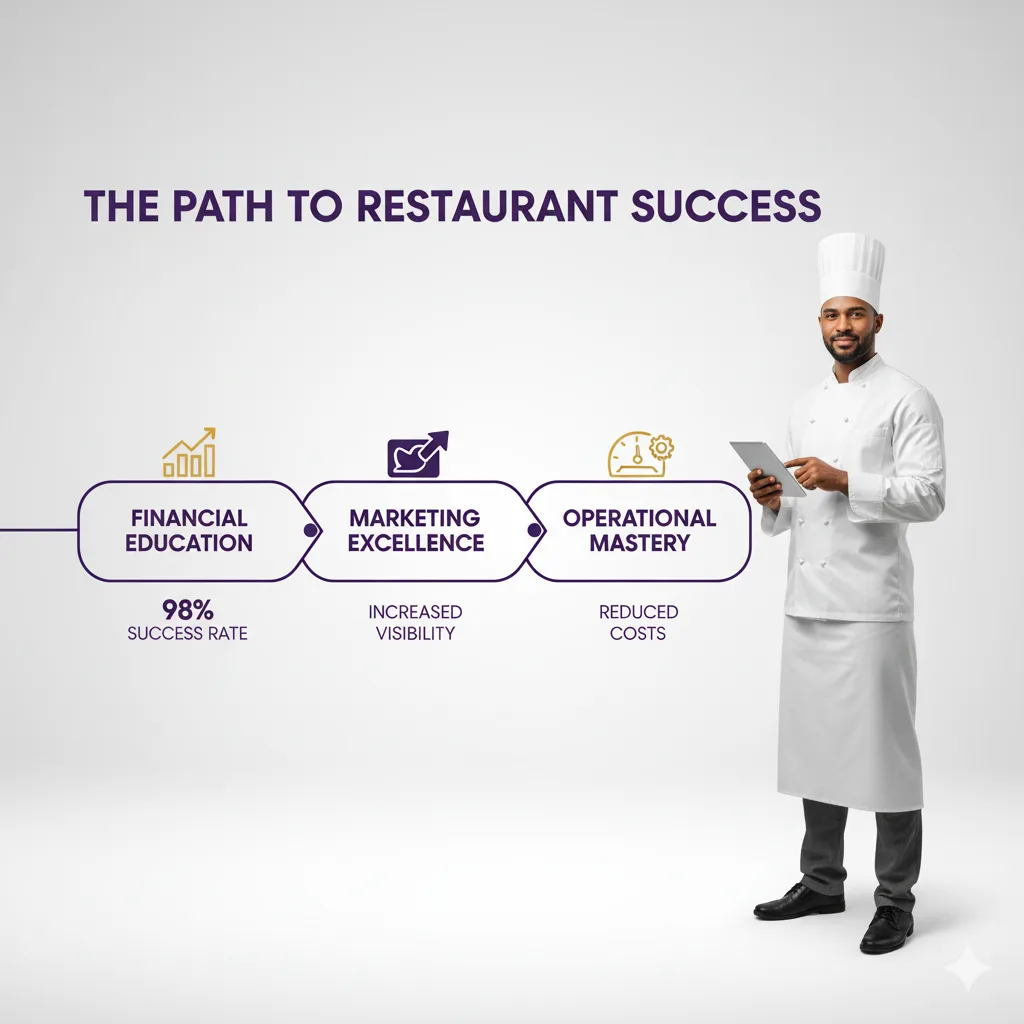 applicants get the rare combo of a $15K cash injection plus six months of hands-on consulting that tackles finance, marketing, HR, and expansion planning – everything a busy owner needs to quit firefighting and grow on purpose. Miss the February 1 to April 15 window and you’ll wait another year, so mark the calendar now.
Here’s something most funding programs won’t tell you up front. This isn’t free money for equipment or a cosmetic renovation. Feed the Soul Foundation built this program after watching 98% of restaurant businesses that received their support continue operating and growing, compared to the industry’s brutal 20% success rate. That gap tells you everything about what actually keeps restaurants alive versus what kills them.
What Makes This Restaurant Development Opportunity Different
One-off cash is nice, but coaching multiplies its impact. Feed the Soul pairs the check with weekly strategy calls – think inventory fixes, menu engineering, and social ads that actually sell tables, not just likes. If $15K alone won’t move your needle, the process improvements probably will. Similar hybrid offers exist, yet few are laser-focused on marginalized culinary owners. Compare it to the Capital & Catalyst Grant and you’ll see this one starts earlier in the growth curve, meeting operators before the half-million-revenue mark.
Feed the Soul Foundation established this initiative in 2020 specifically because marginalized culinary business owners were getting crushed by challenges that had nothing to do with their cooking skills or customer service. Since launch, they’ve supported over 100 marginalized culinary businesses nationwide with more than $850,000 in combined financial and development resources.
The foundation operates as the nonprofit arm of Black Restaurant Week and Latin Restaurant Weeks, bringing real industry connections and deep understanding of the barriers minority restaurant owners face daily. Founded by entrepreneurs Falayn Ferrell, Warren Luckett, Derek Robinson, and Karinn Chavarria, the organization partners with major corporate supporters including the Grubhub Community Fund and Stella Artois to deliver this comprehensive program.
Q: What’s the actual cash amount?
A: $10,000 financial stipend plus approximately $15,000 value in business development services for a total $25,000 investment per business.
Q: Do I need perfect financials to qualify?
A: No, but you must have 3 years of financial statements and use active accounting software like QuickBooks.
Eligibility Deep Dive
Skip guesswork – check every box before hitting “submit.”
– Ownership: 51 % from a marginalized group? Good. Ownership split 50/50 with a non-marginalized partner? Not good.
– Time in business: 24 straight months means no pandemic hiatuses. They will peek at sales history.
– Employee count: Four or fewer? Grow the payroll first, then circle back next year.
– Accounting readiness: A tidy QuickBooks file often separates winners from early exits.
Selection Process: Three Hurdles
Round 1—Pre-Business Assessment: a metrics snapshot covering margins, labor cost, and break-even point.
Round 2—Virtual Interview: 30-minute video chat. Think Shark Tank minus the drama.
Round 3—Final Cut: Board review of financials, interview notes, and mission fit.
Past cohorts say preparation time totals 10–15 hours. That’s light compared with the payoff.
Why Your Restaurant Actually Needs Business Development Training
According to the National Restaurant Association’s 2024 State of the Industry report, 98% of culinary business owners say higher labor and operations costs are crushing their restaurants. Another 97% cite food inflation as a major challenge. Perhaps most telling? Only 62% of restaurants reported being profitable in 2023.
Those numbers aren’t accidents. They represent systematic gaps in business knowledge that cooking talent alone can’t fix. You might serve the best tacos in your neighborhood, but if you don’t understand food cost percentages, labor scheduling efficiency, or how to read a P&L statement properly, you’re operating blind in a business where margins are already razor-thin.
The program addresses five critical business development areas that restaurant owners struggle with most:
Finance and Accounting Support
Three full months of hands-on financial education and consulting focused specifically on culinary businesses. You’ll learn to plan and adopt best practices for inventory management, reduce theft systematically, understand your actual food costs versus perceived costs, and make data-driven decisions about menu pricing and portion control. This isn’t generic small business advice. It’s restaurant-specific financial training from consultants who understand the difference between theoretical profit margins and the reality of running a kitchen.
Advertising and Marketing Training
One concentrated month of marketing and advertising training designed for food service businesses. The program provides access to training in advertising strategies, digital marketing fundamentals, radio promotions, public relations, and promotional strategies that actually work for restaurants. Too many culinary entrepreneurs excel at creating memorable dishes but struggle to fill seats consistently. This training bridges that gap by teaching you how to increase visibility and attract customers beyond word-of-mouth.
Business Expansion Guidance
For restaurant owners considering growth, the program offers specialized support for navigating the expansion process. Whether you’re thinking about adding new locations or creating a franchise model, you’ll get practical guidance on the financial, operational, and strategic considerations that determine whether expansion succeeds or becomes a costly mistake. The Olga Loizon Memorial Grant offers similar support for women entrepreneurs in Michigan’s restaurant sector.
Operating Procedures Development
Two months dedicated to building standard operating procedures, strategies, and planning systems that ensure your business works at maximum capacity. This includes staffing models, kitchen workflow optimization, quality control systems, and the documentation that allows you to scale operations without losing consistency. Many restaurants fail not because of poor food quality but because they can’t maintain standards as they grow.
Human Resources Consulting
Restaurant turnover averages 73% annually, one of the highest rates across all industries. The program provides consulting services to develop best practices for hiring, training, and managing employees effectively. You’ll learn retention strategies, conflict resolution approaches, and how to build a team culture that keeps good people from walking out during your dinner rush.
Q: Can I apply if my restaurant is less than 2 years old?
A: No. The program specifically requires 24 consecutive months of operation.
Q: What does “marginalized” actually mean for eligibility?
A: The business must be at least 51% owned by person(s) who identify as marginalized, including racial minorities and other underrepresented groups in the restaurant industry.
Q: Do I have to attend training in person?
A: No. All training occurs through 2-hour virtual classes from July through December.
The Three-Round Selection Process Explained
Understanding how winners get selected helps you prepare a stronger application. Feed the Soul Foundation uses a comprehensive three-round review process designed to identify businesses with the highest potential for sustainable growth.
Round 1 involves a Pre Business Assessment for selected applicants. Not everyone who submits an initial application advances to this stage. Those who do must complete a detailed assessment that examines current business operations, financial health, and specific areas where development support would create the most impact.
Round 2 consists of virtual interviews with businesses that impressed reviewers during the assessment phase. These conversations dig deeper into your business model, growth challenges, and commitment to implementing what you’ll learn through the program. Prepare to discuss specific operational problems you’re facing and how you’d apply the training to solve them.
Round 3 represents final selection, where the cohort members are chosen from interview participants. Winners are announced by June 2025, giving businesses time to prepare for the July program start. The entire timeline runs from February 1st (application opening) through April 15th (deadline), with notifications arriving roughly two months later.
What Previous Cohorts Actually Accomplished
Since launching in 2021, the program has achieved results that separate it from typical grant offerings. More than 98% of businesses receiving financial and business development support are still operating and experienced measurable growth. Compare that against the national restaurant success rate of approximately 20%, and you start understanding why the comprehensive development approach works where simple cash grants fail.
The foundation has invested over $1,078,000 in financial and business development support to 59 marginalized culinary businesses through mid-2023 alone. An additional Emergency Relief Fund provided $46,000 to culinary businesses facing unforeseen damages and natural disasters. The program also developed an internship initiative, distributing $59,000 in student stipends while providing workforce training to 15 minority college students studying small business marketing and public relations.
Previous recipients span the full range of culinary businesses the program serves. Winners have included traditional restaurants, food trucks, bakeries, bars, pop-up food stands, and ghost kitchens from locations across the United States. Each business received the same comprehensive package: financial stipend, six months of consulting, and structured education tailored to their specific challenges and growth goals.
Feed the Soul Foundation approaches this work with unusual transparency about the challenges marginalized restaurant owners face. According to Small-Business Labor Crisis reporting, 42% of small business owners experienced burnout in the past year, while 56% express feeling alone when solving problems and making decisions. The culinary industry compounds these challenges with fast-paced operations, intense competition, and slim profit margins that leave little room for error.
Strategic Considerations Before You Apply
This program demands significant time commitment during your busiest season. The six-month training period runs July through December, which overlaps with peak revenue months for most restaurants. You’ll need to attend 2-hour virtual classes regularly while managing daily operations. That’s why having more than four employees is a requirement. You need staff who can handle operations while you’re developing business skills that will ultimately benefit everyone.
The financial documentation requirements aren’t optional or negotiable. You must provide three years of financial statements including balance sheets, profit and loss statements, taxes, and general ledgers. If your recordkeeping is incomplete or your accounting software sits unused, you’ll need to address those issues before applying. The program can’t help businesses that lack basic financial visibility into their operations.
Consider your capacity for implementing what you’ll learn. The training only creates value if you actually apply it to your business. Winners who see the strongest results typically approach the program with specific operational problems they’re trying to solve, not vague hopes for “getting better at business.” Think about your three biggest challenges right now. Can this training help you address them systematically?
Also understand the commitment extends beyond just attending classes. You’ll be working with consultants who will expect you to complete assignments, implement new procedures, and track results. The businesses that get the most value treat this as seriously as a part-time MBA program, because that’s essentially what it is, tailored specifically to culinary operations.
How Marginalized Culinary Businesses Face Different Challenges
The restaurant industry employs a diverse workforce, with 47% of jobs held by people of color according to National Restaurant Association data. But that diversity doesn’t extend equally up the ladder. Fewer minority persons fill corporate positions, management roles, and ownership slots. This creates a gap not just in representation but in access to the knowledge, networks, and capital that make restaurants sustainable.
Marginalized restaurant owners often pursue entrepreneurship because traditional employment closed doors on them, not because they had abundant advantages and chose the riskiest path. Research consistently shows that systematically marginalized individuals face barriers in traditional labor markets, including racial discrimination that prevents them from finding gainful employment. For these entrepreneurs, the restaurant becomes less about following a passion and more about creating their own economic opportunity when others won’t.
That context matters because it means many marginalized culinary business owners started without the advantages their competitors may take for granted. Maybe they didn’t have family connections to suppliers who offer favorable terms. Perhaps they couldn’t secure traditional financing and had to bootstrap with personal funds and credit cards. They might lack the business education background that helps other entrepreneurs navigate operational challenges more smoothly.
Feed the Soul Foundation built this program specifically to level that playing field. The comprehensive approach acknowledges that you can’t just hand someone $10,000 and expect systemic disadvantages to disappear. Real support means addressing the knowledge gaps, providing expert guidance, and creating the support network that marginalized entrepreneurs often lack.
Similar programs like the Breva Company Grant and Galaxy Grant also recognize that minority business owners need more than capital alone. They need structured development opportunities and expert mentorship to compete against better-resourced competitors.
Application Timeline and What Happens After
Applications open February 1, 2025, and close April 15, 2025. That three-month window might seem generous, but gathering three years of financial documentation takes time if your records need organizing. Don’t wait until April 10th to start pulling together balance sheets and tax returns.
Incomplete applications won’t be reviewed. Period. This isn’t a program where you can submit partial information and hope for the best. Every requirement exists because the selection committee needs that information to evaluate whether your business is positioned to benefit from the training. Missing even one financial statement or failing to confirm your accounting software is active will disqualify your application immediately.
After the April 15th deadline, the three-round review process begins. By June 2025, selected businesses receive notification. Winners then have roughly one month to prepare for the July program start, which includes ensuring they can commit to the 2-hour weekly virtual sessions for the next six months.
The program runs through December, meaning you’ll finish just before year-end. That timing is actually strategic. You’ll have five months to implement what you learned before tax season arrives, giving you the chance to see measurable improvements in your 2026 financial statements compared to previous years.
Q: Can I apply if I own multiple types of culinary businesses?
A: Apply with your primary business that meets all eligibility criteria. The training will benefit your other ventures too.
Q: What if I don’t have QuickBooks specifically?
A: Other accounting software programs are acceptable, but they must be active and currently in use. The key is having systematic financial tracking, not a specific brand.
Q: Does operating in Puerto Rico count as United States eligibility?
A: Yes. The program explicitly includes Puerto Rico in eligible regions.
Common Mistakes That Kill Restaurant Applications
After reviewing hundreds of applications since 2021, the foundation has seen patterns in what separates winning submissions from rejected ones. Understanding these common mistakes helps you avoid them.
Vague descriptions of how you’ll use the funding consistently hurt applications. Saying “I’ll use it to grow my business” means nothing. Specificity wins. Explain exactly which menu items have the highest food cost issues. Describe the specific marketing channels you want to test. Detail the operational bottleneck that’s preventing you from serving more customers during peak hours.
Incomplete financial documentation remains the most common technical disqualification. Some applicants submit two years instead of three. Others provide tax returns but skip the balance sheets. A few try to explain away missing general ledgers with promises to create them if selected. None of these approaches work. The program can’t waive requirements that exist for legitimate evaluation purposes.
Underestimating the time commitment also creates problems, though usually after selection rather than during application review. Applicants who don’t realistically assess whether they can attend 2-hour classes weekly for six months often struggle once the program begins. Having more than four employees helps distribute workload, but the owner must still carve out significant time for learning and implementation.
Applying with businesses that don’t fit the culinary definition wastes everyone’s time. The program explicitly serves restaurants, food trucks, bakeries, bars/lounges, pop-up food stands, and ghost/cloud kitchens. Catering companies that don’t maintain a regular location don’t qualify. Food products sold wholesale don’t qualify. Personal chef services don’t qualify. The definition exists because the training is specific to certain operational models.
What Winning Applications Actually Look Like
Strong applications tell a story about a viable business facing specific challenges that this program can solve. They demonstrate that the owner understands their numbers, has identified operational problems, and possesses the capacity to implement solutions with proper guidance.
Winners typically show clear financial documentation that reveals both strengths and weaknesses. They’re not ashamed to highlight areas where they need help. In fact, the most successful applications often focus on the gap between where the business is now and where it could be with proper development support. Maybe food costs are running 5% higher than industry standards and the owner knows it but hasn’t figured out how to fix it sustainably.
Winning applications also demonstrate commitment through past actions, not just future promises. Has the business already tried to improve operations but lacked expertise to do it effectively? Did the owner invest in some training but need more comprehensive support? These details show that you’re serious about business development, not just looking for free money.
The businesses that impress reviewers understand their community impact. They can articulate how their restaurant serves their neighborhood, provides jobs, and contributes to local economic activity. This aligns with Feed the Soul Foundation’s mission of supporting businesses committed to economic growth in their communities. Similar to the Creative Business Boost Initiative, community impact often separates competitive applications.
Why This Actually Works When Cash Grants Fail
Most restaurant owners don’t fail because they lack money. They fail because they lack business systems, financial literacy, and operational knowledge. Handing someone $10,000 without addressing those gaps just delays the inevitable by a few months.
Feed the Soul Foundation’s model works because it treats the actual disease, not just symptoms. The financial stipend handles immediate needs like equipment repairs or paying down supplier debt. But the six months of structured training addresses the systemic issues that created those problems in the first place.
The program’s 98% success rate compared to the industry’s 20% success rate isn’t marketing hype. It reflects the difference between giving someone fish versus teaching them to fish, except in this case it’s teaching them to run a sustainable culinary business in a brutal industry where most entrepreneurs fail.
Think about what kills restaurants. Poor financial management destroys more businesses than bad food ever could. Ineffective marketing means even great restaurants struggle to fill tables. Operational inefficiencies bleed money through waste, theft, and poor scheduling. High turnover creates constant training costs and inconsistent service. These are all solvable problems with the right knowledge and systems.
The comprehensive approach also creates accountability that standalone grants lack. You’re not just cashing a check and disappearing. You’re working with consultants who track your progress, attending classes with other restaurant owners facing similar challenges, and implementing changes that get evaluated throughout the six-month program. That structure keeps you focused on actually improving your business rather than just surviving another week.
After the Program: What Winners Say Changed
Previous cohort members consistently cite financial clarity as the biggest transformation. Many restaurant owners operate with a rough sense of whether they’re making money, but they lack precise understanding of their numbers. After three months of financial education, winners report feeling confident reading financial statements, understanding their true profit margins, and making data-driven decisions about menu pricing and cost control.
Marketing training produces the most immediate visible results. Winners learn strategies for increasing visibility without massive advertising budgets. They understand how to build social media presence authentically, leverage local media relationships, and create promotional campaigns that actually drive traffic. Several past recipients reported measurable increases in cover counts within weeks of implementing marketing strategies learned through the program.
Operational improvements often take longer to manifest but create the most sustainable impact. Winners develop standard operating procedures that allow them to maintain quality as they grow. They implement inventory management systems that reduce waste and theft. They create training programs that decrease employee turnover and improve service consistency. These changes compound over time, creating efficiency gains that directly impact profitability.
The networking component also provides unexpected value. Cohort members build relationships with other marginalized restaurant owners facing similar challenges. These connections often lead to knowledge sharing, resource pooling, and mutual support that extends long after the formal program ends. In an industry where entrepreneurs often feel isolated, that community becomes a crucial resource.
Strategic Alternatives If You Don’t Qualify
If your restaurant doesn’t meet the 24-month operation requirement or the more-than-4-employees threshold, other funding opportunities might serve you better right now. The Start.Pivot.Grow. Micro Grant offers $2,500 quarterly for businesses with at least two years of operation, though it doesn’t provide the comprehensive training component.
For women-owned restaurants specifically, the Idea Cafe Small Business Grant provides $1,000 with a simpler application process and fewer restrictions. While the amount is smaller, it can address immediate needs while you build toward programs like the Restaurant Business Development Program.
Businesses focused heavily on community impact should examine the Breva Thrive Grant, which awards $5,000 quarterly to businesses demonstrating measurable community transformation. The emphasis aligns well with restaurants serving underserved neighborhoods.
If your primary challenge is emergency funding rather than business development, investigate the Southern Smoke Emergency Relief Fund, which provides rapid assistance to food and beverage industry workers facing unexpected hardships. Sometimes addressing an immediate crisis takes priority over long-term development.
Look, putting together a competitive application for a program this comprehensive takes real work. You need to organize years of financial documentation, articulate your business challenges clearly, and demonstrate your capacity to implement what you’ll learn. That’s a lot when you’re already running a restaurant seven days a week.
If you’re serious about this opportunity and want expert eyes on your application before submission, that’s exactly what we help with at Grantaura. A little bit of professional guidance on framing your story, organizing your financials, and highlighting your strengths can make all the difference between being selected and being passed over. CLICK HERE to get the GRANT PROPOSAL WRITING help.
Frequently Asked Questions
Q: Do ghost kitchens qualify?
A: Yes, if they meet the 24-month and employee thresholds.
Q: Is the $15K taxable income?
A: Usually yes; plan for federal and state obligations.
Q: Can I apply while also chasing the TMF Stabilization Grant?
A: Yes, different donors, no conflict.
Q: What counts as “marginalized”?
A: BIPOC, women, LGBTQ+, immigrant, veteran, or disabled ownership.
Q: Are food trucks with seasonal downtime eligible?
A: Seasonal is fine; the key is 24 straight months registered and operational.
Check Your Eligibility
Before you spend hours gathering financial documents and crafting your application, use the eligibility tool below to quickly assess whether your restaurant business qualifies for this program. Answer a few straightforward questions about your business operations, ownership structure, and documentation readiness to determine if you should proceed with a full application.
32 More Grants For Restaurant Business Development and Food Service
Beyond the Feed the Soul Foundation program, numerous funding opportunities support restaurant owners, food trucks, bakeries, and other culinary businesses seeking to grow their operations. Exploring multiple options simultaneously increases your chances of securing the capital and support your business needs.
- Secretsos™ Small Business Grant: $2,500 Quarterly Funding for Financially Distressed Entrepreneurs: Quarterly grant program targeting financially distressed businesses, including woman-owned, veteran-owned, and minority-owned restaurants across the United States. The $2,500 award provides complete spending flexibility with no repayment required, making it ideal for culinary businesses facing immediate financial challenges that might prevent them from qualifying for traditional financing.
– Donor: Secretsos™ Foundation
– Focus: Underserved entrepreneurs, financially distressed businesses, quarterly grants, flexible spending
– Deadline: Ongoing quarterly deadlines
- Breva Thrive Grant: $5,000 Quarterly Small Business Funding for Community Impact: Quarterly grant delivering $5,000 in unrestricted funding to small businesses demonstrating measurable community impact in underrepresented neighborhoods. Restaurant owners creating jobs and transforming their communities through culinary businesses are ideal candidates for this program that prioritizes women and minority-owned businesses.
– Donor: Breva, Cadence Financial Group
– Focus: Community impact, small business growth, underrepresented communities, job creation
– Deadline: Quarterly – January 31, April 30, July 31, October 31
- Galaxy Grant: $2,450 Monthly Business Funding for Women and Minority Entrepreneurs: Monthly grant opportunity from Hidden Star nonprofit specifically supporting women and minority entrepreneurs across all business types, including restaurants, food trucks, and bakeries. Each application cycle awards grants ranging from $1,250 to $4,250, with the current opportunity offering $2,450 plus access to a community of 600,000+ entrepreneurs.
– Donor: Hidden Star (501(c)(3) nonprofit)
– Focus: Women-owned businesses, minority-owned businesses, entrepreneurship, business growth
– Deadline: Monthly application cycles
- Food & Beverage Business Grants: Comprehensive collection of funding opportunities specifically targeting food service businesses, restaurants, food trucks, bakeries, and beverage companies across the United States. This list aggregates grants, accelerator programs, and business development resources tailored to the unique challenges of culinary entrepreneurs and food industry professionals.
– Donor: Various donors and foundations
– Focus: Food businesses, beverage companies, culinary entrepreneurs, restaurant owners
– Deadline: Varies for each grant in the food and beverage category
- Creative Business Boost Initiative: $5,000 Grant Plus 8-Week Coaching for Creative Entrepreneurs: While primarily targeting creative businesses, this program from Hello Alice and Etsy’s Uplift Fund includes culinary entrepreneurs who approach food as creative expression. The $5,000 grant combines with an 8-week virtual Boost Camp providing structured guidance on financial management, market expansion, and sustainable business practices.
– Donor: Hello Alice, Global Entrepreneurship Network, Etsy’s Uplift Fund
– Focus: Creative entrepreneurship, business coaching, cultural economy, sustainable growth
– Deadline: May 9, 2025
- Amazon’s Black Business Accelerator: E-Commerce Support for Black-Owned Culinary Products: For restaurant owners who also sell packaged goods, sauces, or other culinary products online, Amazon’s Black Business Accelerator provides $500 enrollment credits, advertising credits, business education, mentorship, and marketing support to help Black-owned businesses succeed on the Amazon marketplace.
– Donor: Amazon
– Focus: E-commerce, business development, marketing, Black-owned businesses
– Deadline: Ongoing enrollment
- EmpowHer Grant: Up to $25,000 for Women-Led Businesses with Social Impact: Quarterly grant program supporting female entrepreneurs running businesses that address social issues including hunger, sustainability, and community development. Women-owned restaurants focused on community feeding programs, sustainable sourcing, or food justice initiatives may qualify for this funding opportunity.
– Donor: Boundless Futures Foundation
– Focus: Women entrepreneurs, social impact, poverty reduction, hunger relief, sustainability
– Deadline: Quarterly review cycles
- Olga Loizon Memorial Foundation Grant: $75,000 for Women Restaurant Entrepreneurs in Michigan: Honoring the legacy of Olga Loizon, who revolutionized Metro Detroit’s culinary landscape with Olga’s Kitchen, this grant provides substantial financial support to women entrepreneurs in Michigan’s restaurant industry. The program awards grants totaling $75,000 annually to exceptional women who demonstrate passion, ambition, and innovative vision in the culinary sector.
– Donor: TEAM Schostak Family Restaurants, Olga’s Kitchen
– Focus: Women entrepreneurs, restaurant industry, Michigan businesses, culinary innovation
– Deadline: Varies annually
- Skip $10K Summer Grants: Seasonal Funding for Growing Restaurants: Designed to support entrepreneurs focusing on business growth during the busy summer season, this $10,000 grant is accessible to all restaurant owners and food service entrepreneurs across the United States. The straightforward application process and seasonal timing make it ideal for restaurants needing capital to maximize their peak revenue period.
– Donor: Skip
– Focus: Business growth, entrepreneur support, small business development, seasonal funding
– Deadline: Ongoing
- Start.Pivot.Grow. Micro Grant: $2,500 Quarterly for Established Small Businesses: Quarterly grant providing $2,500 in non-dilutive funding plus business growth tools for established restaurants with at least two years of operation and $50,000+ in annual revenue. The grant specifically targets businesses with limited staff, making it perfect for owner-operated restaurants or small family-run culinary businesses.
– Donor: Integrality, UPS Foundation, Dallas College Foundation, Wells Fargo
– Focus: Small business support, operational expenses, growth capital, established businesses
– Deadline: Quarterly rolling deadlines
- Santander X Cultivate Small Business Grant: Up to $13K plus Babson College training for early-stage women and BIPOC food entrepreneurs.
– Donor: Santander Bank
– Focus: Minority food start-ups, MBA-style learning
– Deadline: January 31, 2026
- TMF Stabilization Grant: Philadelphia businesses (including eateries) snag up to $10K to plug immediate capital gaps.
– Donor: The Merchants Fund
– Focus: Storefront survival, equipment repairs
– Deadline: May 2, 2026
- Honeycomb Credit Breakthrough Grant: $10K for brick-and-mortar owners planning expansions—think second locations or mobile units.
– Donor: Honeycomb Credit
– Focus: Expansion capital, equipment purchase
– Deadline: Rolling
- AmEx Backing Small Businesses Grant: $10K for storefront upgrades in historic corridors, restaurants welcome.
– Donor: American Express & National Trust
– Focus: Renovations, façade improvements
– Deadline: March 25, 2026
- Hustler’s MicroGrant: Monthly $1K shot for early-stage hustlers, including food pop-ups.
– Donor: HerSuiteSpot
– Focus: Micro-businesses, start-ups
– Deadline: Monthly
- STREETS $10K Awards for Hospitality Change-Makers: Early social enterprises in food/tourism get $10,000 for community good. For owners blending business with positive shifts, plus global connects.
– Donor: STREETS International
– Focus: Social enterprise
– Deadline: August 31, 2026
- Backing Historic Restaurants: $50K Grants for US Legacy Spots: Owners of culturally significant eateries snag $50,000 for upgrades and preservation. Suited for historic venues needing repairs or marketing to preserve heritage while boosting appeal.
– Donor: American Express, National Trust for Historic Preservation
– Focus: Preservation, upgrades
– Deadline: Ongoing
- Southern Smoke $2,500 Emergency Grants for Food Pros: Beverage and food workers in crises get rapid $2,500 for personal stability. Aids in keeping operations afloat during health or disaster hits.
– Donor: Southern Smoke Foundation
– Focus: Crisis support
– Deadline: Rolling
- DoorDash $5K-$15K Disaster Aid for Businesses: Local shops and eateries post-disaster access $5,000-$15,000 recovery funds. Targets repair and restock for quick rebounds in struck zones.
– Donor: DoorDash
– Focus: Recovery
– Deadline: Rolling
- Creative Boost $5K Grants + Guidance for Innovators: Unique food creators receive $5,000 and mentorship for standout ideas like fusion spots. Builds skills to thrive in crowds.
– Donor: Various
– Focus: Creativity
– Deadline: Rolling
- Her Agenda $5K Grants for Women + Resources: Female food owners grab $5,000 for advances, with support against burnout. Balances expansion and wellness.
– Donor: Her Agenda
– Focus: Women-led
– Deadline: Ongoing
- The Amplifier Grant: $5K minimum for community-impact projects—bakeries, cafés, and after-school snack programs fit right in.
– Donor: The Outrage
– Focus: Community impact, small food ventures
– Deadline: Seasonal rolling
- USDA Farmers Market Promotion Program: $50K–$500K for local food systems and direct-to-consumer projects.
– Donor: USDA
– Focus: Farmers markets, CSAs, local food outreach
– Deadline: June 27, 2026
- San Francisco Accessibility Grant: $10K to upgrade restrooms, entrances, or seating for ADA compliance.
– Donor: SF Office of Small Business
– Focus: Accessibility retrofits
– Deadline: Ongoing
- Neighborhood Business Grant: Up to $5K for NYC businesses strengthening local communities—corner cafés often score high.
– Donor: CitizensNYC
– Focus: Community uplift, micro-retail
– Deadline: July 25, 2026
- Idea Cafe Small Business Grant: $1,000 for Women Restaurant Entrepreneurs: Monthly grant providing $1,000 to women entrepreneurs owning or planning to launch culinary businesses. The refreshingly simple application process requires no business plan or application fee, making it accessible for early-stage restaurant owners or food truck operators still developing their full business documentation.
– Donor: Idea Cafe
– Focus: Women entrepreneurs, accessible funding, simple application, business launch support
– Deadline: Monthly application cycles
- AT&T She’s Connected: $50,000 Grand Prize Plus National Media Exposure: National contest offering a $50,000 grand prize, feature content piece with AT&T athlete ambassadors, one year of AT&T service, and mentorship opportunities for woman-owned small businesses with 50 or fewer employees. Restaurant owners focused on community connection and demonstrating how their business builds bridges locally are ideal candidates.
– Donor: AT&T Services, Inc.
– Focus: Women-led business, community development, marketing, national exposure
– Deadline: Varies annually
- $500 Monthly Cash Grant for Single Moms: Side-hustling chef-moms can tap repeat micro-funding for household stability while the restaurant scales.
– Donor: WealthySingleMommy
– Focus: Personal expense relief for entrepreneurs
– Deadline: Ongoing
- Puerto Rico Business Grants: Funding opportunities specifically available to businesses operating in Puerto Rico, including restaurants, food trucks, and culinary businesses serving local communities. These grants often provide additional support for businesses in territories facing unique economic challenges.
– Donor: Various federal, territorial, and private organizations
– Focus: Puerto Rico businesses, economic development, community support
– Deadline: Varies for each grant in Puerto Rico
- Minority Entrepreneur Grants Category: Aggregated collection of funding opportunities specifically designed for minority-owned businesses, including restaurants, food trucks, and culinary ventures owned by racial minorities, women, veterans, and other underrepresented groups in the business community.
– Donor: Various organizations and foundations
– Focus: Minority entrepreneurs, underrepresented business owners, diversity in business
– Deadline: Varies for each grant in the minority entrepreneur category
- United States Business Grants by Location: State-specific and federal funding opportunities for businesses across all fifty states plus territories. Restaurant owners can filter by their specific location to find grants, loans, and business development programs available in their city, county, or state that may offer more favorable terms than national competitions.
– Donor: Various government agencies, foundations, and corporations
– Focus: Small business support, economic development, job creation, local entrepreneurship
– Deadline: Varies for each grant in specific U.S. locations
- Global Grants Directory: Worldwide database—helpful if you’re planning an international pop-up or sourcing outside the U.S.
– Donor: Multiple
– Focus: International business, expansion
– Deadline: Varies
Restaurant owners seeking funding should explore multiple opportunities simultaneously rather than relying on a single application. Grantaura’s platform provides free access to hundreds of vetted grant programs, allowing you to search by industry, location, business type, and funding amount. You can save opportunities to your dashboard, set up alerts for new grants matching your criteria, and access resources that help you understand which programs offer the best fit for your specific situation.
Terms
- Marginalized Entrepreneur: Business owners from underrepresented groups who face systemic barriers in accessing capital, networks, and business resources. In the restaurant industry context, this primarily includes racial minorities, women, and other groups historically excluded from ownership opportunities and traditionally denied equitable access to funding and business development support.
- Culinary Business: For this program’s purposes, businesses defined as restaurants, food trucks, bakeries, bars/lounges, pop-up food stands, or ghost/cloud kitchens. Other food-related businesses like catering companies, personal chef services, or wholesale food production don’t qualify because the training is specifically designed for businesses serving customers at fixed or mobile locations.
- Business Development: Systematic improvement of business operations through education, consulting, and implementation of better systems and processes. Unlike grants that simply provide cash, business development programs focus on building sustainable operational capabilities in areas like financial management, marketing, human resources, and strategic planning that create long-term competitive advantages.
- Financial Stipend: Direct cash payment provided to grant recipients for business expenses determined by their specific needs. In this program, the stipend is part of the total $15,000 package and can address immediate operational needs like equipment repairs, supplier payments, or working capital while the recipient participates in long-term training.
- Cohort Model: Educational approach where a group of participants progresses through a structured program together, learning simultaneously and building peer relationships. This Restaurant Business Development Program uses cohort structure to create community among marginalized restaurant owners facing similar challenges, encouraging knowledge sharing and mutual support beyond formal training sessions.
- Pre Business Assessment: Detailed evaluation of current business operations, financial health, and specific areas where development support would create the greatest impact. This assessment occurs during Round 1 of the selection process and helps the foundation determine which businesses are positioned to benefit most from the comprehensive training program.
- Standard Operating Procedures (SOPs): Documented step-by-step instructions for completing routine business tasks consistently and efficiently. For restaurants, SOPs might cover opening and closing procedures, food preparation standards, customer service protocols, inventory management, and cash handling. Proper SOPs allow businesses to maintain quality as they scale and reduce dependence on any single employee’s knowledge.
- Profit and Loss Statement (P&L): Financial report showing a business’s revenues, costs, and expenses during a specific period, revealing whether the business is profitable. Also called an income statement, the P&L is one of the most important documents restaurant owners must understand to make informed decisions about menu pricing, cost control, and operational efficiency.
- Balance Sheet: Financial statement showing a business’s assets, liabilities, and equity at a specific point in time. Unlike the P&L which shows performance over a period, the balance sheet provides a snapshot of financial position, revealing whether the business owns more than it owes and has adequate working capital to sustain operations.
- General Ledger: Complete record of all financial transactions in a business, organized by account. The general ledger serves as the foundation for all financial statements and provides the detailed transaction history necessary for understanding where money comes from and where it goes, which is essential for identifying problems and opportunities in restaurant operations.
- Food Cost Percentage: The ratio of food costs to food sales, expressed as a percentage. This critical restaurant metric reveals how efficiently you’re managing inventory, portion control, pricing, and waste. Most restaurants target food cost percentages between 28% and 35%, though this varies by concept. Understanding and controlling this percentage often separates profitable restaurants from failing ones.
- Labor Cost Percentage: Total labor costs divided by total sales, expressed as a percentage. This includes wages, payroll taxes, benefits, and related expenses. Restaurants typically target labor costs between 25% and 35% of sales, though fine dining operations may run higher. Balancing labor costs against service quality and employee retention is one of the most challenging aspects of restaurant management.
- Ghost Kitchen (Cloud Kitchen): Commercial cooking facility designed exclusively for delivery and takeout orders without a traditional dining room or storefront. Also called virtual kitchens or dark kitchens, these operations reduce overhead costs by eliminating front-of-house expenses, allowing restaurants to serve multiple delivery brands from a single location or test new concepts with minimal investment.
- Accounting Software: Digital platforms like QuickBooks, Xero, or FreshBooks that track financial transactions, generate reports, and manage business finances systematically. The program requires active use of such software because operating without systematic financial tracking makes it impossible to understand business performance or make data-driven decisions about pricing, costs, or investments.
- Inventory Management: Systems and processes for tracking food and beverage stock levels, monitoring usage patterns, identifying waste or theft, and optimizing purchasing decisions. Effective inventory management directly impacts profitability by reducing food costs, minimizing waste, preventing stockouts, and ensuring consistent product availability for menu items.
- Employee Turnover Rate: The percentage of employees who leave a business during a given period, calculated by dividing the number of departures by average employee count. The restaurant industry averages 73% annual turnover, one of the highest rates across all sectors. High turnover increases training costs, reduces service quality, and damages team morale, making retention strategies crucial for sustainable operations.
- Working Capital: The difference between current assets and current liabilities, representing the liquid funds available for daily operations. Restaurants need adequate working capital to cover payroll, purchase inventory, pay suppliers, and handle unexpected expenses without taking on debt or missing payments that damage vendor relationships.
- Business Expansion: Growth strategies including opening additional locations, franchising the concept, or significantly increasing capacity at existing operations. The program provides specialized guidance on expansion because many successful restaurant owners discover that growth requires fundamentally different skills than launching and operating a single location, and poorly planned expansion destroys more businesses than it helps.
- Marketing Mix: Combination of promotional strategies including advertising, social media, public relations, promotions, and direct marketing that restaurants use to attract and retain customers. The program’s marketing training focuses on culinary-specific approaches that work within typical restaurant budgets, emphasizing high-return tactics over expensive traditional advertising that smaller businesses can’t afford.
- Human Resources Best Practices: Proven approaches to hiring, training, managing, and retaining employees effectively. For restaurants facing chronic labor shortages and high turnover, HR best practices might include structured interview processes, comprehensive training programs, clear advancement paths, competitive compensation packages, and workplace cultures that reduce the stress and burnout common in food service.
- Non-Dilutive Funding: Money provided to businesses without requiring equity ownership or repayment. Unlike loans that must be repaid with interest or investor funding that dilutes ownership, grants like the Restaurant Business Development Program offer capital that businesses keep completely. This makes grants particularly valuable for entrepreneurs who want to maintain full control of their businesses.
- Operational Efficiency: The ratio of valuable output to required input in business operations. Operationally efficient restaurants produce maximum revenue and customer satisfaction with minimum waste, labor hours, and overhead costs. Improving operational efficiency doesn’t necessarily mean cutting corners; it means eliminating waste, streamlining processes, and ensuring every dollar spent generates appropriate return.
- Menu Engineering: Analytical approach to menu design that categorizes items by profitability and popularity, guiding decisions about pricing, placement, and promotion. Understanding which menu items generate the highest margins and which attract customers allows restaurant owners to design menus that maximize profitability while satisfying customer preferences.
- Vendor Relationships: Business partnerships with suppliers providing food, beverages, equipment, and services to restaurants. Strong vendor relationships often result in better pricing, favorable payment terms, priority service during shortages, and flexibility during cash flow challenges. Many marginalized restaurant owners lack the connections that lead to favorable vendor terms, putting them at competitive disadvantage.
- Virtual Training: Online educational sessions conducted through video conferencing platforms, allowing participants to attend from any location with internet access. The program’s virtual format eliminates travel requirements and makes participation possible for restaurant owners across the United States and Puerto Rico without leaving their businesses for extended periods.
Author
Imran Ahmad founded Grantaura after watching too many talented restaurant owners with incredible culinary skills struggle because they never learned the business fundamentals that keep kitchens open past year two. Having worked with over 300 clients since 2021 and maintained a 4.9 rating across hundreds of engagements, Imran built this platform specifically to make grant funding accessible to the SMEs, individual entrepreneurs, nonprofits, and creatives who need it most but often lack the connections or knowledge to find it.
The Restaurant Business Development Program represents exactly the kind of comprehensive support that actually changes outcomes for marginalized culinary entrepreneurs. While Imran can’t promise you’ll win every grant you apply for, he can promise that professional guidance on your application strategy, financial documentation, and narrative development significantly improves your odds. Sometimes the difference between getting selected and getting passed over comes down to how effectively you communicate your business’s potential and your commitment to implementing what you’ll learn.
About Imran · Book a Free Consultation
Grant Expired
Don’t Miss Your Next
Funding Opportunity
Restaurant Business Development Program: $15,000 Food Business Grant Plus 6-Month Expert Training For Marginalized Restaurateurs
While Restaurant Business Development Program: $15,000 Food Business Grant Plus 6-Month Expert Training For Marginalized Restaurateurs
has closed, our expert team can help you discover and secure similar funding opportunities
perfectly matched to your eligibility criteria and project goals.
Let our grant research specialists identify high-potential opportunities tailored
to your unique needs and increase your chances of securing funding.