316 Total Grants316 Grants316$34.5M Available$34.5M Available$34.5M4 Closing This Month4 Closing4276 Rolling DeadlinesRolling DeadlinesRolling$0 to Browse$0 Browse$08+ Projects Completed8+ Projects8+
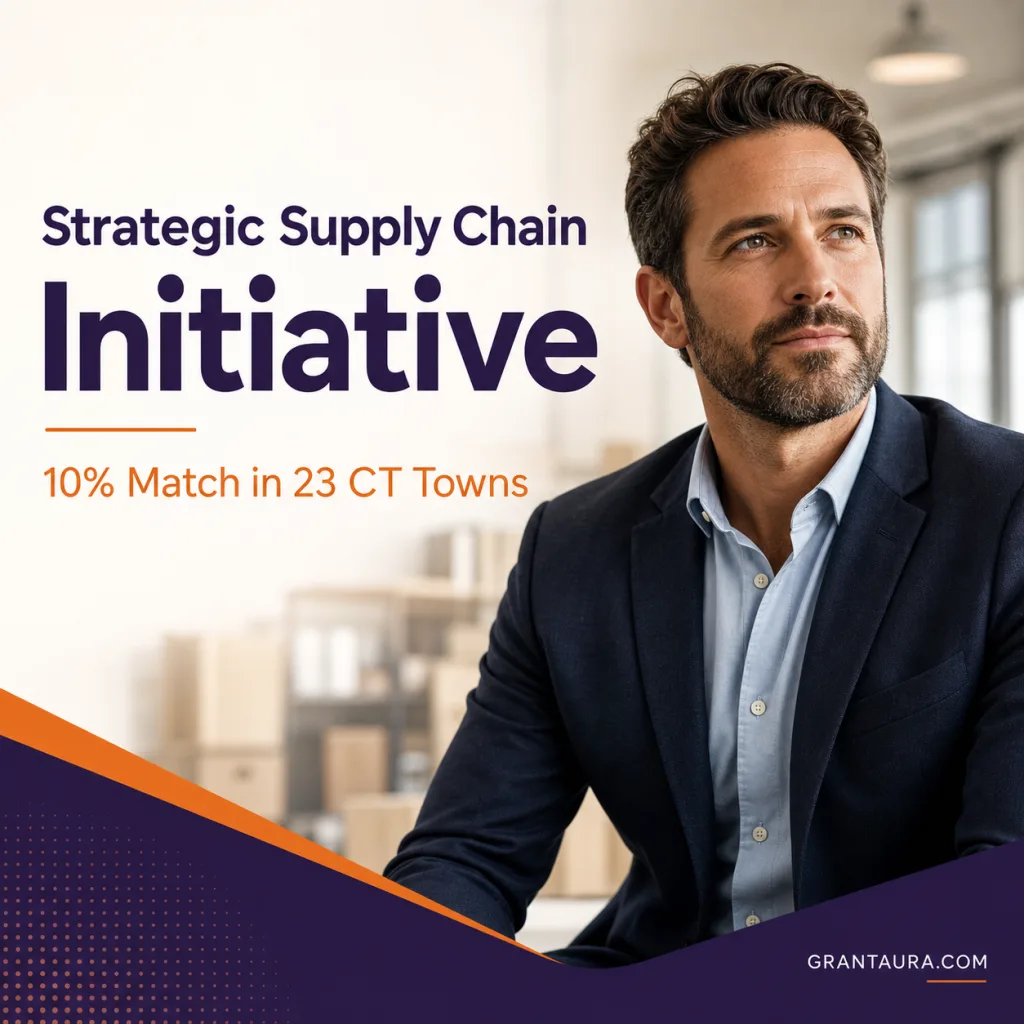
If you are running a supply chain business in Connecticut or planning to relocate here, you have probably seen the headlines about this program. Nearly $50 million committed. Awards up to $5 million. But the real question is whether your specific project, your location, and your financial position line up with what DECD actually approves. I looked at the first two rounds of awards and the funnel metrics. About 24% of preliminary questionnaires reach the Letter of Intent stage. That means three out of four companies that invest time in the questionnaire do not advance. The eligibility checker below runs the same five filters DECD reviewers use. It takes two minutes. It will not submit an application for you. What it will do is tell you if there is a hard disqualifier before you draft a project narrative or gather eight categories of documentation. The match rate alone changes everything for some applicants. If your facility is in one of 23 designated distressed towns, your required match drops from 50% to 10%. On a $1 million project, that is $400,000 in matching capital you do not have to find. Check your town first. Then check your project type. Then decide if the documentation burden makes sense.
The Five Filters That Determine Fit
DECD does not publish the scoring rubric weights, but the official program page and awardee patterns make the boundaries clear. Your business must serve a priority industry ecosystem. Manufacturing supply chains, clean energy, semiconductors, biomedical, aerospace, fintech, AI or quantum. If you are doing routine job-shop work with no connection to these sectors, you probably will not clear the first gate. Your location matters in two ways. You must be in Connecticut or relocating here. And your specific address determines whether you face a 50% match or a 10% match. The distressed municipality list is not a suggestion. It is an official designation that DECD reviewers check early in the process. The project type filter is where I see the most confusion. This is not a maintenance grant. It is not a working capital program. It is for capacity expansion. If your project description reads as replacing aging equipment for current output levels, it fails this test regardless of the dollar amount. The final two filters are financial readiness. Can you provide the match? Can you offer collateral under the Manufacturing Assistance Act framework? These are not soft requirements. They are hard gates.[1]
The Documentation Burden
If you pass the five filters, you still face a significant preparation workload. The full application demands approximately 45 hours across your team. Eight document categories. Three years of corporate financials. A project narrative mapped to allowable uses. Collateral documentation. Workforce retention commitments. Environmental impact details. Capital expenditure breakdowns. Matching fund evidence. The completed DECD questionnaire. Most companies discover the collateral requirement late and stall out. The Manufacturing Assistance Act gives DECD authority to secure its investment against business assets. If you cannot provide acceptable collateral at the time of application, the process stops there. I have seen strong projects fail at this checkpoint because the applicant treated collateral as an afterthought instead of a first-step readiness question.[2]
How to Use This Checker
Answer the five questions honestly. The tool is private. It does not submit anything to DECD. It surfaces hard disqualifiers so you do not waste time on a project the questionnaire would reject on first review. If you pass all five checks, you have cleared the eligibility gate. That does not mean you will win funding. It means you are in the competitive pool. Your next step is an expert review of your positioning before you send the initial inquiry email to Tricia Paesani at DECD. A poorly framed project summary in that first email can kill an otherwise fundable project. Your Grant Assessment fee is non-refundable, but the base assessment fee can be deducted once toward the same grant's Full Application when you choose the optional checkbox at checkout. If you are unsure about your project type or your match rate, book a live consultation. Thirty minutes with a grant expert who has reviewed these allowable-use boundaries is worth more than two hours of independent research.
This Grant Isn’t the Right Fit. Your Best One Might Be Two Clicks Away.
Missing one required criterion doesn’t mean you’re out of options — it means this particular grant wasn’t designed for your profile. Our expert research team identifies the grants built specifically for businesses like yours, across 500+ active opportunities.
Basic Match
$125
One-time research
A list of 5 grants only
Basic eligibility matching based on industry & location
Standard funding amount range verification
Primary criteria alignment check
Most Popular
Advanced Match
$145
One-time research
A list of 7 grants only
Advanced eligibility matching with business model analysis
Deep competitive advantage assessment
Innovation & impact potential matching
Market fit & growth trajectory alignment
Premium Match
$175
One-time research
A list of 10 grants only
AI-powered deep-match algorithm analysis
Historical success pattern matching
Priority sector & focus area alignment
Advanced sustainability impact matching
Strategic vision & long-term goals alignment
Preparing secure checkout…
✓
Order Confirmed
Your grant research order is placed. Our team will deliver your personalised report within 3–5 business days. Check your email for confirmation.
Is your company a supply chain provider for manufacturing, tech, clean energy, semiconductors, fintech/insurtech, biomedical, or AI/quantum industries?
Required
Profile data is saved in your browser and synced to secure storage when available.
Context
Grants selected0
SLA tierNot selected yet
Billing modelNot selected yet
Due today--
Total project value--
Selection preview
No grants selected yet.
Soft estimate
Estimate only. Final pricing appears in Quote step.
Quote expiry
Quote timer starts after pricing is generated.
Verification
Verification status appears here once quote is confirmed.
Success snapshot
Success milestones appear here after confirmation.
What happens next
After quote confirmation, verify your email and complete secure payment.
ProfileReviewPayment
Choose your service
Select how you want to proceed. You will review pricing before checkout.
Next stepReview pricing, then checkout
Recommended
Full service
Full Application Submission
From USD 41.40
We prepare and submit your grant application on your behalf, with priority or rush handling applied when the deadline makes faster service necessary.
Your Grant Assessment fee is non-refundable, but the base assessment fee can be deducted once toward the same grant's Full Application when you choose the optional checkbox at checkout.
No funding guarantee. If Grantaura cannot complete due to our operational failure, refund policy applies.
Assessment
Quick review
Eligibility Assessment
USD 5.99 one-time
Find out if you qualify. Results typically within 24 hours.
Your Grant Assessment fee is non-refundable, but the base assessment fee can be deducted once toward the same grant's Full Application when you choose the optional checkbox at checkout.
FreeNo card needed
Share & Submit Free
Share this grant with your network. We will assess your application at no cost.
Why does Grantaura charge a fee?
The donor does not charge you. This fee covers Grantaura's hands-on work: expert review time, eligibility checks, application drafting, and submission handling.
You will see the exact quote before checkout. Nothing is charged just for opening this screen.
Keep your post public. Our team will verify the link before processing your assessment. If the post is deleted or made private after submission, your free assessment will be void.