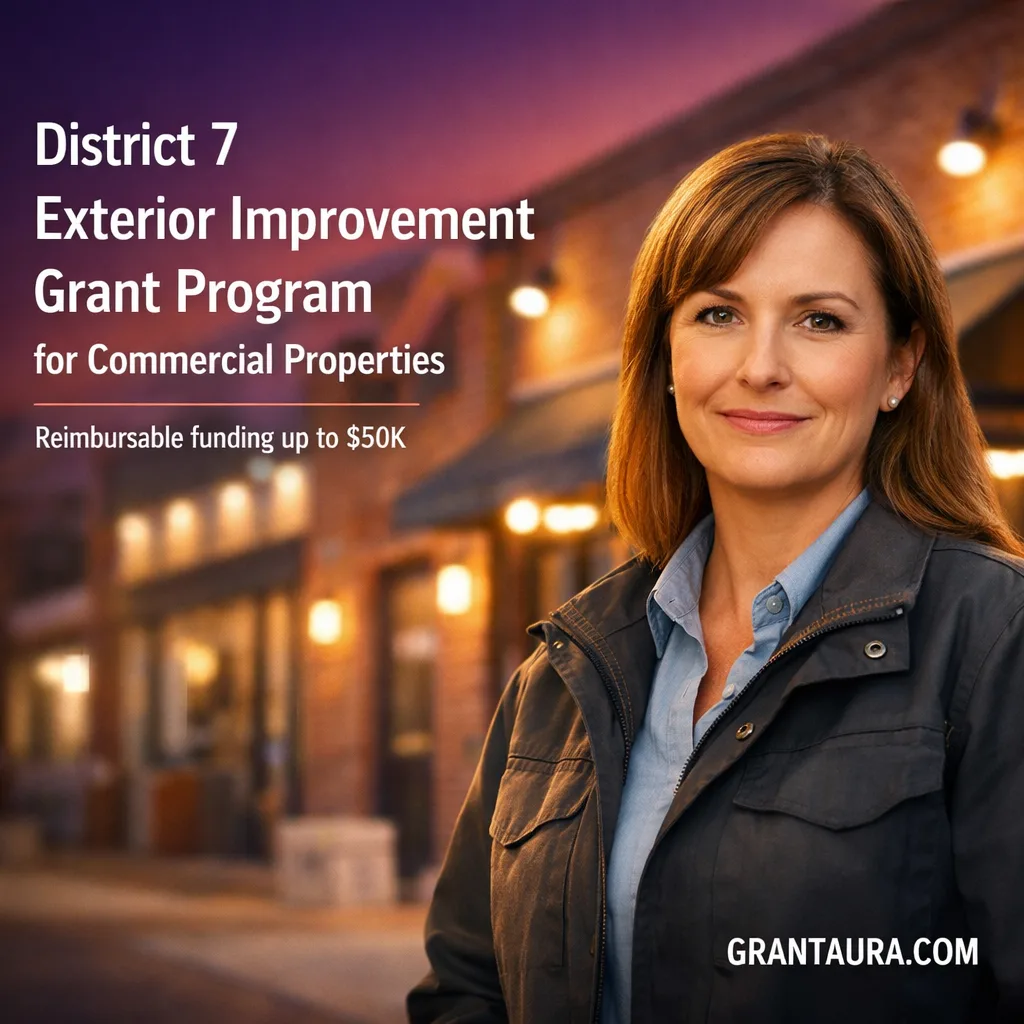
Wondering if your District 7 business qualifies for exterior improvement funding? I dug through the program docs so you don't have to guess. This grant targets for-profit small businesses with a physical commercial location inside Council District 7 boundaries - or on an adjacent street where both sides aren't in the district. You'll need a current Certificate of Occupancy, no recent bankruptcy or city liens, and a project that counts as permanent capital work, not routine touch-ups. Tenants can apply too, but your landlord has to co-sign. The matching fund requirement - 20% to 50% depending on project size - is where most applicants pause. If you're ready to check your fit against these specific gates, the tool below walks you through each requirement. No fluff. Just the stuff that determines yes or no.
Location and business type gates
Geographic eligibility is binary. Your commercial property must sit inside District 7, or on that adjacent-street edge case the program allows. I'd pull up the official district map before you get too attached to a project idea. Beyond location, you need to be a for-profit small business - nonprofits and individuals don't qualify. The city also excludes certain business types entirely: liquor stores, pawn shops, credit access businesses, body piercing studios, tattoo studios, sexually oriented businesses. The Dallas Development Code has the exact SIC definitions if you want to double-check. Which matters because getting this wrong means wasting hours on an application that won't clear the first gate.
Project scope: capital improvement versus maintenance
Here is the distinction that trips people up. The grant funds permanent exterior capital improvements - facade masonry, full parking lot reconstruction, ADA ramps, energy-efficient windows. Not stand-alone painting. Not routine patching. Not cosmetic touch-ups. The city is looking for stuff that stays, stuff that adds lasting value to the district's appearance. Because this is Proposition I bond money, taxpayer funds that need to show long-term impact. If your project mixes eligible and ineligible items, you'll need to separate them or risk losing the whole thing. When in doubt, frame the work as capital improvement in your contractor bid and get pre-review before you commit.
Matching funds and cash flow reality
The matching requirement is tiered. Projects $0-$25K need 20% private match, so the city covers 80%. Projects $25K-$50K need 30% match. Projects $50K-$100K split costs 50-50. But remember: this is reimbursable funding. You pay first, then get paid back. That means you need cash on hand or a financing arrangement to cover your match portion before any city money flows. I see applicants budget for the max $50K award without accounting for their required match, then get stuck halfway through. So run the numbers early. Know your tier. Plan your cash flow accordingly. If the math feels tight, that is exactly when a live consultation with a grant expert can help you explore options.