Grant Overview
Global Competition for Innovators Building Open-Source AI to Solve Real-World Problems in Developing Countries – IEEE & ITU’s Global Competition for Responsible Tech Innovators
The GenAI For Good Challenge puts $25,000 on the table for technologists ready to deploy responsible AI where it’s needed most. This isn’t your typical AI hackathon where flashy demos win prizes. IEEE Humanitarian Technologies and the International Telecommunication Union designed this competition to tackle real problems in Lesotho, The Gambia, and Bangladesh through open-source generative AI solutions that actually work on basic phones and limited infrastructure. You’ll build on the GENIE.AI framework, get feedback from UN agencies who’ll pilot winning solutions, and join a global community using AI for genuine impact rather than hype.
Title: GenAI for Good Challenge
Donor: IEEE Humanitarian Technologies, International Telecommunication Union (ITU)
Focus: Artificial intelligence, generative AI, open source, humanitarian technology, social impact, GENIE.AI, responsible AI deployment, public good AI
Region: Global
Eligibility:
– Individuals, teams, and organizations developing open-source GenAI solutions
– Must address Health, Agriculture, or Climate focus areas
– Participants must submit narrative proposal in Phase One
– Finalists required to develop functional prototype in cloud environment
– All submissions must be open source
– Open to innovators and changemakers globally
Benefits:
– Financial Award: Up to $25,000 for winning teams
– Mentorship: Guidance from IEEE, ITU, and domain experts throughout development
– Networking: Access to global GenAI community of practice and UN agency partnerships
– Real-world deployment opportunity with WHO, FAO, or WMO based on use case
Deadline: December 1, 2025
What Makes This Challenge Different From Every Other AI Competition
Most AI competitions chase the next breakthrough in model performance or theoretical innovation. But here’s what sets the GenAI For Good Challenge apart. The organizers already picked three specific problems that governments in developing countries desperately need solved. These aren’t hypothetical use cases dreamed up in Silicon Valley boardrooms.
Take the Lesotho agriculture chatbot challenge. Farmers there need advice about crops and market prices, but they’re using basic phones without reliable internet. Your solution can’t just work in a demo environment with perfect connectivity. It needs to offer farmers and agricultural advisors in Lesotho real-time advice, crop alerts, and market guidance—via voice, text, and basic phones. Think about that technical constraint for a second. You’re building AI that works over SMS and voice calls in areas where 3G is considered fancy.
The selection process reflects this practical focus. The Challenge unfolds over several phases—from application and evaluation to prototyping and real-world deployment. Explore the timeline below to see how your idea can progress step by step toward impact. Phase One asks for narrative proposals outlining your solution design, implementation approach, and expected impact. If you make it to Phase Two, you’ll build functional prototypes in dedicated cloud environments provided by the organizers. No need to burn through your AWS credits before you even know if your idea has legs.
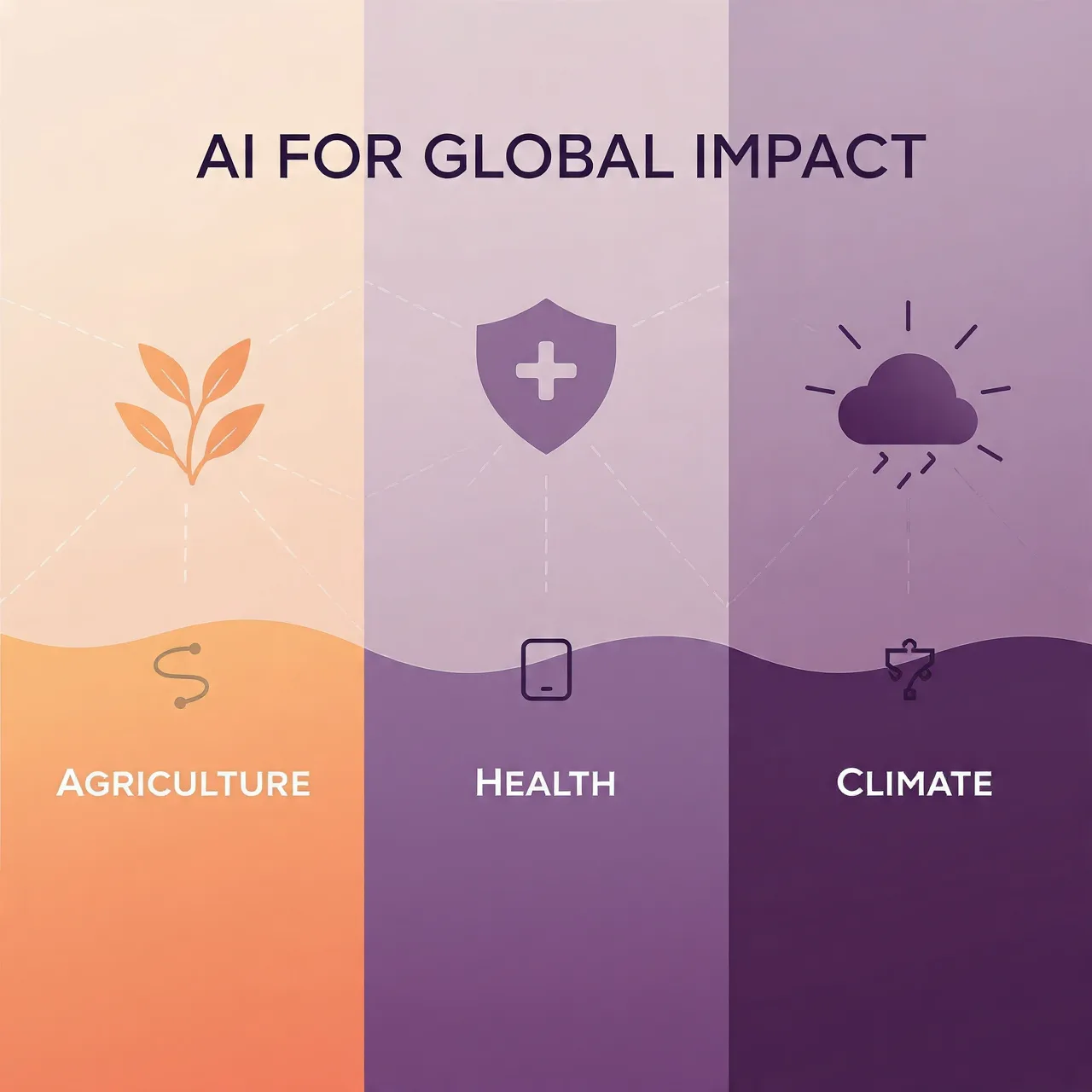
Three Focus Areas That Actually Matter
Challenge 1. Lesotho – Agriculture Extension
Lesotho’s farmers face information gaps that cost them yields and income every season. The challenge calls for a mobile-friendly AI chatbot that delivers practical farming advice through whatever technology farmers actually have. A mobile-friendly AI chatbot offering farmers and agricultural advisors in Lesotho real-time advice, crop alerts, and market guidance—via voice, text, and basic phones. Similar to innovation challenges focused on sustainable agriculture, this track emphasizes practical deployment over theoretical advancement.
Your chatbot needs to understand local languages, work with spotty connectivity, and provide advice that makes sense for Lesotho’s specific climate and soil conditions. This isn’t about training the largest language model or achieving state-of-the-art benchmarks. Success means a farmer getting actionable advice about when to plant based on actual weather patterns, not generic agricultural recommendations copied from Wikipedia.
Q: Can I use existing language models for the Lesotho agriculture chatbot?
A: Yes, but you’ll need to adapt them for local contexts and technical constraints.
Challenge 2. The Gambia – NCD Prevention
Non-communicable diseases kill more people in The Gambia than malaria and HIV combined. The country needs a multilingual AI chatbot delivering evidence-based, personalization guidance to help Gambians prevent and manage chronic health risks like hypertension and tobacco use. But here’s the catch – your solution must work across multiple local languages and account for limited health literacy.
The real challenge isn’t building another health chatbot. It’s creating one that understands cultural contexts around health behaviors, respects local beliefs while promoting evidence-based practices, and delivers personalized guidance without requiring users to share sensitive medical data they might not trust to digital systems. Think about how you’d design consent flows and data protection for users who might be encountering AI for the first time.
Challenge 3. Bangladesh – Extreme Weather Advisory
Bangladesh farmers lose crops to droughts and floods with devastating regularity. They need an AI-powered assistant that helps Bangladeshi farmers prepare for droughts with localized weather alerts, water-saving tips, and crop-specific risk guidance. Weather prediction models exist, but translating global climate data into hyperlocal, actionable farm-level advice? That’s where the innovation happens.
Your system needs to process satellite data, weather forecasts, and historical patterns to generate advice specific enough to help a farmer decide whether to plant tomorrow or wait three days. Generic weather apps already exist. What doesn’t exist is AI that understands the difference between flooding that destroys crops versus flooding that deposits fertile soil. For teams pursuing moonshot ideas with real-world applications, this challenge offers a structured path from concept to deployment.
Q: Do I need experience with weather modeling for the Bangladesh challenge?
A: Not necessarily, but you’ll need to integrate existing weather data sources effectively.
The GENIE.AI Framework – Your Starting Point, Not Your Limitation
Built on the open-source GENIE.AI framework, the Challenge empowers teams to develop scalable prototypes aligned with use cases identified through ITU’s country-level collaborations and existing local ecosystems. Now, before you start worrying about learning another framework, understand what GENIE.AI actually provides. It’s not a restrictive platform that locks you into specific architectures or approaches.
Think of it more as scaffolding that handles the boring parts – data pipelines, API integrations, deployment configurations – so you can focus on solving the actual problem. The framework provides baseline implementations you can build on, standardized evaluation metrics to measure progress, and deployment tools tested in similar low-resource environments.
But here’s what matters most: you’re not competing to build the best GENIE.AI application. You’re competing to solve real problems. The framework is just there to accelerate your development and ensure your solution can actually deploy in the target environment. Smart teams will leverage what GENIE.AI provides while innovating where it matters for their specific use case.
How The Two-Phase Selection Process Works
Phase One opens with narrative proposals. You’ll outline your solution design, implementation approach, expected impact, and the specific innovations you’re bringing to the baseline GENIE.AI framework.
A multidisciplinary jury reviews these proposals. We’re talking IEEE staff, ITU representatives, country stakeholders, domain experts, and technology partners. They’re looking for technical feasibility, innovation, and genuine understanding of the problem you’re trying to solve.
Q: What happens if my Phase One proposal isn’t selected?
A: You receive feedback but cannot reapply for this round. Future challenges may be announced.
Finalists move to Phase Two. This is where you build. IEEE provides dedicated cloud environments. You develop a functional prototype. Not a proof of concept. Not a minimum viable product. A working system that demonstrates your solution can handle real-world conditions.
The evaluation criteria for Phase Two will be published when finalists are announced. Expect rigorous technical assessment combined with practical deployment considerations.
The Role of UN Agencies in Real-World Deployment
This is where the GenAI for Good Challenge separates itself from typical competitions. Winning doesn’t just mean prize money and recognition. It means your solution enters a deployment pipeline with actual institutional support.
Depending on your focus area, you’ll work with the World Health Organization, Food and Agriculture Organization, or World Meteorological Organization. These aren’t vague future possibilities. They’re concrete partnerships already established for this challenge.
Will every winning solution get deployed? Not automatically. Deployment depends on technical performance, local stakeholder feedback, and practical feasibility. But the pathway exists, which is more than most hackathons or competitions can claim.
The Secret Sauce: Local Partnerships
Here’s what most applicants miss. Led in partnership between IEEE Humanitarian Technologies and ITU, the Challenge aims to advance the responsible and inclusive deployment of open-source Generative AI to address country level and local needs. Through this collaboration, IEEE and ITU are mobilizing global innovators to design and test GenAI solutions aligned with use cases identified by ITU and UN agencies on the ground.
Start building relationships now. Reach out to agricultural extension services in Lesotho. Connect with health NGOs in The Gambia. Find climate researchers working in Bangladesh. A letter of support from a local partner is worth a thousand lines of code in your application.
These partners provide more than credibility. They offer ground truth your Silicon Valley competitor lacks. They know why farmers trust radio over apps. They understand which health advice triggers cultural resistance. They’ve seen a dozen well-meaning tech projects fail and can tell you why.
Q: How do I find local partners?
A: Start with UN country offices and local universities.
Q: Should partners be formal collaborators?
A: Informal advisors work, but document the relationship.
Timeline and Key Dates You Can’t Miss
Mark your calendar now because this timeline moves fast:
– Applications open: October 7, 2025
– Public launch: October 8, 2025
– Online information sessions: October 13-14, 2025 (attend these – insider tips get shared)
– Application deadline: December 1, 2025
– Finalists notified: Week of January 19, 2026
– Winners announced: April 2026
That December 1 deadline is firm. No extensions, no exceptions. The online information sessions in October aren’t mandatory, but skipping them would be foolish. Past participants report these sessions clarify evaluation criteria that aren’t fully spelled out in the written guidelines.
Q: Can I submit multiple applications for different focus areas?
A: The guidelines don’t explicitly prohibit it, but focus on one strong proposal.
Who’s Behind This and Why It Matters
The GenAI for Good Challenge was co-designed by IEEE Humanitarian Technologies and the International Telecommunication Union (ITU) to prioritize real-world implementation and tangible local impact. IEEE brings technical credibility – these are the people who write the standards your WiFi router follows. ITU brings the government relationships and deployment infrastructure in 193 member states.
But the real power comes from the deployment partners. Winning teams will have the opportunity to pilot their solutions in partnership with United Nations agencies, including the World Health Organization, the Food and Agriculture Organization, and the World Meteorological Organization, based on the use case. That’s not a “maybe” or a “possibility” – it’s a commitment. Win this challenge and your solution gets piloted by the UN agency that actually works in that domain.
This backing matters because it solves the biggest problem facing social impact tech: the path to deployment. Most hackathon winners never deploy because nobody thought about how to get from prototype to production in challenging environments. Here, that path is pre-negotiated. The partnerships exist. The funding is allocated. You just need to build something that works.
Who Should Apply vs. Who Probably Shouldn’t
This challenge rewards specific combinations of skills and mindset. You need technical chops, obviously. But you also need genuine interest in international development challenges and willingness to design for constraints most developers never consider.
If you’ve built successful chatbots before, you have relevant experience. If you understand natural language processing, especially in multilingual contexts, that’s valuable. Background in healthcare, agriculture, or climate science helps you understand domain requirements. Experience with technology deployment in resource-constrained environments gives you realistic expectations about what works and what fails.
Who probably shouldn’t apply? Anyone looking for quick wins without genuine commitment to seeing solutions deployed. Anyone uncomfortable with open-source requirements. Anyone who can’t handle the reality that deployed solutions require ongoing maintenance and adaptation.
Application Strategy That Actually Wins
After analyzing successful proposals from similar challenges, clear patterns emerge. Winning teams don’t just have better technology – they understand what judges actually evaluate. Your narrative proposal needs to nail four things.
First, demonstrate deep understanding of the local context. Generic solutions adapted to developing countries fail. Show you’ve researched Lesotho’s specific agricultural practices, The Gambia’s health system structure, or Bangladesh’s weather patterns. Use specific examples. Reference local partners if you have them.
Second, address the technical constraints head-on. Don’t pretend your solution will work perfectly everywhere. Acknowledge the limitations of basic phones, intermittent connectivity, and low digital literacy. Then explain exactly how you’ll overcome them. Judges prefer honest assessment of challenges over hand-waving optimism. Unlike typical AI grants focused on cutting-edge technology, this challenge rewards practical problem-solving over technical sophistication.
Third, explain your sustainability model. What happens after the pilot ends? Who maintains the system? How do users access it long-term? Too many development projects die when grant funding ends. Show you’ve thought beyond the award period.
Fourth, demonstrate open-source commitment authentically. Don’t just promise to open-source your code – explain your documentation strategy, community building approach, and how others could adapt your solution for different contexts. The open-source requirement isn’t a checkbox. It’s core to the challenge’s theory of change.
Q: How technical should the Phase One narrative proposal be?
A: Balance technical depth with accessibility – assume intelligent readers who aren’t necessarily AI experts.
The Money and What It Really Covers
Let’s talk about the $25,000 prize realistically. That sounds substantial, but consider what you’re building. A production-ready AI system that works in challenging environments, passes evaluation by domain experts, and deploys with UN agencies. That $25,000 might not even cover your cloud computing costs during development, let alone compensate team members fairly.
So why do it? Because the real value isn’t the prize money. It’s the deployment pipeline. Getting your solution piloted by WHO, FAO, or WMO opens doors that money can’t buy. It’s validation that transforms a side project into a fundable venture. It’s the difference between “we built an AI chatbot” and “the UN deployed our solution in three countries.”
Smart teams treat the prize as seed funding for something bigger. They budget carefully, leverage free resources where possible, and focus on building something that attracts follow-on funding after winning. The teams that view this as a $25,000 contract for services end up disappointed. The ones that see it as an investment in massive future opportunity tend to win.
Open Source Requirements and What They Really Mean
Every submission must be open source, but that doesn’t mean giving away your entire business model. You can open-source the core AI components while keeping deployment scripts, custom training data, or service layers proprietary. Many successful open-source businesses follow this model. Think carefully about what you open-source and what you keep as competitive advantage.
The organizers want open source because it enables adaptation and scaling. Your Lesotho agriculture chatbot could be modified for Kenya or Nigeria. Your Bangladesh weather advisory system might work in Vietnam or the Philippines with minor adjustments. Open sourcing multiplies impact, which matters more to IEEE and ITU than protecting intellectual property.
But also consider the benefits. Open source submissions can attract contributors who improve your solution. They build credibility in the development community. They demonstrate confidence in your approach. And practically, they make evaluation easier for judges who can review your actual code, not just marketing materials.
Documentation Standards That Win
Based on successful open-source projects, your documentation needs five components. First, a clear README explaining what your project does and why it matters. Second, installation instructions that actually work – test them on fresh systems. Third, API documentation if you’re building services. Fourth, contribution guidelines encouraging community participation. Fifth, a roadmap showing where the project is headed.
Poor documentation kills more open-source projects than bad code. Judges will attempt to run your solution. If they can’t get it working in 30 minutes, you’ve probably lost, regardless of how innovative your approach is. Invest time in making deployment smooth.
Q: Can I use proprietary APIs or services in my open-source solution?
A: Yes, but provide alternatives or clear documentation about replacing them.
Building Your Team for Maximum Impact
Solo developers can enter, but they rarely win. The challenges require diverse expertise – machine learning, software development, domain knowledge, and deployment experience. A typical winning team includes a technical lead who understands AI systems, a domain expert who knows the target country or sector, and a project manager who keeps everything coordinated.
But avoid the trap of assembling an all-star team that can’t actually work together. Three people who collaborate well beat ten experts who argue about architecture. Geographic distribution can actually help if team members have connections to the target countries. A team member in Dhaka brings invaluable context for the Bangladesh challenge that no amount of research can replace.
Also consider including people from the communities you’re serving. Not as token representatives, but as genuine team members who shape the solution. Their insights into user needs, cultural contexts, and deployment realities often determine success or failure. Similar to programs that combine funding with expert mentorship, this challenge values teams that blend technical skills with local knowledge.
Common Pitfalls That Sink Applications
After reviewing hundreds of similar challenge submissions, certain mistakes appear repeatedly. Over-engineering solutions for problems that need simple answers. Building for smartphones when target users have feature phones. Assuming reliable internet in areas where electricity is intermittent. These technical mismatches reveal teams that didn’t research their context deeply enough.
Another killer is ignoring language diversity. The Gambia has multiple local languages beyond English. Your NCD prevention chatbot better handle at least the major ones, or you’re excluding large populations. Machine translation might work for some use cases, but health communication requires nuance that automated translation often misses.
Teams also underestimate deployment complexity. Your solution might work perfectly on AWS, but can it deploy on government infrastructure with strict security requirements? Can local technicians maintain it? What happens when the cloud credits expire? Address these practical concerns upfront.
Finally, avoid techno-solutionism – the belief that technology alone solves complex problems. Judges see through proposals that ignore political, social, and economic factors. Acknowledge that your AI chatbot won’t eliminate agricultural poverty or cure diabetes. Show how it fits into broader interventions addressing these challenges.
Making the Most of the Information Sessions
Those October 13-14 information sessions deserve strategic preparation. Come with specific questions that demonstrate you’ve already thought deeply about the challenge. Don’t ask what’s clearly stated in the guidelines. Instead, probe edge cases, clarification on evaluation criteria, or insights about past winners.
Listen for emphasis and examples. When organizers spend five minutes explaining something that gets one line in written guidelines, that’s probably important. When they give specific examples of what they want to see, take detailed notes. These sessions reveal the implicit criteria that determine who actually wins.
Network with other participants strategically. Some will become competitors, but others might become collaborators. The best teams often form during these sessions when participants realize their complementary skills. That researcher in Berlin might have the perfect NLP model for your Gambia health chatbot. Stay open to unexpected partnerships.
Q: Will session recordings be available for those who can’t attend live?
A: Usually yes, but live attendance allows asking questions directly.
Prototype Development in Phase Two
Reaching Phase Two means you’ve impressed judges with your narrative proposal. Now comes the hard part – building something that actually works. The cloud environments provided by organizers level the playing field somewhat. Everyone gets the same resources, so efficient architecture matters more than throwing compute power at problems.
Start with a minimal viable solution that addresses the core use case. You can add features later, but if the basic functionality doesn’t work reliably, nothing else matters. Test extensively with realistic data and constraints. If your solution needs to work over SMS, test with actual SMS gateways, not just API calls that simulate them.
User interface design matters more than many technical teams realize. Your Lesotho farmers aren’t tech enthusiasts eager to explore new features. They need simple, intuitive interactions that work the first time. Complex menus or unclear prompts will kill adoption regardless of how sophisticated your AI model is.
Documentation during this phase becomes crucial. Keep detailed logs of what works, what doesn’t, and why you made specific technical choices. Judges often ask about these decisions during final presentations. Being able to explain why you chose one approach over another demonstrates the thoughtful development process they’re looking for.
The Hidden Benefits of Participation
Even if you don’t win, participating strategically generates value. You’ll build connections with people working on similar problems globally. The IEEE and ITU networks include researchers, policymakers, and practitioners who might become future collaborators or customers. Many past participants report these relationships mattered more than prize money.
The forced focus on real-world deployment improves your skills in ways that pure research or commercial development might not. You learn to balance innovation with practicality, to design for constraints most developers never consider, and to think about technology adoption in challenging contexts. These skills transfer to other projects and make you more valuable in the growing field of technology for development. Like other innovation-focused grants, the learning experience often exceeds the monetary value.
Publication opportunities also emerge. Conference papers about your approach, blog posts about lessons learned, and case studies about deployment challenges all build your reputation in the field. Some participants leverage challenge participation into speaking engagements or consulting opportunities.
Sustainability Models Beyond the Pilot
Judges pay close attention to what happens after the pilot phase ends. The best proposals include realistic sustainability models that don’t depend on continued grant funding. Consider different approaches based on your focus area.
For the agriculture chatbot, could farmers pay small fees for premium advice during critical seasons? Would agricultural input companies sponsor the service to reach customers? Might the government integrate it into existing extension services? Each model has trade-offs between sustainability and accessibility that you’ll need to address.
The health chatbot faces different constraints. Charging users for health information raises ethical concerns. But healthcare providers, insurance companies, or public health agencies might fund continued operation if you demonstrate reduced disease burden or healthcare costs. Think about who benefits financially from better health outcomes and how to align incentives.
Weather advisory systems might follow a freemium model – basic alerts free, detailed forecasts for commercial farms paid. Or integration with existing agricultural insurance products where better weather information reduces claim costs. The key is showing judges you’ve thought beyond winning to actual long-term operation.
Regional Variations and Opportunities
While the challenge is global, certain regions have advantages. Teams from South Asia understand Bangladesh’s context better. African teams grasp the infrastructure constraints in Lesotho and The Gambia. But don’t assume geographic proximity equals understanding – urban Dhaka differs vastly from rural Bangladesh where farmers need weather advisories.
International teams can leverage diverse perspectives and resources. A partnership between U.S. universities with technical expertise and local NGOs with deployment experience often succeeds. European teams might access EU development funding to extend pilot projects. The challenge welcomes these creative collaborations that combine different strengths.
Consider also how your solution might adapt regionally after the initial deployment. The Lesotho agriculture chatbot might work across Southern Africa with modifications. The Gambia health solution could extend throughout West Africa. Demonstrating this scaling potential strengthens your application without distracting from the immediate challenge.
Final Thoughts on Winning
Success in the GenAI For Good Challenge requires balancing multiple tensions. Technical innovation with practical constraints. Global best practices with local contexts. Open source ideals with sustainability needs. Teams that navigate these tensions thoughtfully tend to win.
But winning means more than just securing $25,000. It means your solution will actually deploy where it’s needed. Real farmers will get better agricultural advice. Actual patients will receive health guidance. Communities facing climate threats will prepare better. That impact, more than any prize money, should drive your effort.
Remember that judges aren’t looking for the most sophisticated AI system. They want solutions that work reliably in challenging environments and genuinely improve lives. Keep that focus throughout your application and development process.
Honestly, preparing a winning submission takes serious work. The technical development alone is substantial, and addressing deployment considerations adds complexity. If you’re looking at this challenge thinking you need help structuring your approach, developing documentation, or presenting your innovation effectively, that’s exactly what we do at Grantaura. Our team has supported hundreds of successful grant applications, and we understand what makes technical proposals stand out. CLICK HERE to get the GRANT PROPOSAL WRITING help.
Final Reality Check
This challenge isn’t for everyone. If you’re looking for quick wins, easy money, or resume padding, look elsewhere. The GenAI for Good Challenge will help technologists and innovators team up with international partners, get funding, connect with global networks, and build AI solutions with measurable impact on pressing global challenges. This is a structured pathway from prototype to real-world deployment.
But if you’re ready to build something that matters? If you can handle 3am debugging sessions for farmers you’ll never meet? If impact means more than valuation? Then this is your moment.
The world doesn’t need another chatbot. It needs AI that helps a Lesotho farmer save her corn crop. It needs systems that catch diabetes before it destroys Gambian families. It needs early warnings that give Bangladesh farmers time to protect their livelihoods. Fancy frameworks and development methodologies matter less than genuine commitment to solving real problems. As you prepare your application, consider how initiatives like the Caltech Rocket Fund approach cleantech innovation for additional perspective.
The GenAI For Good Challenge offers something rare in tech: a chance to build something that matters. Not for VCs. Not for exit strategies. But for people who need it. That’s worth more than any grant money.
Check Your Eligibility
Before diving into your application, verify that you meet all the GenAI For Good Challenge requirements. This quick assessment tool will help you understand your qualification status and identify any gaps you need to address before the December 1 deadline.
27 Alternatives for GenAI For Good Challenge
- Lenovo Small Business AI Grant: $35K for AI Transformation: While GenAI For Good focuses on humanitarian applications, Lenovo’s program supports small businesses implementing AI solutions. Receive $25,000 cash plus $10,000 in AI technology for commercial AI applications across the United States.
– Donor: Lenovo, Intel, Microsoft
– Focus: AI integration, business transformation
– Deadline: Varies quarterly
- Emergent Ventures Grant for Moonshot AI Ideas: Tyler Cowen’s program funds high-risk, high-reward projects including AI for social good. Unlike GenAI For Good’s structured challenges, EV supports any radical AI innovation that could change how the world works.
– Donor: Mercatus Center at George Mason University
– Focus: Innovation, moonshot projects
– Deadline: Rolling basis
- Technology Innovation Grants Category: Explore dozens of grants supporting AI, machine learning, and emerging technology projects. Many share GenAI For Good’s focus on practical applications over pure research.
– Donor: Various
– Focus: Technology innovation
– Deadline: Varies for each grant
- Sustainability Open Innovation Challenge: S$2.5M for Green Tech: Singapore’s challenge includes AI solutions for climate change and sustainable agriculture. Teams working on Bangladesh weather advisories might find synergies with this program’s climate focus.
– Donor: Enterprise Singapore
– Focus: Sustainability, climate tech
– Deadline: January 27, 2025
- Aurora Tech Award: $85K for Women in AI: Empowers female founders in tech. Eligible globally for women-led AI; provides prizes for solving real issues. Deadline: Ongoing.
– Donor: Aurora
– Focus: Women AI, tech awards
– Deadline: Ongoing
- Maine Technology Institute Innovation Seed Grant: Up to $50,000 for tech startups including AI ventures. While geographically limited to Maine, it shows how regional programs support AI innovation similar to GenAI For Good’s mission.
– Donor: Maine Technology Institute
– Focus: Technology commercialization
– Deadline: Rolling
- Caltech Rocket Fund: $100K for CleanTech AI: Environmental AI applications addressing climate challenges. Teams working on Bangladesh weather advisories or agricultural optimization could pursue this parallel opportunity.
– Donor: Caltech Resnick Sustainability Institute
– Focus: Clean technology, sustainability
– Deadline: Varies annually
- JustFilms Documentary Funding for AI Ethics Stories: Document your GenAI For Good journey or explore AI’s social impact through film. Ford Foundation supports narratives about technology and social justice intersections.
– Donor: Ford Foundation
– Focus: Social justice storytelling
– Deadline: April 2025
- Social Impact Grants Collection: Browse funding opportunities for technology projects creating positive social change. Many align with GenAI For Good’s humanitarian mission.
– Donor: Various foundations
– Focus: Social innovation
– Deadline: Varies for each grant
- Giga Accelerator: $50K Tech Grants: Open-source connectivity innovators receive $50K for global solutions. Eligible worldwide for tech teams; funds prototypes with UN backing for impact. Deadline: Ongoing.
– Donor: UNICEF
– Focus: Technology connectivity, open source
– Deadline: Ongoing
- McKinsey Fast Grants: Business Support for Tech Entrepreneurs: Chicago-based but offers insights into programs combining funding with expert mentorship, similar to GenAI For Good’s UN agency partnerships.
– Donor: McKinsey & Company
– Focus: Business development
– Deadline: Various cycles
- AAUW Career Development Grants: $8,000 for Women in STEM: Women pursuing high-growth STEM careers can access up to $8,000 for certificates, credentials, and training programs. The grant supports career advancement in fields where women remain underrepresented.
– Donor: American Association of University Women
– Focus: STEM Education, Women in Technology, Career Development, Professional Training
– Deadline: Three annual deadlines
- Nehemiah Davis Greatness Grant: $2,500 Quarterly for First-Time Founders: Beginning entrepreneurs starting from scratch can access $2,500 quarterly grants plus 90 days of personal mentorship from an experienced founder. No revenue requirements or perfect pitch decks needed.
– Donor: Nehemiah Davis
– Focus: Entrepreneurship, Startup Development, Mentorship, Business Formation
– Deadline: Quarterly review cycles
- EmpowHer Grants: $25,000 for Female Founders Addressing Social Issues: Women entrepreneurs building businesses tackling poverty, hunger, sustainability, or community development can access up to $25,000 plus advisory circle support through this quarterly program.
– Donor: Boundless Futures Foundation
– Focus: Women Entrepreneurs, Social Impact, Business Development, Community Development
– Deadline: Quarterly application cycles
- InnovateMass: $350K for Climate Technology: Massachusetts program for cleantech including AI-driven climate solutions. Weather prediction and agricultural optimization systems align with their funding priorities.
– Donor: Massachusetts Clean Energy Center
– Focus: Climate technology
– Deadline: Annual cycles
- AI Illumination Grant: $25K for Black-Owned AI Businesses: This grant targets Black entrepreneurs using AI tech, offering $25K to scale operations. Eligible for US-based owners with innovative AI applications; provides funding plus visibility to overcome barriers. Deadline: May 2, 2025.
– Donor: 15% Pledge
– Focus: AI technology, business growth
– Deadline: May 2, 2025
- Creative Business Boost for AI Innovation: $5,000 grants for creative applications of technology. While smaller than GenAI For Good’s prize, it supports innovative tech applications in unexpected domains.
– Donor: Hello Alice, Etsy
– Focus: Creative technology
– Deadline: May 9, 2025
- ZenBusiness Grant: $5,000 for New Tech Ventures: GenAI teams forming companies to sustain their solutions post-challenge can access this grant. Requires using ZenBusiness formation services but provides quick funding for entity setup and initial operations.
– Donor: ZenBusiness
– Focus: Business formation, startup funding, tech ventures
– Deadline: January 1, 2025
- NDN Collective Radical Imagination Grant: $50,000 for Indigenous Innovation: Indigenous developers bringing traditional knowledge to AI solutions should explore this opportunity. Particularly relevant for teams incorporating indigenous agricultural or climate wisdom into their GenAI solutions.
– Donor: NDN Collective
– Focus: Indigenous innovation, traditional knowledge, community technology
– Deadline: Check current cycle
- Thrive-Breva Company Grant: $5,000 Quarterly for Community Impact Businesses: Teams whose GenAI solutions create community impact can leverage this quarterly grant. Particularly relevant for those building inclusive AI systems that serve underrepresented populations.
– Donor: Breva (formerly Cadence Cash)
– Focus: Community impact, underserved populations, inclusive technology
– Deadline: Quarterly cycles
- Start.Pivot.Grow. Micro Grant: $2,500 Quarterly Funding for Tech-Enabled Small Businesses: While the GenAI challenge focuses on humanitarian AI, tech entrepreneurs can explore this quarterly $2,500 grant supporting operational expenses and growth capital. Perfect for teams needing bridge funding while developing their GenAI prototype, especially those incorporating AI into business solutions.
– Donor: Various corporate sponsors
– Focus: Small business tech adoption, operational scaling, AI integration
– Deadline: Rolling quarterly
- IAC Intellectual Property Grants for Tech Innovation: Canadian program but illustrates how to protect and commercialize AI innovations developed through challenges like GenAI For Good.
– Donor: Innovation Asset Collective
– Focus: IP development
– Deadline: Quarterly rounds
- Fast Pitch Competition: $25,000 for Women-Led Startups: Women founders building tech-enabled or consumer businesses can compete for $25,000 cash grants plus comprehensive support including pitch coaching and investor access. The competition features separate tracks for technology and consumer products.
– Donor: Women Founders Network
– Focus: Women Entrepreneurs, Startups, Technology, Business Development
– Deadline: Annual competition dates vary
- InnovateMass Grant: $350,000 Massachusetts Clean Energy Technology: Cleantech startups bridging the commercialization valley can access up to $350,000 for technologies addressing energy, transportation, manufacturing, agriculture, water, buildings, or resilience challenges in Massachusetts.
– Donor: Massachusetts Clean Energy Center
– Focus: Clean Energy, Technology Commercialization, Climate Solutions, Innovation
– Deadline: Check program website
- R&D Grants for AI Development: Research-focused funding that could support the technical development phase of GenAI For Good projects.
– Donor: Government and private sources
– Focus: Research and development
– Deadline: Varies for each grant
- African Innovation Grants: Since two GenAI challenges focus on African countries, explore region-specific funding that could support continued development after the challenge.
– Donor: Various African development organizations
– Focus: Continental innovation
– Deadline: Varies for each grant
- International Grants Directory: Since GenAI For Good accepts global participants, explore other worldwide opportunities in AI and technology innovation. Many UN-affiliated programs share similar humanitarian technology goals.
– Donor: Multiple international organizations
– Focus: Various technology and development
– Deadline: Varies for each grant
Finding the right grant is just the beginning. Beyond GenAI For Good, Grantaura’s platform lists hundreds of funding opportunities for AI innovators, social entrepreneurs, and technology developers. Use our free search tools to discover grants matching your specific project, location, and eligibility criteria. Whether you’re building humanitarian AI or commercial applications, the right funding opportunity exists – you just need to find it.
Terms
- Generative AI: Tech that creates new content like text or images from inputs, key in the GenAI For Good Challenge for building chatbots. Matters because it enables scalable solutions in health and agriculture without constant human input. Boosts efficiency in climate resilience tools too.
- Open Source: Software with code freely available for modification, required in this challenge to foster collaboration. Ensures broader impact for AI for good grants by letting others adapt winners’ work. Reduces barriers in global AI innovation.
- Prototype: Working model of your AI solution, built in phase two of the GenAI For Good Challenge. Critical for showing feasibility in responsible AI development. Helps jury assess real-world potential in sustainable AI projects.
- UN SDGs: Sustainable Development Goals tying into focus areas like zero hunger via agriculture AI. Aligns GenAI For Good Challenge with global priorities. Guides applicants in measuring impact for AI funding opportunities.
- GENIE.AI Framework: Open-source tool provided for efficient prototype building in the challenge. Simplifies development for cost-efficient AI prototypes. Essential for scalability in open source GenAI solutions.
- Jury Evaluation: Multidisciplinary review process in GenAI For Good Challenge assessing innovation and ethics. Determines winners in AI challenge deadlines. Focuses on measurable outcomes for global AI competitions.
- Phase One: Initial proposal submission in the GenAI For Good Challenge outlining design and impact. Key step for advancing to prototypes in AI for health solutions. Sets foundation for successful entries.
- Phase Two: Prototype development stage for finalists in cloud environments. Builds on phase one in generative AI challenges. Leads to potential UN pilots in AI agriculture tools.
- Cloud Environment: Provided setup for building prototypes securely in the challenge. Supports low-bandwidth needs in climate resilience AI. Enables global teams in responsible AI funding.
- Impact Measurement: Metrics showing real change from your AI solution, required in proposals. Vital for winning in AI for public good. Ties to long-term success in UN AI partnerships.
- Human-Centered Outcomes: Results focused on people, emphasized in GenAI For Good Challenge designs. Ensures ethical AI in global innovators’ work. Prevents tech-driven biases.
- Scalable Solutions: AI that grows to serve more users, a core criterion in the challenge. Important for cost-efficient prototypes in agriculture advisory tools. Drives broader adoption.
- Real-World Deployment: Actual use of winning prototypes via UN agencies. Sets GenAI For Good Challenge apart from other AI grants. Focuses on tangible benefits in climate advisors.
- Multilingual Chatbot: AI tool supporting multiple languages, like in Gambia health focus. Enhances accessibility in generative AI for good. Key for inclusive global networks.
- Low-Bandwidth Ops: Functionality in poor connectivity areas, built into GENIE.AI. Crucial for Lesotho agriculture in AI innovation challenges. Expands reach in developing regions.
- Ethical AI: Development avoiding bias, stressed throughout the GenAI For Good Challenge. Matters for trust in open GenAI community. Guides jury in evaluations.
- OSEE Initiative: Supports the challenge for open source in public services. Boosts digital capacity in sustainable development AI. Enables collaborative innovation.
- Country Stakeholders: Local experts involved in jury for GenAI For Good Challenge. Ensure relevance in AI for climate resilience. Bring practical insights to selections.
- Domain Experts: Specialists in health, agriculture judging entries. Critical for robust evaluation in AI technologists opportunities. Add depth to feedback.
- Technology Partners: Collaborators providing tools for prototypes. Enhance GenAI For Good Challenge resources. Support scalable AI changemakers.
- Narrative Proposal: Written submission detailing your approach in phase one. Foundation for advancing in global AI competitions. Must highlight innovations clearly.
- TRL (Technology Readiness Level): A scale measuring technology maturity from 1 (basic research) to 9 (proven deployment). GenAI For Good targets solutions between TRL 5-8, meaning concepts proven in lab settings ready for real-world testing.
- Natural Language Processing (NLP): AI technology enabling computers to understand and generate human language. Critical for building chatbots that work in local languages across Lesotho, The Gambia, and Bangladesh.
- SMS Gateway: Infrastructure allowing AI systems to send and receive text messages. Essential for the challenge since many target users only have basic phones without internet access.
- Cloud Environment: Remote computing resources provided for Phase Two prototype development. Ensures all teams have equal computational resources regardless of their financial backing.
- Non-Communicable Diseases (NCDs): Health conditions not transmitted between people, like diabetes and heart disease. The Gambia challenge specifically targets NCD prevention through AI-powered health guidance.
- Agricultural Extension Services: Systems delivering farming knowledge and advice to rural communities. The Lesotho challenge aims to enhance these services through AI-powered chatbots accessible via basic phones.
- Hyperlocal Weather Prediction: Weather forecasting specific to small geographic areas. The Bangladesh challenge requires translating regional weather data into farm-level advisories for drought preparation.
- Feature Phone: Basic mobile phones with limited capabilities compared to smartphones. Many GenAI For Good users will access solutions through these devices, requiring special design considerations.
- Pilot Deployment: Initial real-world testing of technology solutions with actual users. Winners get their solutions piloted by UN agencies, providing unprecedented validation and scaling opportunities.
- Machine Learning Model: Algorithms that improve through experience without explicit programming. The foundation of GenAI solutions, these must be optimized for accuracy despite limited training data from developing countries.
- API (Application Programming Interface): Protocols allowing different software systems to communicate. Your GenAI solution will need APIs to connect with weather services, health databases, or agricultural information systems.
- Digital Divide: The gap between those with and without access to modern technology. This challenge specifically addresses solutions that work despite limited digital infrastructure in target countries.
- Localization: Adapting technology for specific regions, languages, and cultures. Goes beyond translation to ensure solutions respect local customs and work within existing social structures.
- Edge Computing: Processing data closer to where it’s generated rather than in distant data centers. Important for GenAI solutions that must work with intermittent internet connectivity.
- Technical Debt: Future development costs resulting from choosing quick solutions now. Open source requirements help minimize this by ensuring clean, documented code others can maintain.
- Community of Practice: Network of people sharing knowledge and experience in a specific domain. Challenge participants join a global GenAI community focused on humanitarian applications.
- Deployment Pipeline: The process moving solutions from development to real-world use. GenAI For Good provides this through partnerships with UN agencies, solving a major challenge for social impact technology.
- Impact Metrics: Measurable indicators of a solution’s real-world effectiveness. Beyond technical performance, these include lives improved, costs saved, or productivity increased in target communities.
- Cross-Platform Compatibility: Software working across different devices and operating systems. Essential when users might access your solution through phones, tablets, or computers with varying capabilities.
- Scalability: A system’s ability to handle growing amounts of work. Your GenAI solution must scale from pilot projects to potentially millions of users across multiple countries.
Author
This GenAI For Good Challenge sits at the exact intersection of everything I believe technology should accomplish. After years of helping innovators secure funding through Grantaura, I’ve seen countless AI projects with brilliant technical specs but no path to real-world impact. What excites me about this challenge is how IEEE and ITU have already solved the deployment problem. You’re not building another prototype that dies in a GitHub repository – you’re creating solutions that UN agencies will actually put in farmers’ and patients’ hands. The focus on basic phones and limited connectivity might seem like constraints, but they’re actually forcing innovation that matters. Any developer can build AI that works on high-speed internet with unlimited compute. But creating intelligence that operates over SMS in rural Lesotho? That’s the kind of challenge that pushes the entire field forward. If you’re serious about using AI for genuine humanitarian impact, this competition offers something rare: a direct pipeline from your code to communities that desperately need these solutions. Let’s discuss how to position your innovation for maximum impact.
About Imran · Book a Free Consultation
Grant Expired
Don’t Miss Your Next
Funding Opportunity
GenAI For Good Challenge: Win $25K for AI Solutions That Transform Health, Agriculture & Climate
While GenAI For Good Challenge: Win $25K for AI Solutions That Transform Health, Agriculture & Climate
has closed, our expert team can help you discover and secure similar funding opportunities
perfectly matched to your eligibility criteria and project goals.
Let our grant research specialists identify high-potential opportunities tailored
to your unique needs and increase your chances of securing funding.