If your storefront was blocked by construction last quarter, you have a 180-day window to file a claim for reimbursement. Metro’s Business Interruption Fund (BIF) is designed to pay you back up to $60,000 for those specific fixed operating losses. It is not a pilot anymore. Metro approved $10 million annually in 2023 to keep this going as a permanent program for "mom and pop" shops that are literally within arm's reach of the trench.
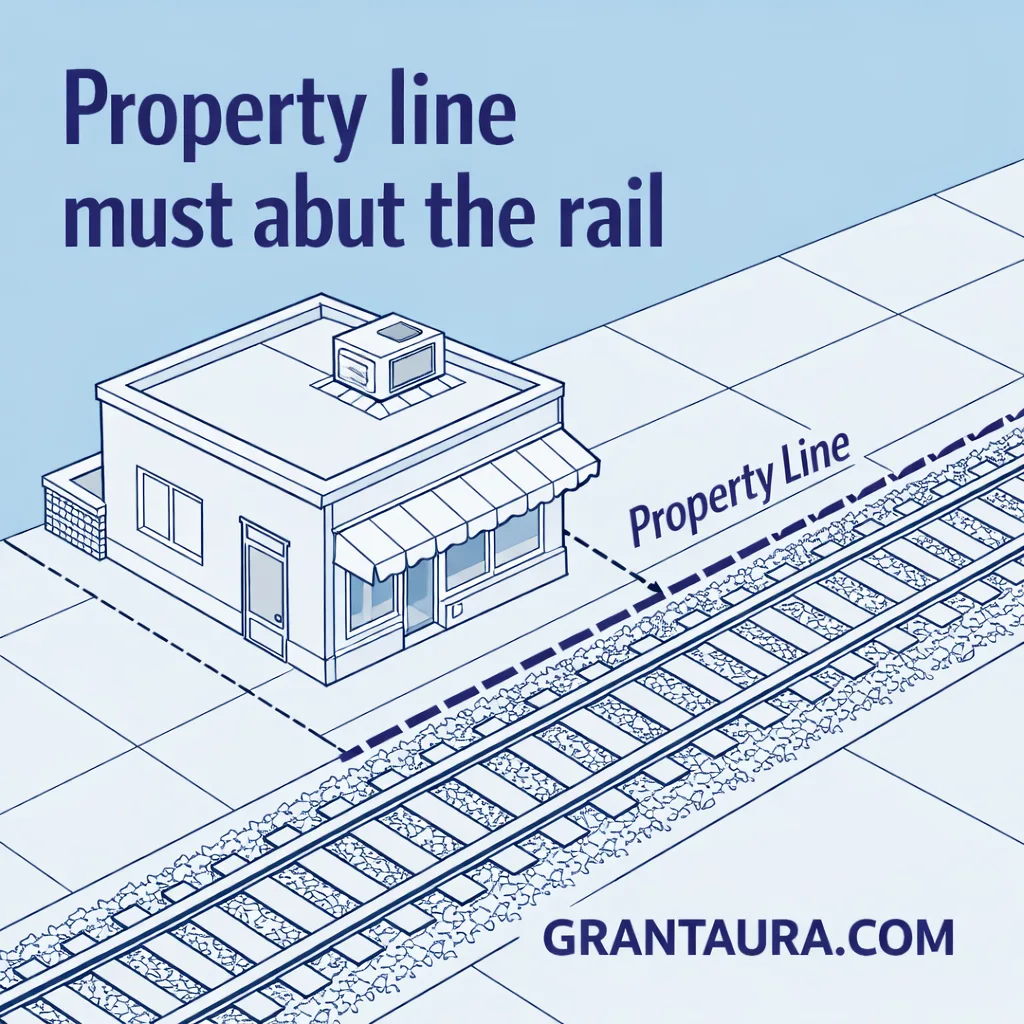
I know "adjacent" is a scary word in legal speak, but if your property line actually abuts or faces the rail corridor or a staging area, you might be sitting on a reimbursement check for rent, payroll, or utilities that you already spent.
Commercial property owners and non-religious nonprofits eligible
Grant Benefits
$60000
Sub-benefit: Presumptive Eligibility Award (PEA) offers $1500
Rent or Mortgage
Utilities
Insurance
Payroll
Other documented fixed operating expenses
04
Focus Areas
Construction MitigationBusiness RecoveryReimbursement
Check Your Eligibility
Check your specific location against the active D Line and East Valley corridors to see if you qualify.
Eligibility Check
Eligibility for Metro’s Business Interruption Fund (BIF): Up to $60,000 for Rail Construction Losses
Answer a few guided questions. Your responses are matched to this grant's criteria in real time.
Ready to check your eligibility?
We'll guide you through a short, structured flow and instantly evaluate fit for this opportunity.
Eligible
You Appear Eligible
Based on your answers, you meet the core requirements for this grant.
Recommended Next Step
Protect Your Application Before You Submit
You look eligible — but eligibility alone doesn't win grants. Most rejections happen on the application itself: missed language, wrong framing, weak impact statement. A Grantaura Expert Review takes 24–48 hours and flags every gap before the funder sees it.
✓Expert reviews your draft⏱Results in 24–48 h💰Avg. grant value $12,000+
⚠ Grant committees reject 7 in 10 applications that meet eligibility. One overlooked line can cost you thousands.
🔒 Satisfaction-backed — if our review finds nothing actionable, you pay nothing more.
This Grant Isn’t the Right Fit. Your Best One Might Be Two Clicks Away.
Missing one criterion for Metro’s Business Interruption Fund (BIF): Up to $60,000 for Rail Construction Losses doesn’t mean you’re out of options — it means this grant wasn’t designed for your profile. Our expert research team identifies the grants built specifically for businesses like yours, across 500+ active opportunities.
Basic Match
$125
One-time research
A list of 5 grants only
Basic eligibility matching based on industry & location
Standard funding amount range verification
Primary criteria alignment check
Most Popular
Advanced Match
$145
One-time research
A list of 7 grants only
Advanced eligibility matching with business model analysis
Deep competitive advantage assessment
Innovation & impact potential matching
Market fit & growth trajectory alignment
Premium Match
$175
One-time research
A list of 10 grants only
AI-powered deep-match algorithm analysis
Historical success pattern matching
Priority sector & focus area alignment
Advanced sustainability impact matching
Strategic vision & long-term goals alignment
Preparing secure checkout…
✓
Order Confirmed
Your grant research order is placed. Our team will deliver your personalised report within 3–5 business days. Check your email for confirmation.
Auto-advances after each answer. Use Back to revise.
If the tool says you are eligible, with Grantaura to get your claim organized. If the result is unclear or you are unsure about the "adjacent" rule, book a live 1-on-1 consultation with a grant expert to review your map. If you are not eligible, scroll down to the "More Grants" section or explore our Los Angeles grants archive for other opportunities.
Two Paths to Get Paid
There are two ways to get paid. The standard path requires you to have 25 or fewer full-time employees, at least two years of operation on the corridor, and the ability to produce detailed financial records like gross receipts and payroll taxes to prove the loss.
But what if your books are a mess? That is where the Presumptive Eligibility Award (PEA) comes in. This path offers up to $1,500 per impact year for micro-businesses, including street vendors, who might not have extensive financial records. The PEA has lighter documentation requirements but the same base eligibility rules regarding location and time in business.
Strict Geography Rules
This money is not for just anyone in Los Angeles. It is strictly for businesses impacted by the D Line Extension (Sections 1, 2, and 3) and the East San Fernando Valley Light Rail Transit Project. The older corridors like Crenshaw/LAX and the Regional Connector are listed as "Past" alignments, so if you are looking for relief there, you are likely out of luck unless you have an existing claim.
Biggest mistake I see is assuming "near" counts. It does not. Metro defines eligible locations as businesses whose property lines "abut or face" the rail corridor or a designated construction staging area. If you are across a busy street from the construction, you probably do not qualify. If your front door shares a wall with the construction fence, you are in the zone. Businesses inside malls or strip malls qualify if their property line abuts or faces the corridor.
What It Pays For
This is a reimbursement program, not a growth grant. You cannot use the money to hire new staff, renovate your store, or launch a marketing campaign. The funds are restricted to fixed operating expenses you already paid because revenue dropped.
Expense Type
Eligibility
Rent or Mortgage
Allowed
The Document Reality
Most owners underestimate the paperwork until the portal asks for everything at once. You will need specific financial records to prove the loss: gross receipts, payroll tax documentation, bank statements, a lease or proof of location, and tax compliance verification. Gathering these five core document types typically takes several hours if your records are organized. If you are starting from scratch, it can take weeks. The 180-day quarterly deadline means you must submit within six months of the quarter in which construction impact occurred. If you are organizing records from scratch, starting immediately is prudent.
The Application Process
You cannot just click "submit" and be done. After you file the initial request through the PCR portal, a Business Advisor will contact you within two business days to schedule an appointment. This is the most critical part of the process. You have to sit down with them and prove, with your bank statements and tax returns, that your revenue cliff happened exactly when the Metro construction started.
Most rejections happen right here. Not because the business isn't eligible, but because the owner could not clearly link the financial loss to the construction timeline. I have seen many applicants struggle to organize their proof. If that sounds like you, let our experts review your financial narrative before you meet with the advisor.
Frequently Asked Questions
Q: Is Metro’s Business Interruption Fund still a pilot program? A: No. Metro approved making it a permanent program in 2023 with a $10 million annual budget, though some older pages might still use the word "pilot."
Q: What if I am across the street from the construction? A: You likely do not qualify. The rule requires your property line to "abut or face" the corridor or staging area. Being across the street usually does not count.
Q: I’m in a strip mall. The construction is in the parking lot. Do I qualify? A: Yes, if your property line abuts or faces the rail corridor or a staging area. The strip mall itself counts as your property line.
Q: Can I apply for this if my business is on the Crenshaw/LAX line? A: Only for past impacts. New applications are focused on the current D Line Extension and East San Fernando Valley projects.
Q: Do I need perfect books to apply? A: Not necessarily. If you lack detailed records, look into the Presumptive Eligibility Award (PEA) which requires lighter documentation. If you are unsure which path fits your situation, schedule a consultation to discuss your documentation.
Q: Can a commercial property owner apply for tenant revenue loss? A: Property owners can file for mortgage, utilities, insurance, and other expenses as determined by the program administrator. They cannot claim tenant revenue loss unless they can prove direct business impact.
What The Donor Page Won't Tell You
The donor page lists the requirements. It does not help you structure the narrative that connects specific construction activities to your financial dip. Our experts catch phrasing that triggers rejection before submission. They optimize your budget section against what PCR reviewers expect in this specific program. They flag supporting document gaps you might miss when you're too close to the paperwork.
Or maybe the 180-day quarterly deadline logic feels confusing. If your impact period spans multiple quarters or construction started mid-quarter, the edge cases need human judgment. A live 1-on-1 video or phone call with a grant expert can map your specific timeline to the submission window so you don't miss the cutoff.
I am a grant researcher and writer focused on finding obscure funding opportunities for small businesses. I dig through board reports and admin guidelines so you do not have to. My goal is to give you the straight truth on who gets paid and why, without the fluff. When I am not analyzing eligibility rules, I am helping applicants navigate the tricky narrative parts of their submissions. Read more about me or schedule a consultation.
KGI Title: Metro Business Interruption Fund (BIF)
Figuring out whether you qualify for Metro's Business Interruption Fund requires checking more than just your business type and size. The geographic constraint is brutal - your property line must actually touch the rail corridor or staging area, not just be nearby. I have seen businesses assume they qualify because they are on the same street as construction, only to discover the hard way that "immediately adjacent" means exactly what it says. This eligibility checker walks you through the specific requirements that trip up most applicants: your location relative to active Metro projects, your documentation capacity for either the full grant or the Presumptive Eligibility track, and your business standing with taxing authorities. Answer honestly - the tool will route you to the right next step based on your actual situation, not an idealized version of it.
The Geographic Constraint Most Applicants Miss
The official guidelines say "immediately adjacent" and many business owners interpret this loosely. They assume being on the same block or within sight of construction qualifies them. It does not. Your property line must abut or face the rail corridor, a designated staging area, or a construction storage facility. If you are in a strip mall, the mall itself must face the corridor directly. I have reviewed the quarterly reports and the most common reason for rejection after incomplete applications is simply being on the wrong side of the street. The checker above verifies your location against the current project alignments - D Line Extension Sections 1-3 and the East San Fernando Valley Light Rail.
Two Tracks, Different Documentation Burdens
Here is where this grant gets interesting. Metro created the Presumptive Eligibility Award specifically because 18% of otherwise qualified businesses were failing due to documentation gaps. The full BIF requires tax returns, payroll records, bank statements, and lease agreements spanning two years. The PEA requires self-certification and gets you up to $1,500 faster. If you are a street vendor, cash-only operation, or micro-business without formal books, the PEA is not a consolation prize - it is the track designed for you. The checker helps you assess which path matches your recordkeeping reality, not just your revenue loss.
When to Talk to an Expert
The eligibility checker handles the clear yes-or-no questions. But what if you are unsure whether your location counts as "immediately adjacent"? What if you have most of the required documents but not all? What if you cannot tell whether your revenue drop correlates with construction milestones or general market trends? These judgment calls matter because the 180-day quarterly deadline does not wait for you to figure it out. If the checker leaves you uncertain, or if you want a human review of your documentation readiness before you commit hours to gathering records, schedule a consultation. We can verify your location eligibility, assess which track fits your situation, and map a timeline for your application.
[
  {
    "url": "https://grantaura.com/grant/abc-fuerza-fund/",
    "custom_description": "For LA businesses affected by crises including construction disruptions. Alternative funding when Metro BIF geographic constraints exclude your location."
  },
  {
    "url": "https://grantaura.com/grant/spectrum-reach-pay-it-forward-grant/",
    "custom_description": "LA-area businesses can access advertising credits to offset customer acquisition costs during construction periods when foot traffic declines."
  },
  {
    "url": "https://grantaura.com/grant/kuya-capital-grant/",
    "custom_description": "California businesses seeking non-equity funding alternatives. Useful for businesses on Metro corridors needing capital beyond construction mitigation."
  },
  {
    "url": "https://grantaura.com/grant/sephora-grant/",
    "custom_description": "Minority-owned businesses in LA may qualify for this retail-focused grant program. Good alternative for businesses ineligible for Metro BIF location requirements."
  },
  {
    "url": "https://grantaura.com/grant/wfn-fast-pitch-competition/",
    "custom_description": "LA-based women founders can pitch for funding. Relevant for female-owned businesses on Metro corridors seeking additional capital sources."
  },
  {
    "url": "https://grantaura.com/grant/small-business-administration-sbir-sttr/",
    "custom_description": "Federal R&D funding for technology businesses. Alternative for LA tech companies near Metro construction with innovative projects."
  },
  {
    "url": "https://grantaura.com/grant/amber-grant-for-women/",
    "custom_description": "Monthly grants for women-owned businesses. LA applicants on Metro corridors can supplement BIF funding or apply if location-ineligible."
  },
  {
    "url": "https://grantaura.com/grant/nase-growth-grants/",
    "custom_description": "Micro-grants for small business growth. Useful for LA businesses needing smaller amounts than Metro BIF minimums or PEA track."
  },
  {
    "url": "https://grantaura.com/grant/fedex-small-business-grant-contest/",
    "custom_description": "National grant program with strong California presence. Alternative for LA businesses ineligible for Metro BIF geographic constraints."
  },
  {
    "url": "https://grantaura.com/grant/verizon-small-business-digital-ready/",
    "custom_description": "Digital transformation grants for small businesses. Helps LA businesses on Metro corridors build online presence to offset lost foot traffic."
  }
]
We are your trusted grant application partners. You can navigate the entire grant application process with our expert guidance through this simple 5-step process.
300+ Projects
4.9/5 Rating
Expert Team
Step 1: Application Form
Fill out the "Apply for this grant" form with your information and grant requirements.
Step 2: Eligibility Assessment
Our grant experts will assess your eligibility and notify you via email.
Step 3: Expert Consultation
A dedicated grant expert will be assigned to discuss next steps for your application.
Step 4: Application Submission
Our expert will help you complete and submit your application with all required materials.
Step 5: Final Decision
The grant committee will make their decision and notify successful applicants.
As the founder of Grantaura, I've dedicated myself to demystifying the grant funding process. My goal is simple: to empower entrepreneurs, non-profits, and innovators like you to secure the capital needed to make a real impact. Let's build your funding strategy together.
Profile data is saved in your browser and synced to secure storage when available.
Context
Grants selected0
SLA tierNot selected yet
Billing modelNot selected yet
Due today--
Total project value--
Selection preview
No grants selected yet.
Soft estimate
Estimate only. Final pricing appears in Quote step.
Quote expiry
Quote timer starts after pricing is generated.
Verification
Verification status appears here once quote is confirmed.
Success snapshot
Success milestones appear here after confirmation.
What happens next
After quote confirmation, verify your email and complete secure payment.
ProfileReviewPayment
Choose your service
Select how you want to proceed. You will review pricing before checkout.
Next stepReview pricing, then checkout
Recommended
Full service
Full Application Submission
From USD 41.40
We prepare and submit your grant application on your behalf, with priority or rush handling applied when the deadline makes faster service necessary.
No funding guarantee. If Grantaura cannot complete due to our operational failure, refund policy applies.
Assessment
Quick review
Eligibility Assessment
USD 7.75 one-time
Find out if you qualify. Results typically within 24 hours.
FreeNo card needed
Share & Submit Free
Share this grant with your network. We will assess your application at no cost.
Why does Grantaura charge a fee?
The donor does not charge you. This fee covers Grantaura's hands-on work: expert review time, eligibility checks, application drafting, and submission handling.
You will see the exact quote before checkout. Nothing is charged just for opening this screen.
Keep your post public. Our team will verify the link before processing your assessment. If the post is deleted or made private after submission, your free assessment will be void.