Your shortlist, progress, and updates stay in sync.
See matches based on your real profile
Track deadlines and key updates
Move into 1-Apply when ready
No payment required to open your account.
grantaura.com
Rolling
VR&E Self-Employment Track
VA vocational rehab program for service-disabled veterans launching a business – training, startup tools, and business plan support through Chapter 31.
The VR&E self-employment track is an ongoing federal program – no application deadline, no application cycle – and the VA’s own internal handbook calls it “one of the most demanding tracks” in the entire Veteran Readiness and Employment system. Which is not how the official page describes it. The official page gives you four bullet points and a button. What that page skips is the part where two completely separate approval tiers exist, each unlocking a different set of things the VA will actually fund, and that your business plan has to survive a formal viability review conducted against eight specific criteria before any services begin.
Wait – I should be honest about something else too. Most veterans who walk into that first counselor meeting get redirected. Not because they do not qualify. Because they do not know what the counselor is evaluating. This program is open right now, and it may cover real startup support for your business. But only if you understand how it actually works first.
Service-connected disability rating of 10% or higher (or Serious Employment Handicap finding at lower ratings)
No dishonorable discharge
Employment handicap determination by Vocational Rehabilitation Counselor
Enrolled or applying for VR&E (Chapter 31) benefits
Business concept must pass VA viability analysis
Pre-2013 discharge: within 12-year eligibility window (extendable with SEH finding)
Post-2013 discharge: no time limit
For-profit businesses only – non-profits explicitly excluded per 38 CFR 21.257(f)(5)
Credit report with score required before category assignment
Grant Benefits
Services and startup support (no fixed cash award – value depends on category assignment)
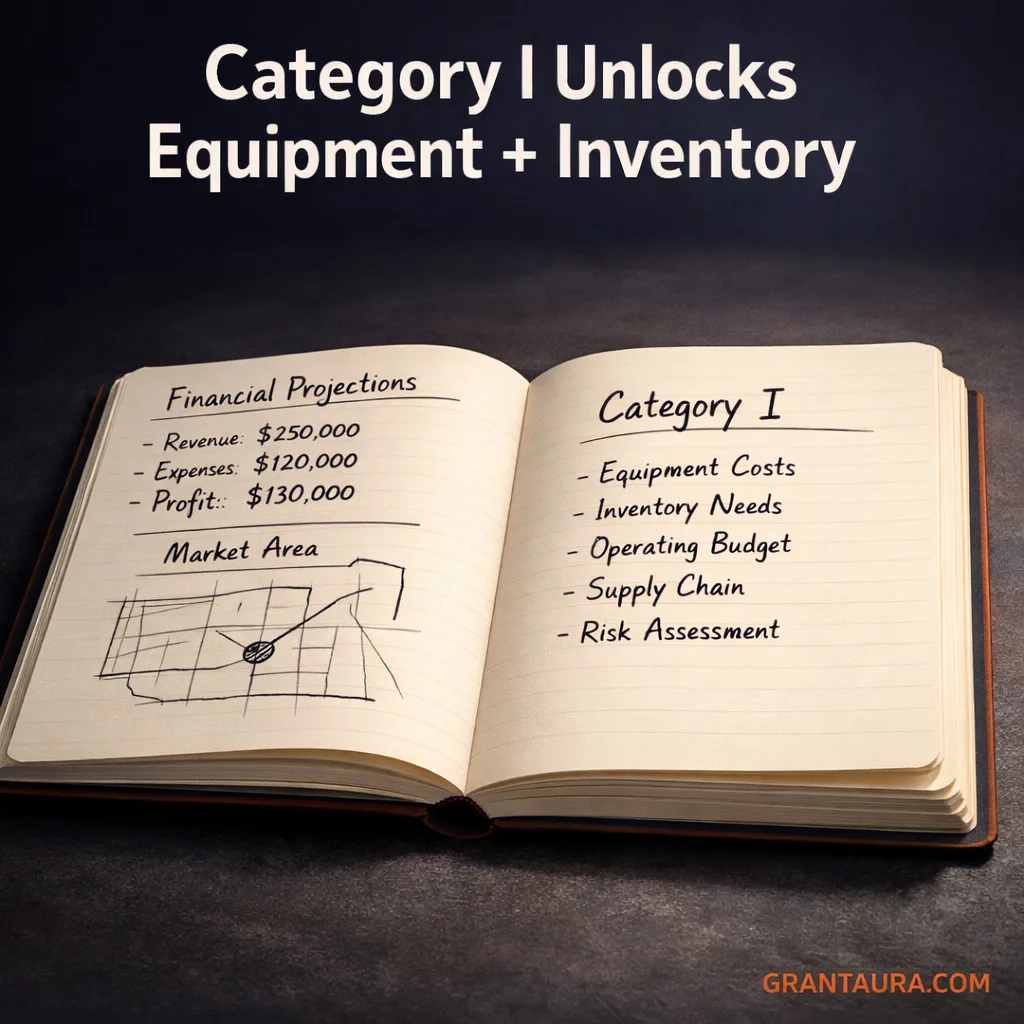
Category I: comprehensive training plus initial inventory plus essential equipment plus license fees plus required insurance
Category II: training plus personal tools plus license fees plus required insurance only
Subsistence allowance during training phase (up to $3439.23/month FY26 maximum – varies by dependents)
Business plan development support with professional consultant (arranged by VRC)
Mandatory SBA referral to support business plan viability
12 months of post-launch VRC case management monitoring
04
Focus Areas
VR&E self-employmentChapter 31 business supportveteran entrepreneurshipvocational rehabilitation self-employmentservice-connected disability employment
See Where You Stand Before the VRC Meeting
The eligibility checker maps your situation – disability rating, discharge type and date, and business concept stage – against the actual criteria the VA uses during enrollment. It takes less time than reading through the regulations yourself and gives you a clearer read on where you land before you invest time in a counselor appointment.
Eligibility Check
Eligibility for VR&E Self-Employment Track Category I & II
Answer a few guided questions. Your responses are matched to this grant’s criteria in real time.
Ready to check your eligibility?
We’ll guide you through a short, structured flow and instantly evaluate fit for this opportunity.
Eligible
You Appear Eligible
Based on your answers, you meet the core requirements for this grant.
Recommended after eligibility
You qualify. Now make sure the application is worth sending.
Eligibility only tells you that you can apply. It does not catch weak answers, missing proof, confusing budget details, or language that makes reviewers hesitate.
This Grant Isn’t the Right Fit. Your Best One Might Be Two Clicks Away.
Missing one criterion for VR&E Self-Employment Track Category I & II doesn’t mean you’re out of options — it means this grant wasn’t designed for your profile. Our expert research team identifies the grants built specifically for businesses like yours, across 500+ active opportunities.
Basic Match
$125
One-time research
A list of 5 grants only
Basic eligibility matching based on industry & location
Standard funding amount range verification
Primary criteria alignment check
Most Popular
Advanced Match
$145
One-time research
A list of 7 grants only
Advanced eligibility matching with business model analysis
Deep competitive advantage assessment
Innovation & impact potential matching
Market fit & growth trajectory alignment
Premium Match
$175
One-time research
A list of 10 grants only
AI-powered deep-match algorithm analysis
Historical success pattern matching
Priority sector & focus area alignment
Advanced sustainability impact matching
Strategic vision & long-term goals alignment
Preparing secure checkout…
✓
Order Confirmed
Your grant research order is placed. Our team will deliver your personalised report within 3–5 business days. Check your email for confirmation.
Auto-advances after each answer. Use Back to revise.
If the tool confirms likely eligibility, the next move is building your application materials – not filling out a form. This program rewards preparation before the VRC meeting more than almost anything else. Submit your details through the intake below and we will review what you have. If the tool flags something unclear, the right call is a live 1-on-1 call with a grant expert to work through the specific ambiguity. If the tool finds you outside eligibility for this track right now, the related grants section further down surfaces veteran entrepreneur funding that may fit your current situation instead.
The Real Eligibility Picture
Of all the criteria the VA checks, the one that trips up most applicants is the employment barrier documentation. It is not enough to have a service-connected disability rating. You have to demonstrate how that specific disability creates a barrier to preparing for, obtaining, or keeping suitable employment. That determination happens during your VR&E evaluation – not during a separate self-employment application step. Which confuses a lot of veterans into thinking they have already cleared this gate when they have not.
The discharge requirement is the clearest: no dishonorable discharge. Other-than-honorable or bad conduct discharges may require an upgrade or a Character of Discharge review before VR&E benefits become accessible. The rating minimum is 10% service-connected – though a lower rating can still qualify if your VRC finds a Serious Employment Handicap. One thing that matters for startup-only planning: this track is for new business creation. Using VR&E to expand or improve an existing business is not allowed unless your disability has made that existing business unsuitable employment in its current form.
Eligibility timing matters if you separated before January 1, 2013. Your eligibility window is 12 years from whichever comes later: your separation date, or the date you received your first VA disability rating. That window can be extended if the VRC finds a Serious Employment Handicap. Separated on or after January 1, 2013? No time limit.
One requirement almost nobody expects: before your category assignment can happen, you need to provide a credit report with your score. The VA uses it to assess whether you can secure alternate funding for items VR&E cannot cover. Poor credit does not automatically stop the process, but it changes how your VRC structures the plan.
Q: Does the VR&E self-employment track work for veterans already running a business?
A: Yes, under a specific condition. The existing business must not be considered suitable employment in its current form – meaning your disability has created a barrier to its continued operation. The business plan has to address those disability-related barriers directly. If the business is functioning fine and your disability is not limiting it, VR&E will not provide services to expand or improve it. If your situation is ambiguous, a live 1-on-1 call with a grant expert is the right move before you sit down with a VRC.
Q: Is this only for brand-new startups?
A: Yes, for practical purposes. The track is designed for new business creation, not expansion of existing operations. The preliminary evaluation and business plan viability review both enforce this.
Two Approval Tiers, Two Completely Different Levels of Support
This is what the official VA page does not explain. Your VRC assigns you to one of two categories during evaluation, and that assignment determines the entire scope of what the VA will actually fund. It is not a preference you select. The VRC decides, based on the severity of your disability and whether any form of traditional employment is still viable for you given your transferable skills and work history.
Category I
Category I is for veterans where the disability is most severe, where the situation qualifies as a Serious Employment Handicap, and where the VRC concludes that self-employment is the only reasonably feasible vocational goal. That last piece matters more than most veterans realize. The VRC will look at your prior work experience. If you have transferable skills that could support any form of traditional desk work or standard employment – even if you do not want to use those skills – the counselor may argue Category I is not appropriate, because those skills mean traditional employment is theoretically still viable. To reach Category I, you need to demonstrate that your disability specifically neutralizes those options. Under Category I, the VA can fund comprehensive training, a minimum initial stock of inventory or salable merchandise, expendable items required for day-to-day business operations, essential equipment including machinery and fixtures, and incidental services like business license fees, workers’ compensation insurance, and disability insurance. Central Office must pre-approve every Category I assignment before plan development even begins – regardless of how much the plan will cost. That adds time.
Worth noting separately: if your business plan involves operating from your home and you need accessibility modifications to make that viable, service-disabled veterans may separately qualify for VA housing adaptation grants – a different VA program that sits alongside VR&E, not inside it.
Category II
Category II covers veterans with an employment handicap or an SEH where the disability is not classified as most severe. No Central Office pre-approval required. Services are narrower: comprehensive training toward the vocational goal, incidental small-business management training, license and required insurance fees, and personal tools and supplies that the specific occupation requires. No inventory. No machinery. No equipment beyond the tools the job demands.
Expert Tip
Category I assignment requires documentation that your disability limits every form of traditional suitable employment – not just the kind of work you prefer to avoid. Before your first VRC appointment, assemble current medical records establishing functional limitations, a written statement from your treating provider on work capacity, and a clear written explanation of why schedule flexibility or environment control is a medical necessity. The VRC uses this to support a Category I argument when they submit to Central Office.
What VR&E Will Not Pay For
The M28R handbook is specific. Regardless of which category you land in, the VA must not authorize any of the following even if you consider them essential to your startup:
Purchase of land or buildings (full or partial)
Lease or rental payments for business premises
Purchase or rental of cars, trucks, or any vehicle
Stocking a farm for animal husbandry operations or a fishery
Franchise fees
Working capital, business loans, or any direct cash investment
Non-profit business concepts – explicitly excluded under 38 CFR 21.257(f)(5) because non-profits are not individually owned
Businesses in industries that are federally illegal regardless of state law
Franchise fees are worth addressing directly. Veterans who see franchise ownership as a lower-risk business entry point need to know upfront that VR&E will not cover the initial franchise fee or any ongoing royalty fees. A franchise concept can still appear in your plan – but the fee structure has to come from alternate sources, and your business plan must document those sources. SBA veteran-specific loan programs exist for this gap; verify the specific programs against your franchise type and business plan before counting on them.
If your business concept involves farming or agricultural operations, VR&E cannot fund livestock or farm stocking. The Farmer Veteran Fellowship Fund from the Farmer Veteran Coalition specifically covers equipment and supplies for veteran farmers – a direct complement for exactly that gap.
For veterans whose startup requires working capital or an unrestricted cash injection that VR&E is not designed to provide, the Hiring Our Heroes Small Business Grant offers $10,000 to veteran and military spouse entrepreneurs – funding with no restrictions on how it is spent.
Do’s
Bring your credit report with score to the first VRC meeting – the VA requires it before category assignment
Prepare a written explanation of why your disability makes traditional employment medically infeasible – not just inconvenient
Document how your disability specifically limits transferable skills you already have
Build your business plan to address all eight M28R viability criteria including five-year income projections
Gather a written statement from your treating provider on your work capacity before the evaluation appointment
Don’ts
Assume VR&E will fund vehicles
business premises
or working capital – it explicitly will not
Propose a non-profit business concept – the regulation categorically excludes it
Walk into the first VRC meeting treating it like an intake appointment – it is an evaluation
Expect the counselor to write your business plan – that responsibility stays with you
Ignore the $25000 approval threshold when estimating your plan budget
Eight Things Your Business Plan Must Prove
The VR&E self-employment track does not work like a form-and-wait application. Your business plan is the primary document the VA evaluates. The M28R handbook specifies eight components the VRC checks during viability analysis, and none of them are optional:
The location of your business and, if applicable, the cost of that site
A financial statement showing non-VA financing sources and your personal financial resources
An economic viability study covering: geographic distribution of your customers, population traffic patterns toward your location, probability your business could serve as a subcontractor or vendor to federal agencies, competition you face and why your business survives it, and a comparison of operating expenses against projected income over five years
A cost analysis itemizing every startup expense – including items the VA cannot fund
A working outline of your market strategy for your product or service
A detailed operation plan describing how the business runs day to day
A training schedule for skills you still need to acquire to operate the business
Documentation of contact with the Small Business Administration for consideration under Section 8 of the Small Business Act
You develop the written plan. Not the VRC. A professional business consultant joins the process – arranged by the VRC on either a voluntary or contractual basis – but the veteran leads the work. When you submit, the VRC writes a viability summation that either supports the plan or redirects it. If viable, you and the VRC co-develop the combined Individualized Written Rehabilitation Plan and Individualized Employment Assistance Plan. Both parties sign that document. Services do not begin until after those signatures.
One practical note on document specificity: vague line items in your cost analysis get flagged during review. “Equipment” or “supplies” without vendor quotes or market research behind them signal an unprepared plan. Every line item should be specific enough that the VRC can evaluate whether it is genuinely essential to the startup.
Q: Do I need a business plan ready before I apply for VR&E?
A: No. You apply for VR&E (Chapter 31) first using VA Form 28-1900. If entitlement is established and self-employment is determined to be a suitable vocational goal, you develop the business plan as part of the rehabilitation planning process. Bringing a preliminary concept outline to your first VRC meeting is helpful. A polished plan is not required at that stage.
Q: What happens if my business plan fails the VA’s viability review?
A:
Your VRC will offer you the option to revise and resubmit the plan.
If revision will not lead to approval, the VRC discusses alternative VR&E tracks with you.
For Category I veterans specifically: if self-employment is found not viable, the VRC must conduct a comprehensive Independent Living assessment – because at that assignment level, the determination already established that all other employment goals are unsuitable.
If you disagree with the outcome, the appeal basis is 38 USC 3107 and 38 CFR 21.98.
Q: Can I start a non-profit through this track?
A: No. Non-profit business concepts are explicitly excluded under 38 CFR 21.257(f)(5). Non-profits are owned by the public, not by the individual veteran. That ownership distinction disqualifies them.
While the Plan Is in Progress
During the training and business plan development phases, you may receive a monthly subsistence allowance. The FY26 maximum is $3,439.23 per month – but the actual figure varies by dependents and training status. Veterans with at least one day of remaining Post-9/11 GI Bill eligibility can elect the Basic Allowance for Housing rate at the E-5 with dependent level instead of the standard Chapter 31 rate, which community sources consistently report is the higher option.
The Fast Track planning option lets vocational goal identification be deferred while business plan development happens in an earlier case status. Maximum duration is 12 months or three consecutive terms – extendable by up to six months with VREO approval. You can receive subsistence during this phase, which means the months of business plan development do not have to be financially unsupported.
After launch, the VRC follows up for a minimum of 12 months to confirm the business is operational and your needs are met without continued VR&E support. Rehabilitation is not considered complete – and the case does not close – until the business has operated viably for one full year. Not the day you launch. Twelve months after.
What to Actually Bring to That First VRC Meeting
Here is what most veterans get wrong. They walk in saying “I want to start a business” and the VRC hears “I do not want a traditional job.” Those are different conversations, and only one of them gets you toward the self-employment track. The VRC is evaluating whether self-employment is a legitimate vocational rehabilitation goal given your disability – not whether your business idea sounds good. So what you are actually doing in that room is making a case, not a pitch.
The case rests on showing how your disability creates specific barriers to traditional employment, and why those barriers cannot be resolved through standard workplace accommodations. If you have transferable skills from a prior career – logistics, office work, technical fields – the VRC will notice, because those skills suggest traditional employment is still viable. Your documentation needs to specifically address why those skills cannot be applied in a conventional employment setting given your current functional limitations. That is the harder argument to make. It is also the one that matters most for Category I.
What to bring to that first appointment:
Current medical records establishing your specific functional limitations and how they affect your ability to work in a standard employment setting
A written statement from your treating provider on your work capacity and why a structured workplace environment is medically problematic
A preliminary description of your business concept – not a full plan, but enough to show what the business does, who the customers are, and why self-employment accommodates your disability better than traditional work
Your credit report with score – the VA requires it before category assignment, so arriving with it pre-empts a delay
Documentation of relevant skills, experience, or training that demonstrates your ability to operate the proposed business
Q: My VRC is pushing back on the self-employment track. Is that normal?
A: Yes. The M28R program manual explicitly describes self-employment as one of the most demanding tracks and requires VRCs to help veterans understand the demands before proceeding. That is a polite framing for what is often experienced as active discouragement. One VetsbenefitsNetwork thread documents a three-year BVA appeal over a self-employment track denial – so the friction is real and documented. The strongest counter is preparation: medical documentation that addresses why traditional employment is infeasible, a business concept with clear disability-accommodation rationale, and clarity on your credit history. If you have already received a denial and are considering appeal, the regulatory framework is 38 CFR 21.257 and 38 CFR 21.258.
Q: Does using VR&E reduce my GI Bill benefits?
A: No. Using VR&E Chapter 31 benefits does not deduct from your Post-9/11 GI Bill or Montgomery GI Bill entitlement. They are separate programs. You can use VR&E first and preserve your GI Bill months. If you used GI Bill benefits before VR&E, there may be a deduction from your remaining VR&E entitlement – but not the reverse.
The $25,000 Decision
Once your business plan is developed and the VRC’s viability summation supports it, the approval route depends on cost. Plans with an estimated or actual total cost under $25,000 go to your local VR&E Officer for approval. Plans at or above $25,000 go to the VR&E Service Director – a national-level review with longer timelines, more layers, and more scrutiny.
Does that mean you should design your plan to come in under $25,000? Not automatically. Some businesses genuinely need more. But you should understand the trade-off: local approval is faster and your counselor has more direct influence over the outcome. National review adds time and reduces that direct influence. The practical question is whether to request what you need to launch – not what you might want by year three. Build for launch. Adjust later if the business grows into needing more.
The total includes everything in the plan: training fees, tools, equipment, license fees, required insurance. It adds up faster than most people expect. Keep a running itemized tally as you develop the plan with your consultant. And remember: for Category I assignments, Central Office pre-approval is required before plan development even begins – separate from and in addition to the VREO or Service Director approval on the plan itself.
Both veteran and VRC sign VAF 28-8872, the Rehabilitation Plan, after approval is secured. That signature is when services begin. Not when the plan is submitted. Not when the VRC agrees it is viable. After approval and after signatures. Keep that sequence clear in your timeline expectations.
Q: Do I have to work with the SBA as part of this program?
A: Yes. Referral to the Small Business Administration or another approved business consultant is a mandatory part of the feasibility and plan development process – not optional. The SBA connection is built into the viability criteria your business plan must address (specifically, SBA coordination under Section 8 of the Small Business Act). Your VRC arranges this referral as part of plan development.
Terms Worth Knowing Before Your First Appointment
Veteran Readiness and Employment (VR&E): The federal program formerly called Vocational Rehabilitation and Employment, renamed in June 2020. Also known as Chapter 31. Offers five service tracks; self-employment is the most demanding to access.
Chapter 31: The statutory designation for VR&E, from Title 38 of the United States Code. VRCs, VSOs, and attorneys use this term interchangeably with VR&E. The self-employment track is governed by 38 CFR 21.257 and 38 CFR 21.258.
Vocational Rehabilitation Counselor (VRC): The VA staff member who evaluates your case, determines your entitlement, assigns your category, reviews your business plan’s viability, and manages the approval chain. The VRC is simultaneously your advocate and your evaluator – that dual role matters.
VR&E Officer (VREO): The official at your regional VA office who approves self-employment plans with total estimated costs under $25,000. Plans at or above $25,000 go to the VR&E Service Director at the national level.
Employment Handicap: A VRC determination that your service-connected disability limits your ability to prepare for, obtain, and maintain suitable employment – meaning work that does not worsen your disability, is stable, and matches your abilities. Required for VR&E entitlement at minimum (Category II threshold).
Serious Employment Handicap (SEH): A more severe employment handicap determination – the disability significantly limits suitable employment options. Required for Category I assignment. Also extends the eligibility window for veterans discharged before January 1, 2013, who have exceeded the standard 12-year period.
Category I: The higher tier of self-employment services. Requires SEH plus most-severe disability classification plus a VRC finding that self-employment is the only viable vocational goal. Unlocks equipment, inventory, and machinery coverage. Central Office pre-approval required before plan development.
Category II: The standard tier. Requires employment handicap or SEH without most-severe classification. Covers training, license fees, required insurance, and personal tools only – no inventory, no equipment beyond tools.
Individualized Written Rehabilitation Plan (IWRP): The formal plan co-developed by veteran and VRC, combined with an Individualized Employment Assistance Plan (IEAP) for self-employment cases. Both parties must sign before any services begin.
Individualized Employment Assistance Plan (IEAP): The employment-focused component of the self-employment rehabilitation plan. Outlines startup objectives, success criteria, and VA-provided resources. Combined with the IWRP into one signed document.
Fast Track Planning: An expedited process allowing vocational goal identification to be deferred while business plan development proceeds in an earlier case status. Maximum duration 12 months or three consecutive terms – extendable six months by VREO. Subsistence allowance is paid during this phase.
Business Plan Viability Analysis: The VRC’s formal review of your business plan against eight specific M28R criteria. The VRC writes a viability summation that determines whether the plan proceeds or is redirected. Not a rubber stamp.
Self-Employment Panel: The consultative review group that may participate in evaluating your feasibility analysis report before plan approval proceeds. May include VRC, business consultant, and panel members depending on your regional office process.
Concurrence Threshold: The dollar level that determines which approval authority reviews your plan. Under $25,000: local VREO. At or above $25,000: VR&E Service Director. A strategic factor in how you structure your initial plan budget.
Subsistence Allowance: Monthly payment to veterans participating in a VR&E training program. FY26 maximum: $3,439.23 per month. Actual amount varies by dependents and training status. Veterans with remaining Post-9/11 GI Bill eligibility can elect the BAH rate at E-5 with dependent level instead.
Employment Adjustment Allowance (EAA): A benefit paid at the institutional subsistence rate that may be available during the transition period after plan services complete. VRC determines eligibility and processes payment. Not automatic.
VAF 28-0794 (Self-Employment Plan Approval Request): The form the VRC submits to the VREO requesting plan approval before any services begin. Required for all self-employment cases and triggers the approval chain.
VAF 28-8872 (Rehabilitation Plan): The signed rehabilitation plan document. Both veteran and VRC sign after VREO approval. The signature triggers the start of services – nothing moves before this form is signed.
38 CFR 21.257: The federal regulation governing the VR&E self-employment track. Basis for the category structure, the non-profit exclusion, and the viability determination process. Referenced in VRC reviews, VSO consultations, and any appeal proceedings.
Other Funding Veteran Entrepreneurs Stack With This
VR&E covers the services and training side of a startup. It does not provide working capital, cash reserves, or the equipment categories its rules prohibit. Veteran entrepreneurs who need unrestricted funding alongside VR&E support – or who do not qualify for this specific track right now – have other programs worth stacking into the same strategy.
A recurring small business grant open to U.S. entrepreneurs with no application fee. The straightforward application and flexible use of funds complement VR&E’s more structured approval process, serving veteran entrepreneurs who need accessible cash funding alongside their rehabilitation plan.
Monthly community-backed startup grants for underrepresented entrepreneurs including veterans. Provides unrestricted cash that can cover items VR&E will not fund, with a streamlined application process that can run in parallel with the longer VR&E evaluation timeline.
A micro-grant for veteran business owners already operating an employer-based business, offered annually around Veterans Day. It targets the same veteran entrepreneur audience and serves as a cash supplement for businesses in the post-launch phase that VR&E monitors for 12 months.
VA housing adaptation grants (SAH, SHA, TRA) from the same donor address accessibility modifications to homes. Veterans in the VR&E self-employment track planning to operate a home-based business may need these modifications simultaneously – making this a natural parallel application.
VFW emergency financial assistance for active-duty service members facing hardship during deployment or medical discharge. Relevant to veterans who need bridge support while navigating the multi-month VR&E self-employment track approval timeline.
The Farmer Veteran Fellowship Fund covers equipment and supplies for veteran farmers – precisely the category VR&E excludes when it prohibits farm stocking for animal husbandry or fisheries. Veterans with agricultural business concepts should consider both programs in parallel.
This grant provides $10,000 in unrestricted cash to veteran and military spouse entrepreneurs – covering working capital, vehicles, and startup costs that VR&E explicitly cannot fund. Veterans using the self-employment track frequently stack this alongside their rehabilitation plan to fill the gaps.
What We Build Before Your VRC Meeting and Business Plan Review
Two documented friction points stop most veterans before they clear the VR&E self-employment track approval. The first is the VRC meeting itself. Veterans who arrive without medical documentation establishing why traditional employment is infeasible – and without a clear articulation of how their disability specifically limits their transferable skills – get redirected. Often on the first contact. The second is the business plan. The VA evaluates plans against eight specific viability criteria from M28R Chapter 9, including a five-year income projection, a local competition analysis, and SBA Section 8 coordination documentation. Most veterans have never written a document structured to those requirements.
For the business plan, we build the full document to VA’s viability specifications – financial projections, market analysis, SBA coordination documentation, training schedule, and cost analysis with itemized vendor quotes. Not generic business planning. VR&E-specific document preparation structured to what the viability summation actually checks. For the VRC meeting, we work through the category assignment strategy: which documentation supports a Category I argument, what the medical records need to show, and how to frame the disability-to-employment-barrier narrative in language counselors accept rather than language that triggers the “you have transferable skills” pushback.
This is a highly complex application by any measure – multiple documents, a multi-phase approval chain, months of counselor interaction, and a business plan review against specific regulatory criteria. The exact quote for our application support appears in the intake modal. Pricing reflects the document count, the multi-phase nature of the process, and the timeline from VRC meeting to plan approval.
If you are in the early stages and want to think through category strategy and documentation before the VRC meeting, the live consultation is where to start. If you have already cleared VRC and need help with the business plan document itself, the application intake moves that process forward.
I am the founder of Grantaura and spend most of my time on exactly these kinds of cases – federal programs where the public-facing page undersells what is actually required. The VR&E self-employment track is one of the more demanding programs I have dug into. The real mechanics live in a 2014 program handbook most applicants never read. What I do not pretend to know is what the VA has not published: the approval rate for this track, the typical cost of an approved plan, or exactly how regional offices interpret the viability criteria differently. That honest gap is part of why preparation before the VRC meeting matters so much. More about how I approach this work at my profile page, or let’s talk through your specific situation at the consultation page.
So you found the VR&E self-employment track and now you are trying to figure out if you actually qualify. Good instinct to check before you schedule that counselor appointment. The eligibility picture here is more layered than the official VA page makes it look – there is a discharge gate, a disability rating minimum, an employment handicap determination, a timing window that depends entirely on when you separated, and a business type restriction that catches a surprising number of veterans off guard. The checker below maps your specific situation against each of those gates in order, so you get a fast honest read on where you stand before you invest hours in a VRC evaluation. It is not a replacement for a counselor conversation, but it tells you whether that conversation is worth having right now.
What the Eligibility Check Is Actually Testing
The discharge requirement is the bluntest gate – dishonorable discharge disqualifies entirely, and other-than-honorable may require an upgrade first. Past that, the 10% service-connected disability rating is the statutory floor for VR&E enrollment. But the rating alone does not get you into the self-employment track. What matters is whether your VRC finds an employment handicap – a determination that your disability specifically limits your ability to prepare for, get, or keep suitable work. That judgment call is the real gate, and it is the one most veterans underestimate.
The Eligibility Window Most Veterans Do Not Know About
If you separated from active duty before January 1, 2013, there is a 12-year basic eligibility period. It starts from whichever comes later: your separation date, or the date you received your first VA disability rating. Run the math on that before you check. Veterans who separated on or after January 1, 2013 face no time limit at all – a significant change that is still not widely known. And if a Vocational Rehabilitation Counselor finds a Serious Employment Handicap, the window can be extended even for pre-2013 veterans who have passed the standard period. Which means the timing question is not always a hard stop. Just sometimes.
The Business Concept Gates
Two business-specific rules trip up veterans who otherwise clear all the standard VR&E eligibility hurdles. First: non-profit organizations are explicitly excluded under 38 CFR 21.257(f)(5), because non-profits are owned by the public rather than by the individual. That is not a soft preference – it is a categorical exclusion. Second: the track is for new business creation only. Using it to expand or improve an existing business that is already functioning as suitable employment is not permitted. An existing business can qualify only if your disability has made it unsuitable in its current form, and the business plan must specifically address those disability-related barriers.
If the Checker Raises Questions About Your Situation
Some eligibility questions in this program – particularly around the employment handicap determination and the category assignment that follows – cannot be settled by a checklist alone. The VRC makes those calls in person. If your results flag something unclear, or if you want to think through how to document your employment handicap before your first counselor meeting, a live 1-on-1 call with a grant expert is the right next step. We work through the specific documentation strategy that supports a Category I argument – the tier that unlocks equipment and inventory coverage – and what your medical records need to show before you sit down with the VRC. That conversation is the difference between walking into that meeting prepared and walking in hoping for the best.
[
  {
    "url": "https://grantaura.com/grant/hiring-our-heroes-small-business-grant-for-veterans/",
    "custom_description": "This grant provides $10,000 in unrestricted cash to veteran and military spouse entrepreneurs - covering working capital, vehicles, and startup costs that VR&E explicitly cannot fund. Veterans using the self-employment track frequently stack this alongside their rehabilitation plan to fill the gaps."
  },
  {
    "url": "https://grantaura.com/grant/stephen-l-tadlock-veteran-business-grant/",
    "custom_description": "A micro-grant for veteran business owners already operating an employer-based business, offered annually around Veterans Day. It targets the same veteran entrepreneur audience and serves as a cash supplement for businesses in the post-launch phase that VR&E monitors for 12 months."
  },
  {
    "url": "https://grantaura.com/grant/va-disability-housing/",
    "custom_description": "VA housing adaptation grants (SAH, SHA, TRA) from the same donor address accessibility modifications to homes. Veterans in the VR&E self-employment track planning to operate a home-based business may need these modifications simultaneously - making this a natural parallel application."
  },
  {
    "url": "https://grantaura.com/grant/farmer-veteran-fellowship-fund-2025/",
    "custom_description": "The Farmer Veteran Fellowship Fund covers equipment and supplies for veteran farmers - precisely the category VR&E excludes when it prohibits farm stocking for animal husbandry or fisheries. Veterans with agricultural business concepts should consider both programs in parallel."
  },
  {
    "url": "https://grantaura.com/grant/vfw-financial-assistance-service-members/",
    "custom_description": "VFW emergency financial assistance for active-duty service members facing hardship during deployment or medical discharge. Relevant to veterans who need bridge support while navigating the multi-month VR&E self-employment track approval timeline."
  },
  {
    "url": "https://grantaura.com/grant/skys-limit-friends-family-business-grant/",
    "custom_description": "Monthly community-backed startup grants for underrepresented entrepreneurs including veterans. Provides unrestricted cash that can cover items VR&E will not fund, with a streamlined application process that can run in parallel with the longer VR&E evaluation timeline."
  },
  {
    "url": "https://grantaura.com/grant/warrior-rising-small-business-grants/",
    "custom_description": "Warrior Rising provides business funding and mentorship to veteran entrepreneurs through a competitive grant program. Serves the same veteran startup audience as the VR&E self-employment track and can provide cash funding for business costs outside VR&E's approved categories."
  },
  {
    "url": "https://grantaura.com/grant/sba-veteran-advantage/",
    "custom_description": "SBA Veterans Advantage loans provide reduced-fee small business financing for veteran-owned businesses. Particularly relevant for veterans whose VR&E self-employment plan requires alternate funding sources beyond what the VA can authorize, especially for franchise fees or vehicle needs."
  },
  {
    "url": "https://grantaura.com/grant/boots-to-business-reboot/",
    "custom_description": "The SBA Boots to Business Reboot program delivers entrepreneurship education to veterans and military spouses in their communities. Completing this training is a natural companion to VR&E self-employment track preparation, supporting the business plan viability review the VA requires."
  },
  {
    "url": "https://grantaura.com/grant/service-disabled-veteran-owned-small-business-sdvosb-program/",
    "custom_description": "SDVOSB certification gives service-disabled veteran-owned businesses preferential access to federal contracting. Veterans who complete the VR&E self-employment track and achieve a viable business are natural SDVOSB candidates, making this a high-value next step after program completion."
  },
  {
    "url": "https://grantaura.com/grant/nase-growth-grants/",
    "custom_description": "NASE Growth Grants provide direct cash awards to self-employed individuals and micro-businesses for business development needs. Veterans who are self-employed through the VR&E track and need ongoing operational funding during the 12-month post-launch monitoring period may find this a strong supplement."
  },
  {
    "url": "https://grantaura.com/grant/idea-cafe-small-business-grant/",
    "custom_description": "A recurring small business grant open to U.S. entrepreneurs with no application fee. The straightforward application and flexible use of funds complement VR&E's more structured approval process, serving veteran entrepreneurs who need accessible cash funding alongside their rehabilitation plan."
  },
  {
    "url": "https://grantaura.com/grant/vets-first-verify/",
    "custom_description": "VA Vets First Verification allows veteran-owned small businesses to access VA-specific contracting set-asides. Veterans completing the VR&E self-employment track who launch viable businesses benefit from verification as a direct market access pathway aligned with federal contracting priorities."
  }
]
We are your trusted grant application partners. You can navigate the entire grant application process with our expert guidance through this simple 5-step process.
300+ Projects
4.9/5 Rating
Expert Team
Step 1: Application Form
Fill out the “Apply for this grant” form with your information and grant requirements.
Step 2: Eligibility Assessment
Our grant experts will assess your eligibility and notify you via email.
Step 3: Expert Consultation
A dedicated grant expert will be assigned to discuss next steps for your application.
Step 4: Application Submission
Our expert will help you complete and submit your application with all required materials.
Step 5: Final Decision
The grant committee will make their decision and notify successful applicants.
You are on VR&E Self-Employment Track Category I & II. I can help check fit, compare effort, or decide whether Grantaura application support makes sense for this grant.
No chat history in this browser yet.
You are in queueIAGA
A Grantaura colleague can review this conversation. You can keep chatting with the assistant while you wait.
Tell us about yourself
0/1000
i
The information you add here helps the assistant answer this browser session more clearly. Close this window to continue the chat.
Grant Application Details
No charge to start. You'll review your next steps before checkout — we'll guide you through.
Expert Review
No Payment Yet
Secure & Private
Want to save your progress?
We can email you a private link so you can continue this application later.
Profile data is saved in your browser and synced to secure storage when available.
Context
Grants selected0
SLA tierNot selected yet
Billing modelNot selected yet
Due today--
Total project value--
Selection preview
No grants selected yet.
Soft estimate
Estimate only. Final pricing appears in Quote step.
Quote expiry
Quote timer starts after pricing is generated.
Verification
Verification status appears here once quote is confirmed.
Success snapshot
Success milestones appear here after confirmation.
What happens next
After quote confirmation, verify your email and complete secure payment.
ProfileReviewPayment
Choose your service
Select how you want to proceed. You will review pricing before checkout.
Next stepReview pricing, then checkout
Recommended
Full service
Full Application Submission
From USD 41.40
We prepare and submit your grant application on your behalf, with priority or rush handling applied when the deadline makes faster service necessary.
Your Grant Assessment fee is non-refundable, but the base assessment fee can be deducted once toward the same grant's Full Application when you choose the optional checkbox at checkout.
No funding guarantee. If Grantaura cannot complete due to our operational failure, refund policy applies.
Assessment
Quick review
Eligibility Assessment
USD 5.99 one-time
Find out if you qualify. Results typically within 24 hours.
Your Grant Assessment fee is non-refundable, but the base assessment fee can be deducted once toward the same grant's Full Application when you choose the optional checkbox at checkout.
FreeNo card needed
Share & Submit Free
Share this grant with your network. We will assess your application at no cost.
Why does Grantaura charge a fee?
The donor does not charge you. This fee covers Grantaura's hands-on work: expert review time, eligibility checks, application drafting, and submission handling.
You will see the exact quote before checkout. Nothing is charged just for opening this screen.
Keep your post public. Our team will verify the link before processing your assessment. If the post is deleted or made private after submission, your free assessment will be void.