Solid Waste Infrastructure for Recycling Grant Program
EPA SWIFR program with three funding tracks for states, territories, Tribes, and political subdivisions to improve recycling infrastructure.
$5,000,000Max Award
Imran Ahmad
Written by
Reviewed by
Your next step
See what this grant would take before you commit
Review your fit first, then choose the level of help you want. You can start with an eligibility assessment, talk through the opportunity with an expert, or get full application support.
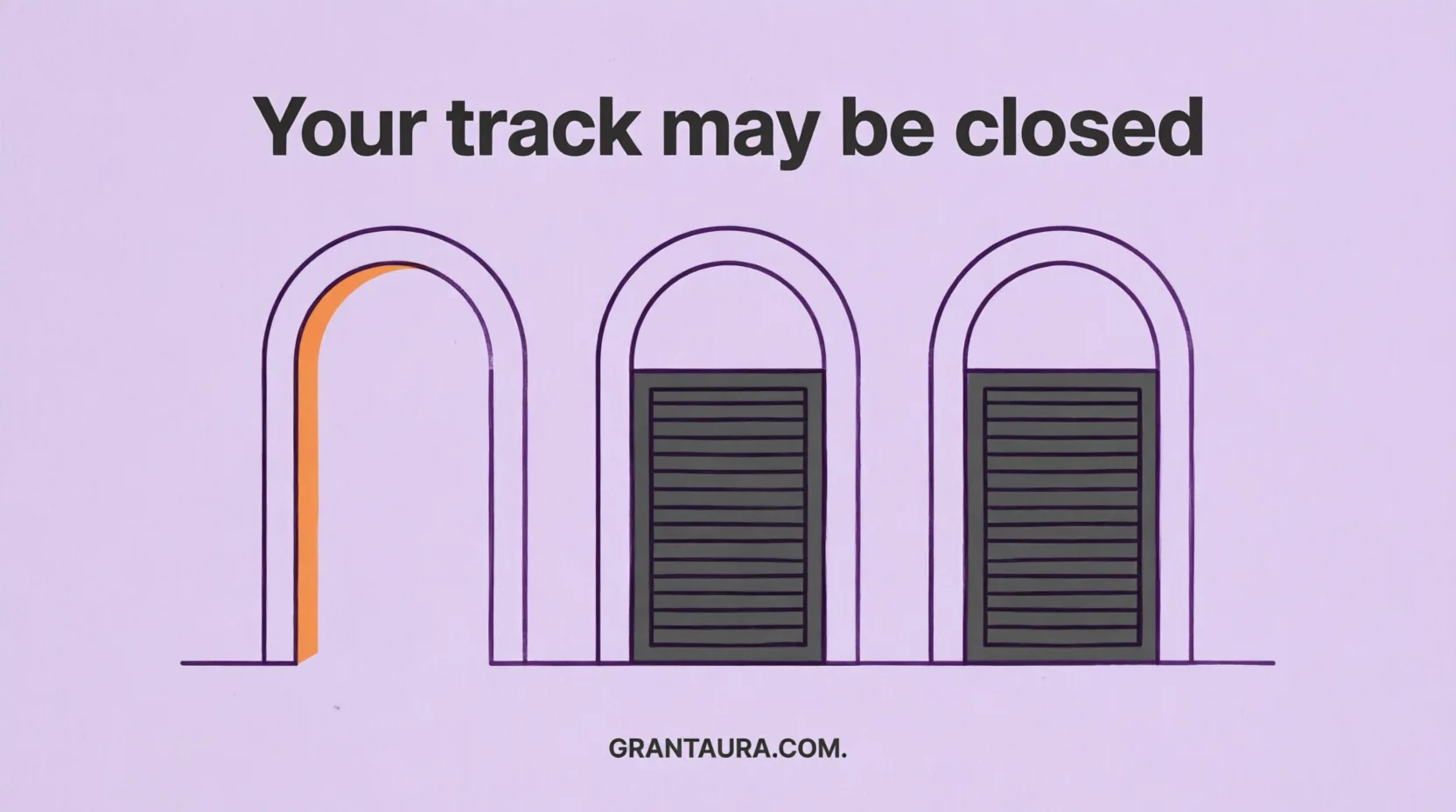
The Solid Waste Infrastructure for Recycling Grant Program operates as three separate funding tracks, each with its own eligibility rules and current status. Two of those tracks are closed right now. The EPA does not run one universal application. States and territories move through a non-competitive allocation process.
Tribes compete through Grants.gov when a NOFO is open. Political subdivisions have no active window at all. Before you read a single award figure or eligibility line, you need to know which door you are standing in front of and whether it is open.[1]
Key Grant Information
Active
12 days left
01
Solid Waste Infrastructure for Recycling Grant Program
Funded byU.S. Environmental Protection Agency
02
Grant Snapshot
Grant Award
$5,000,000
Application Deadline
September 30, 202612 days left
Eligible Region
United States, Puerto Rico, U.S. Virgin Islands, Guam, American Samoa, Commonwealth of the Northern Mariana Islands, Washington D.C., Tribal lands
03
Eligibility and Benefits
Eligibility Criteria
States and territories (50 states, DC, PR, USVI, Guam, American Samoa, CNMI)
Federally recognized Indian Tribes, Alaska Native Villages, Alaska Native Corporations, and intertribal consortia
Political subdivisions of states and territories (counties, cities, towns, parishes)
Nonprofits, for-profits, and individuals are not directly eligible but may participate as subrecipients or contractors
04
Focus Areas
Solid Waste Infrastructure for Recycling Grant ProgramSWIFR grantsEPA recycling infrastructure grants
Solid Waste Infrastructure for Recycling Grant Program Track Status
The three tracks do not share a single deadline, a single portal, or a single award range.
Track Name
Current Status
Award Range
Application Pathway
States and Territories
In non-competitive allocation with allocation notice and award target timing
~$300000 to $500000 base plus formula
EPA regional workplan process
Tribes and Intertribal Consortia
Closed – 2025 NOFO closed on September 30, 2026
$100000 to $1500000
Grants.gov when a NOFO is open
Political Subdivisions
Not currently accepting applications
$500000 to $5000000 from prior rounds
No active pathway
The state and territory row follows EPA’s 2026 guidance. The Tribal row follows the Tribal NOFO and track page. The Political Subdivision row follows EPA’s current closed-track page.[2][3][4]
Solid Waste Infrastructure for Recycling Grant Program Eligibility
Only government and Tribal entities can lead a SWIFR application. Nonprofits, businesses, and individuals cannot. That is a hard gate, but it is not a dead end.[5]
If you run a private recycling facility, an environmental nonprofit, or a technical consulting firm, you still have a path in. The eligible government or Tribal applicant can hire contractors or designate subrecipients to execute project components. The money flows through the eligible entity, but the work can involve diverse partners.
Do’s
Don’ts
Partner with a government or Tribal lead entity as a subrecipient or contractor
Apply as a primary applicant if you are a nonprofit or for-profit business or individual or school or informal group
Still unsure which track fits? The eligibility tool below asks about your organization type first, then routes you toward the right pathway or explains why direct application is not available. Eligible routes move toward the application submission modal. Unsure routes move to expert consultation. Ineligible routes pivot to related grants or the subrecipient path.
Eligibility Check
Eligibility for Solid Waste Infrastructure Recycling Grant Program
Answer a few guided questions. Your responses are matched to this grant’s criteria in real time.
Ready to check your eligibility?
We’ll guide you through a short, structured flow and instantly evaluate fit for this opportunity.
Eligible
You Appear Eligible
Based on your answers, you meet the core requirements for this grant.
Recommended after eligibility
You qualify. Now make sure the application is worth sending.
Eligibility only tells you that you can apply. It does not catch weak answers, missing proof, confusing budget details, or language that makes reviewers hesitate.
This Grant Isn’t the Right Fit. Your Best One Might Be Two Clicks Away.
Missing one criterion for Solid Waste Infrastructure Recycling Grant Program doesn’t mean you’re out of options — it means this grant wasn’t designed for your profile. Our expert research team identifies the grants built specifically for businesses like yours, across 500+ active opportunities.
Basic Match
$125
One-time research
A list of 5 grants only
Basic eligibility matching based on industry & location
Standard funding amount range verification
Primary criteria alignment check
Most Popular
Advanced Match
$145
One-time research
A list of 7 grants only
Advanced eligibility matching with business model analysis
Deep competitive advantage assessment
Innovation & impact potential matching
Market fit & growth trajectory alignment
Premium Match
$175
One-time research
A list of 10 grants only
AI-powered deep-match algorithm analysis
Historical success pattern matching
Priority sector & focus area alignment
Advanced sustainability impact matching
Strategic vision & long-term goals alignment
Preparing secure checkout…
✓
Order Confirmed
Your grant research order is placed. Our team will deliver your personalised report within 3–5 business days. Check your email for confirmation.
Auto-advances after each answer. Use Back to revise.
What SWIFR Will Not Fund
EPA will not fund project activities that include landfill construction, incineration, or waste-to-energy. The agency makes one narrow exception for anaerobic digestion. This exclusion list catches applicants who assume any waste management or recycling-adjacent activity qualifies. SWIFR targets mechanical recycling, composting infrastructure, and end-market development. It does not fund disposal infrastructure or chemical conversion processes.[6]
Required Steps
Landfill construction or operation
Incineration or burn units
Waste-to-energy or biofuels except anaerobic digestion
Chemical or thermal recycling
Environmental cleanup
Does your project idea touch any of these excluded activities? If yes, you may need to redesign the scope or pursue different funding. Our assessment team can review your project concept for disqualifying errors before you invest weeks in application development.
A single Tribal award can reach $1.5 million, while prior Political Subdivision awards have gone as high as $5 million. States and territories receive base allocations around $300000 to $500000 plus formula-based supplements. Exact FY2026 state-by-state amounts remain unpublished. The total program received $275 million across fiscal years 2022 through 2026 under the Infrastructure Investment and Jobs Act.[7]
Past selectees demonstrate the program’s scale. The City of Kansas City, Missouri received $5000000 for recycling infrastructure. Chicago secured $4999988 for similar work. The Saint Regis Mohawk Tribe in Akwesasne, New York was awarded $1500000.[8]
Grant recipients
Who received this grant
These recipients were confirmed through official grant program records.
No match is required, and EPA explicitly rejects voluntary cost share. Many applicants assume match makes a proposal stronger. SWIFR does not. Adding voluntary match can complicate your submission instead of improving it.[9]
Important Note
Match is not required and voluntary cost share is not accepted. Do not include matching funds or cost share in your application budget.
Expert Tip
Tribal applicants should not include cost share in the budget narrative. EPA will not accept voluntary matching funds for SWIFR awards.
Beyond the match rule, successful applicants must navigate Build America, Buy America Act requirements for construction projects, Davis-Bacon prevailing wage rules, and National Environmental Policy Act compliance. Those rules add layers of documentation and oversight.[10]
Application Mechanics by Track
States and Tribes do not use the same portal, the same forms, or the same timeline. Political Subdivisions currently have no portal at all.
Important Information
Two different processes serve two different active or preparatory tracks. Tribal applicants use Grants.gov when a NOFO is open. States and territories use an EPA regional workplan process, not Grants.gov.
States and Territories
States and territories operate through non-competitive allocation. EPA calculates each jurisdiction’s share using a formula, then notifies them of their allocation. After receiving allocation notice, the eligible state or territory entity submits a workplan and application materials to their EPA regional representative. This is not a public application portal. Individual agencies, nonprofits, or local governments within a state cannot apply directly to EPA. They must work through the designated state entity.[11]
Tribes and Intertribal Consortia
Tribal applicants compete through Grants.gov when a NOFO opens. The 2025 NOFO closed on September 30, 2026, and no new competitive window has been announced. When the next NOFO publishes, applicants will need a heavy document package: SF-424, SF-424A, EPA Key Contacts Form 5700-54, EPA Form 4700-4, and a Project Narrative Attachment Form. The narrative requires a 1-page cover letter, a 10-page proposal, and a 4-page budget table or description. Preparation hours remain UNKNOWN. The application package requires SAM.gov registration, UEI numbers, and detailed project narratives. The Grantaura Dashboard can help track form readiness across these 5+ mandatory forms.[12]
Political Subdivisions
EPA is not currently accepting Political Subdivision applications. Prior rounds awarded up to $5 million per recipient. No reopening date has been announced. Local governments interested in SWIFR funding should monitor the EPA program page for updates but cannot submit applications at this time.[13]
SWIFR Terms That Change Your Next Step
NOFO
A NOFO is the formal funding notice. For SWIFR, the Tribal path depends on a NOFO being open. If no NOFO is open, Grants.gov preparation is useful. Submission is not.
Subrecipient
A subrecipient is not the lead applicant. That distinction matters for nonprofits, businesses, and schools. They may help deliver the project only when an eligible government or Tribal entity leads.
Cost Share
Cost share means matching funds. SWIFR does not require it, and voluntary cost share should not be added to the official request.
Decision Acceleration and Next Steps
By this point, you know which track fits your entity, whether that door is open, and what SWIFR will not fund. The remaining question is what to do next.
Must Do
Confirm your SWIFR track
Confirm current track status
Run the exclusion check
Avoid adding voluntary cost share
Path 1: I’m eligible and my track is open
If you represent a state or territory entity receiving allocation notice, coordinate with your EPA regional representative immediately. Prepare workplan materials and budget documentation. Application complexity is high. Federal forms, compliance reviews, and narrative requirements demand careful assembly. Our assessment team can review your draft application for disqualifying errors before submission.
Tribal applicants and political subdivisions face closed windows. Use this time to build project narratives, secure partnerships, and complete SAM.gov or UEI registration. When NOFOs reopen, preparation work separates successful applicants from those who scramble at the last minute. Expert consultation can help you develop a competitive project concept and identify potential subrecipients or contractors.
Path 3: I’m not eligible as a primary applicant
Nonprofits, businesses, individuals, and schools cannot apply directly. Your pathway is partnership. Identify eligible government or Tribal entities working on recycling infrastructure in your area. Pitch your services as a subrecipient or contractor. Alternatively, explore other recycling grant opportunities that accept nonprofit or business applicants directly, such as the Small Business Recycling Grant Program.
Your Grant Assessment fee is non-refundable, but the base assessment fee can be deducted once toward the same grant’s Full Application when you choose the optional checkbox at checkout.
More Recycling and Infrastructure Grant Options
If SWIFR is closed for your track or unavailable to your entity type, do not sit still. Compare related opportunities. They are not replacements for EPA SWIFR, but they may keep the project moving while your main track is blocked.
Source Notes
[1] EPA state and territory, Tribal, and Political Subdivision track pages (S2, S4, S6).
[2] State and Territory guidance December 2025, non-competitive allocation process and timing (S3).
[3] Tribal track page and Tribal NOFO December 2025, status, award range, and Grants.gov pathway (S4, S5).
[4] Political Subdivision track page, current closed status and prior-round award range (S6).
[5] State guidance, Tribal NOFO, and Political Subdivision track materials for eligible applicant types and partner roles (S3, S5, S6).
[6] Tribal NOFO December 2025, excluded activities and project restrictions (S5).
[7] EPA main SWIFR program page, State/Territory guidance, Tribal track materials, and Tribal NOFO for total program funding and award ranges (S1, S3, S4, S5).
[8] EPA recipient page, verified selectees and award amounts (S7).
[9] State/Territory guidance and Tribal NOFO for no-match and voluntary cost-share rules (S3, S5).
[10] SWIFR guidance and NOFO compliance materials for construction and federal compliance requirements (S3, S5).
[11] State/Territory guidance for EPA regional workplan process and allocation mechanics (S3).
[12] Tribal NOFO December 2025 for Grants.gov package, forms, narrative length, budget materials, SAM.gov, and UEI requirements (S5).
[13] Political Subdivision track page for closed status and no active application pathway (S6).
SWIFR Questions Applicants Actually Hit
Can a nonprofit apply for SWIFR funding?
EPA restricts primary SWIFR applications to government and Tribal entities. Nonprofits cannot apply directly, but they may participate as subrecipients or contractors if an eligible lead entity includes them in the application.
Is the Political Subdivision track open?
No. EPA is not currently accepting applications from counties, cities, towns, or parishes through the Political Subdivision track. Monitor the EPA program page for reopening announcements.
Do we need matching funds?
SWIFR does not require matching funds, and voluntary cost share is not accepted. Do not include matching funds in your budget.
About This Page
This grant page was prepared by the Grantaura editorial team using locked EPA source materials including the official program page, track-specific guidance documents, the December 2025 Tribal NOFO, and the EPA recipient page. All high-stakes claims about track statuses, deadlines, award ranges, and exclusions trace back to those sources. Where evidence is thin or unavailable, we have said so plainly rather than smoothing the gap.
We are your trusted grant application partners. You can navigate the entire grant application process with our expert guidance through this simple 5-step process.
300+ Projects
4.9/5 Rating
Expert Team
Step 1: Application Form
Fill out the “Apply for this grant” form with your information and grant requirements.
Step 2: Eligibility Assessment
Our grant experts will assess your eligibility and notify you via email.
Step 3: Expert Consultation
A dedicated grant expert will be assigned to discuss next steps for your application.
Step 4: Application Submission
Our expert will help you complete and submit your application with all required materials.
Step 5: Final Decision
The grant committee will make their decision and notify successful applicants.
Hi there 😊 I’m Imran Ahmad, the founder of Grantaura. I normally examine funding opportunities through both newer research methods and older, manual verification methods because official webpages, application forms, FAQs, archived materials, etc. do not always tell the same story.
Because I believe that “the fine print usually only shows up when you’re stubborn enough to check twice.”
You are on Solid Waste Infrastructure Recycling Grant Program. I can help check fit, explain the September 30, 2026 deadline, compare effort, or decide whether Grantaura application support makes sense for this grant.
No chat history in this browser yet.
You are in queueIAGA
A Grantaura colleague can review this conversation. You can keep chatting with the assistant while you wait.
Tell us about yourself
0/1000
i
The information you add here helps the assistant answer this browser session more clearly. Close this window to continue the chat.
Check your eligibility
Check your saved details, answer the grant questions, and see your next steps.
Grant team review
Saved details where available
Free assessment
Save option
Save this grant application for later
Send yourself a private link so you can return to this grant form with your details ready.
Keep your post public. Our team will verify the link before processing your assessment. If the post is deleted or made private after submission, your free assessment will be void.